Jakarta - Amid an increasingly fragmented world marked by intensifying major power competition, shifting global alliances, and conflicts with the potential to spill over economically, Indonesia’s economy is expected to continue growing. Entering 2026, Indonesia is equipped with solid fundamentals: controlled inflation, maintained fiscal discipline, strong domestic consumption, a predominantly productive-age population, and a relatively resilient currency compared to many other emerging markets.
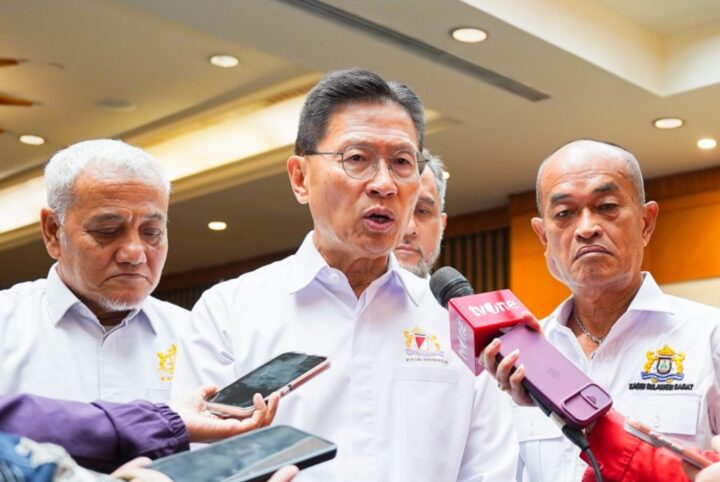
“Indonesia is not entering 2026 empty-handed,” said James Riady, Coordinating Vice Chairman for Foreign Affairs of the Indonesian Chamber of Commerce and Industry (Kadin Indonesia), during the Kadin Monthly Breakfast Meeting, the organization’s year-end gathering held at Hotel Aryaduta, Jakarta, on Friday (December 12, 2025). The event was attended by leaders and members of Kadin from both central and regional levels.
James explained that Kadin’s regular monthly meetings serve as an open, insightful, and collegial forum where business leaders can collectively reflect on challenges ahead and opportunities that must be seized together.
“And more importantly, the Kadin community gives us strong reasons to remain optimistic,” James said. Despite global uncertainty, he noted, Indonesia is home to entrepreneurs who continue to build, companies that keep investing, innovators who keep creating, and leaders who are not easily discouraged by negative headlines.
If 2025 was a year of adjustment and transition, James said, 2026 could become a year of anticipation and courage. “We must not become a community paralyzed by risk. We must become a community that moves forward because of opportunity,” urged the Chairman of the Lippo Group.
According to James, history shows that in every period of global disruption, Indonesia has consistently emerged stronger—provided its leaders remain calm, work together, and think long-term. “In an uncertain world, Indonesia stands out,” he stressed.
Global Challenges
As 2025 draws to a close, the global landscape presents a difficult and uncertain outlook. The world, James noted, is entering one of the most unpredictable geopolitical eras in decades, characterized by three key trends: intensifying great-power competition, shifting global alliances, and conflicts that were once regional but now carry the risk of broader escalation.
International institutions such as the IMF, World Bank, ECB, and OECD describe the global economy as slowing, fragmented, and undergoing major structural transformation. Four major indicators stand out: weakening global trade; supply chains being restructured for security rather than efficiency; public debt in many countries reaching record highs; and a technology race advancing faster than regulators can keep pace.
“From a financial perspective, new vulnerabilities are emerging,” James said. First, many assets are now in fragile positions due to rapid valuation increases over recent years, making them highly sensitive to interest rate hikes, economic slowdowns, or global market corrections.
Second, banking systems in several countries have yet to fully recover, still burdened by non-performing loans, portfolio losses stemming from high interest rates, and weakened market confidence—conditions under which even minor shocks can amplify financial instability.
Third, the era of “higher interest rates for longer” poses a tangible challenge for businesses heading into 2026.
Socially, polarization is also on the rise. The year 2026 will see elections in several key countries, including midterm elections in the United States, general elections in Brazil, national elections in Bangladesh, and major polls in several European countries—all of which could significantly affect markets and global stability.
Taken together, James warned, 2026 could become a year when many things go wrong: a sharper global economic slowdown, rising protectionism and export restrictions, energy instability, prolonged conflicts with major economic consequences, and technological disruption outpacing adaptive capacity. “This is the reality of the world we are facing,” he said.
Strong Fundamentals
Nevertheless, James emphasized how unique and strong Indonesia’s position is compared to many other countries—an advantage often overlooked. First, Indonesia’s political transition has remained stable, with global observers viewing the country’s politics as continuous, clear, and predictable—qualities that are increasingly rare today.
Second, macroeconomic fundamentals remain solid: controlled inflation, sound fiscal discipline, strong domestic consumption, a favorable demographic structure, and a relatively resilient exchange rate compared to other emerging markets.
Third, Indonesia is undergoing the largest infrastructure decade in its history, developing ports, roads, industrial zones, energy facilities, logistics networks, and a new capital city—investments that tangibly enhance national competitiveness.
Fourth, the President’s focus on food security, downstream industrialization, health, defense, and connectivity infrastructure provides a clear national direction.
Fifth, Indonesia possesses a rare combination of political stability, demographic strength, natural resources, accelerating digitalization, and a growing manufacturing base. In an increasingly fragmented world, Indonesia is becoming even more attractive.
“We must be realistic yet remain optimistic as we enter 2026,” James said. “We must be honest—2026 will not be an easy year for the global economy. There will be storms, some already visible, others still beyond the horizon. But Indonesia is not entering that year empty-handed. Indonesia enters 2026 with sufficient capital.”
Meanwhile, government programs under President Prabowo Subianto have begun to show positive impacts. As a strategic partner of the government, Kadin fully supports these initiatives, which further strengthen the basis for optimism. Despite global uncertainty, Indonesia continues to rely on resilient entrepreneurs, investing companies, creative innovators, and leaders who are not easily shaken by negative news.
“If 2025 was a year of adjustment and transition, then 2026 can be a year of anticipation and courage,” James concluded. He urged business actors to confront uncertainty with preparation and to amplify the narrative of Indonesia’s resilience—not a narrative of decline. (PD)