


Author: Primus Dorimulu – Head of Communications, Kadin Indonesia
Jakarta – To boost public purchasing power and accelerate economic growth toward the government’s targets of 5.4% in 2026 and 8% in 2029, improving the investment climate must be a top priority. Domestic business players need a sense of comfort and certainty. Using a simple analogy, if chickens are constantly under stress, they will struggle to lay eggs.
Kadin appreciates the government’s various efforts to improve the investment climate and roll out economic stimulus programs. However, the current business environment is still perceived as not fully providing security and certainty for entrepreneurs. As a strategic partner of the government, Kadin fully supports the national development agenda, while also offering several notes to ensure that implemented policies truly hit their intended targets.
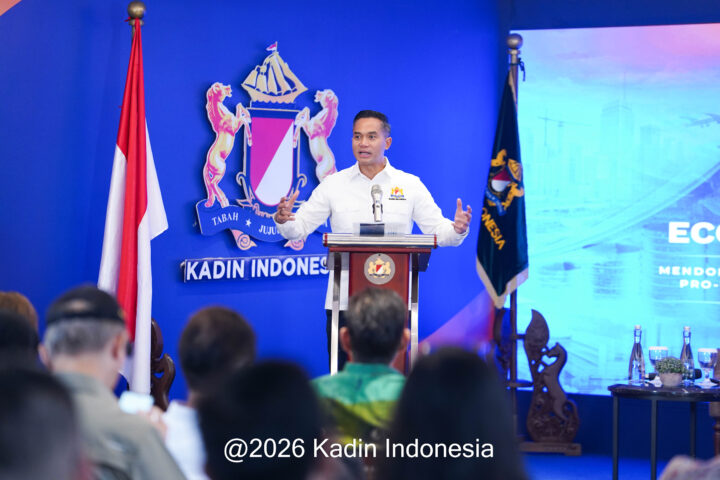
Efforts to attract foreign investment are considered crucial. Indonesia needs a strong inflow of foreign direct investment (FDI) to create new jobs, increase purchasing power, and accelerate economic growth. Nevertheless, attention to domestic businesses must not be neglected. “We must not let domestic ‘chickens’ become so stressed that they can no longer lay eggs,” said Anindya Novyan Bakrie, Chairman of Kadin Indonesia, at the Global and Domestic Economic Outlook 2026 seminar themed Encouraging the Role of the Private Sector in Economic Growth: Pro-Growth, Pro-Poor, Pro-Job, and Pro-Environment, on Thursday (15/1/2026).
Citing the inaugural Business Pulse Survey conducted by Kadin Institute, Anindya—commonly known as Anin—revealed that 47% of respondents plan to invest or expand their businesses in the first six months of 2026. However, the biggest challenges facing businesses remain classic issues: regulation and bureaucracy. Licensing and ease of doing business continue to be the main complaints among Kadin members.
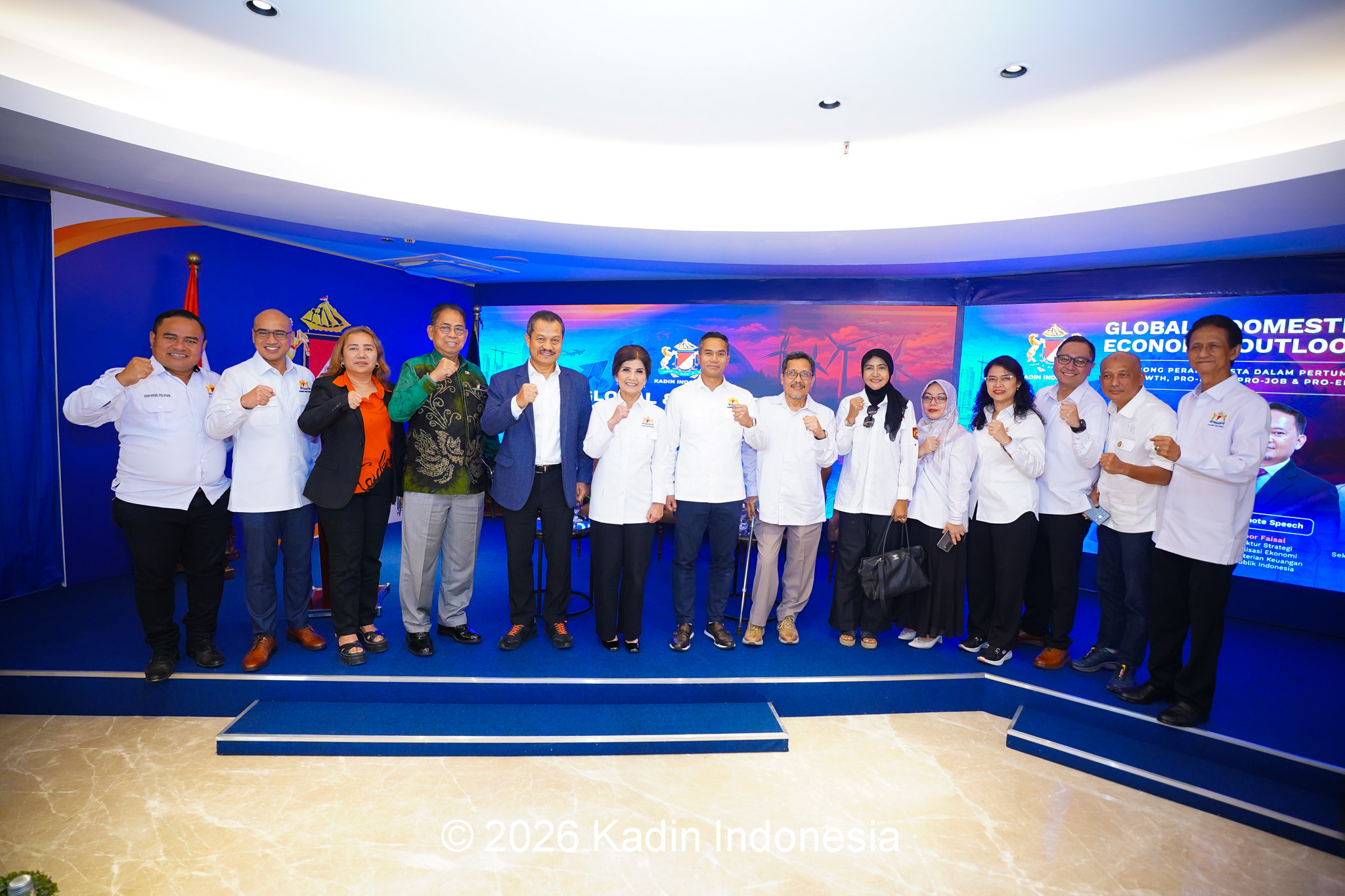
According to Anin, Kadin strives to serve as a platform for collaboration and a hub for data, knowledge, and networking among business players. Discussions on economic data and projections, he said, will only be meaningful if followed by real economic activity. “Without real economics moving, the wheels of the economy will not keep turning,” he noted.
He added that the seminar’s theme—pro-growth, pro-job, pro-poor, and pro-environment—reflects the real needs of the national economy. High economic growth must go hand in hand with job creation, support for small businesses, and environmental sustainability. When these four principles are balanced, strategic sectors such as food security, energy security, and clean energy will grow in a healthier manner.
Anin also emphasized the importance of economists in helping the business community read global, national, and regional dynamics. Business players, he said, tend to focus on micro-level issues. Therefore, macroeconomic perspectives are essential so entrepreneurs can anticipate risks and opportunities amid growing global uncertainty.
He warned that current global dynamics are no longer limited to trade wars, but have shifted toward physical conflicts and competition over strategic resources. These geopolitical and geoeconomic tensions create uncertainty that dampens global expansion appetite. In such conditions, Indonesia must remain calm while also being realistic in reading the global balance of power.
Amid global uncertainty, Anin assessed that Indonesia’s economic fundamentals remain relatively sound. Economic growth is steady at around 5%, inflation is controlled below 3%, the trade balance records a surplus, and national trade performance shows a positive trend. These four indicators, he stressed, must be safeguarded and strengthened to maintain business confidence.
Nevertheless, pressure on the business sector persists. “Laying hens all over the world are under stress. The question is, are chickens in Indonesia also stressed? Pressure is inevitable, but we have no choice but to keep laying eggs,” Anin remarked.
He viewed the policy direction under President Prabowo Subianto’s administration as being on the right track, although implementation will not be easy. Programs such as the development of 30,000 Nutrition Fulfillment Service Units (SPPG) or Free Nutritious Meal kitchens, as well as the target of building three million houses per year, require enormous effort. However, these programs are believed to have significant economic impacts, including the creation of millions of jobs and the strengthening of downstream industries.
In this context, Kadin’s role becomes crucial as a bridge between the government’s macro policies and their implementation in the real sector. Kadin is expected to translate government agendas into concrete empowerment opportunities for the business community.
Anin acknowledged that the challenges ahead are far from light. The unemployment rate remains at around 4.8%, approximately 17% of young people are still seeking jobs, and a high ICOR ratio demands greater efficiency to ensure Indonesia remains competitive. Accordingly, Kadin’s National Leadership Meeting (Rapimnas) 2025 set priorities on job creation, productivity improvement, trade expansion, industrialization or downstreaming, and investment acceleration.
“Ultimately, the chickens that are easiest to convince to keep laying eggs are the domestic ones,” Anin concluded. This does not mean Indonesia is closing itself off from foreign investment, but rather that strengthening domestic business players is the main foundation to keep the economy moving, resilient, and sustainable amid global uncertainty.