Jakarta - Indonesia’s economic growth in the first quarter of 2026, which reached 5.61%, cannot be separated from government programs that have been executed effectively. The acceleration of government spending since January, the large-scale implementation of the Free Nutritious Meals (MBG) program amounting to Rp80 trillion, the aggressive construction of 3 million homes, and a number of other priority programs have all contributed to boosting economic growth. This is also reflected in direct investment activities that have been underway since the beginning of the year.
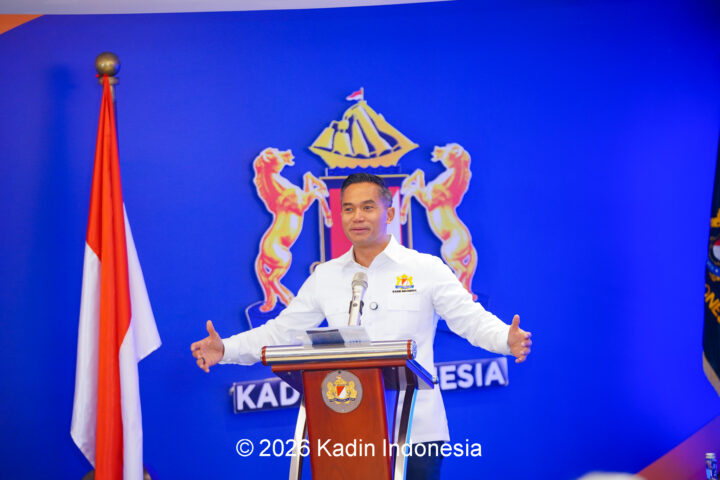
“We appreciate the government’s performance. Programs implemented since early 2025 are beginning to show results this year,” said Chairman of the Indonesian Chamber of Commerce and Industry (Kadin), Anindya Novyan Bakrie, on Tuesday (May 5, 2026).
Indonesia’s economic growth of 5.61% amid worsening global conditions is an extraordinary achievement and deserves recognition. Kadin will continue to work closely with the government, providing full support and participation in all programs to boost economic growth and promote equitable prosperity across Indonesia, from Sabang to Merauke.
Indonesia’s 5.61% growth in the first quarter of 2026 is the highest among G20 member countries. During the same period, China’s economy grew by 5%, Singapore by 4.6%, South Korea by 3.6%, Saudi Arabia by 2.8%, and the United States by 2.8%.
“This is a remarkable achievement,” said Anindya, who is commonly known as Anin.
Trade Balance and Investment
Anin noted that the improvement in national economic performance is not only supported by government spending and domestic consumption, but is also increasingly marked by the opening of new export markets and rising investment flows, including medium-scale investments that are beginning to spread to the regions.
Efforts to open new export markets, although still in the early stages, have started to show impact amid various global challenges. At the same time, investment inflows are becoming more diverse, no longer dominated solely by large-scale projects but also by medium-scale investments that have the potential to drive regional economies.
“Recently, we have succeeded in opening new export markets. Although still at an early stage, the impact is already visible, including on incoming investments,” Anin said.
He added that current investments are not only large-scale but are also beginning to target a wider range of sectors and regions.
According to Anin, the next challenge is to ensure that investment continues to flow into the regions through stronger coordination and cooperation between central and regional governments. Only then can economic growth be distributed more evenly rather than concentrated in major urban centers.
“Going forward, we need to strengthen discussions with regional governments so that investment in the regions can increase and local economies can grow. Economic growth must also take place in the regions,” he added.
Indonesia’s trade data further reinforces this optimism. Data from Statistics Indonesia (BPS) shows that the country’s trade balance recorded a surplus of USD 3.32 billion in March 2026, a significant increase from USD 1.27 billion in February 2026. This surplus was supported by exports of USD 22.53 billion and imports of USD 19.21 billion, extending the surplus streak to 71 consecutive months since May 2020.
Cumulatively, the trade surplus through March 2026 reached USD 5.55 billion. Although exports declined by 3.1% year-on-year (yoy), the import structure shows positive signals for economic activity. Imports of capital goods grew by 4.98% and raw materials by 2.15%, indicating increased production and domestic investment activity. Meanwhile, consumer goods imports fell by 10.81%, reflecting a shift toward strengthening the productive sector.
From the investment side, Anin added that realized investment in the first quarter of 2026 reached Rp498.8 trillion, growing by 7.2% year-on-year, equivalent to 24.4% of the annual target of Rp2,041.3 trillion. The downstream sector remains the main driver, contributing Rp147.5 trillion and reaffirming its strategic role in strengthening the national economic structure.
This performance shows that Indonesia’s growth momentum is increasingly supported by a more balanced combination of domestic consumption, recovering exports, and expanding investment. In this context, the entry of medium-scale investments into the regions is considered a key factor in sustaining growth while promoting more equitable development.
Kadin believes that if the trend of expanding export markets and strengthening investment continues, supported by solid coordination between central and regional governments, Indonesia’s economy will not only grow faster but also become more inclusive.
“Growth must not be concentrated only in major centers. Regions must become new sources of growth,” Anin emphasized.
Transfers to Regions
Looking ahead, Anin said that transfers to regional governments, which have been reduced over the past year, need to be gradually increased again. Regional governments that have demonstrated strong performance should be incentivized through increased transfers. These funds are crucial in driving economic activity, particularly for micro, small, and medium enterprises (MSMEs) in the regions.
As announced by BPS on Tuesday morning (May 5, 2026), government spending, which surged by 21.81%, and investment, which grew by 5.96%, drove Indonesia’s economic growth in the first quarter of 2026 to 5.61%, far exceeding expectations from various domestic and international analysts and institutions.
Household consumption grew moderately at 5.52%. Based on current prices, Indonesia’s gross domestic product (GDP) reached Rp6,187.2 trillion, while at constant prices it reached Rp3,447.7 trillion in the first quarter of 2026.
The growth structure underscores the dominance of domestic demand amid a weak external sector, with exports growing by 0.90% yoy and imports rising by 7.18% yoy. By sector, services became the main driver, particularly accommodation and food services (13.14%), transportation (8.04%), and information and communication (7.14%), while manufacturing remained the largest contributor to GDP at around 19%.
Geographically, growth remains dominated by Java Island, which contributes more than half of GDP, although Bali–Nusa Tenggara and Sulawesi recorded higher growth rates. Overall, this performance demonstrates Indonesia’s economic resilience at the start of 2026, with government spending and investment serving as key drivers in maintaining growth momentum amid global uncertainty.
Contribution of MBG
The Free Nutritious Meals (MBG) program, Anin noted, has emerged as a new driver of Indonesia’s economic growth in the first quarter of 2026, as well as a strategic instrument for promoting equitable economic development across regions. Amid 5.61% economic growth (yoy), the program has experienced extraordinary expansion, with its scale increasing by more than 2,400% year-on-year.
In the first quarter of 2025, MBG was still in its early stages, with 900 kitchens, 2.5 million meals per day, and around 45,000 workers involved. By the first quarter of 2026, the program has evolved into a massive economic ecosystem, with 26,066 kitchens, production reaching 60 million meals per day, and employing approximately 1.3 million workers. The economic circulation generated has also surged significantly, from Rp37.5 billion per day to around Rp900 billion per day.
“This reflects a very strong multiplier effect on the domestic economy,” Anin explained.
This massive expansion has made MBG one of the fastest budget-absorbing programs in early 2026, with spending estimated at around Rp80 trillion. This spending directly flows into communities through food supply chains, distribution, logistics, and local labor.
Its impact is not only seen in increased household consumption but also in the strengthening of the real sector, particularly agriculture and construction, which have experienced rising activity in line with demand for raw materials and supporting infrastructure.
Beyond being a short-term stimulus, MBG also plays a crucial role in promoting economic equality. The program has reached approximately 56.13 million beneficiaries across all provinces, making it one of the widest-reaching government interventions. Its broad distribution helps channel liquidity into previously underserved areas, reducing regional disparities.
This equalizing effect is evident in widespread job creation, from farmers and MSME food producers to kitchen and distribution workers. With more than 1.3 million workers involved, MBG has become one of the largest labor-intensive programs, strengthening local economic foundations. Economic activity generated in the regions also contributes to increased purchasing power, further driving domestic consumption as a key pillar of national growth.
At the same time, the boost from MBG is complemented by rising national investment. Investment realization in the first quarter of 2026 reached Rp498 trillion, growing by 7% yoy, with employment absorption increasing by 19% to 706,569 workers.
“Downstreaming programs driven by investment, including strategic projects that began early in 2026, are strengthening the production side of the economy, while MBG strengthens consumption and distribution,” Anin said.
With this combination, MBG functions not only as a social program but also as an effective economic instrument in sustaining growth momentum. It demonstrates how well-targeted government spending can generate a multiplier effect—boosting consumption, creating jobs, strengthening the real sector, and accelerating economic equality.
The sustainability and effectiveness of MBG will be crucial in maintaining the balance between growth and equity.
“In the context of ongoing global uncertainty, this program is one of the key foundations for Indonesia to sustain inclusive and sustainable growth,” Anin concluded.