


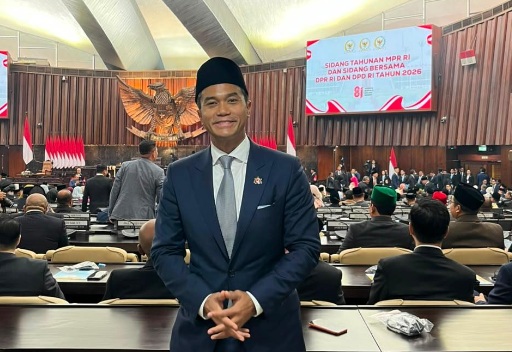
Jakarta – The Indonesian Chamber of Commerce and Industry (Kadin Indonesia) welcomed the economic and development policy directions outlined by President of the Republic of Indonesia Prabowo Subianto in the Government Statement on the Draft State Budget (RAPBN) for Fiscal Year 2027 and its Financial Note before the House of Representatives of the Republic of Indonesia (DPR RI) on Friday (14/08/2026).
Chairman of Kadin Indonesia Anindya Novyan Bakrie said the various agendas presented by the President reflected the government’s commitment to maintaining macroeconomic stability while accelerating structural transformation. As a strategic partner of the government, Kadin Indonesia is ready to support the implementation of these policies through the spirit of Indonesia Incorporated, involving collaboration among the government, business community, state-owned enterprises (SOEs), Danantara, regional governments, MSMEs, universities, workers, and all development stakeholders.
The following are Kadin Indonesia’s views on the ten key issues presented by President Prabowo Subianto.
1. Strong Economic Fundamentals, Momentum to Attract Investment
Kadin Indonesia welcomed the recognition from international rating agencies of Indonesia’s resilient economic fundamentals. The President stated that S&P Global Ratings, on July 13, 2026, maintained Indonesia’s credit rating at BBB with a stable outlook, keeping Indonesia within the investment-grade category. The assessment was supported, among other factors, by the country’s economic growth prospects, prudent macroeconomic policies, and government debt position.
Recognition also came from China Lianhe Credit Rating, which, according to the President’s presentation, assigned an AAA rating with a stable outlook to Indonesia’s Panda Bond issuance. The government said the agency viewed Indonesia’s economic fundamentals as remaining solid, government policies as effective, the economy as resilient to external shocks, and inflation as under control.
Chairman of Kadin Indonesia Anindya Novyan Bakrie views the confidence shown by international rating agencies as an important asset for Indonesia to attract greater investment. Economic stability, fiscal discipline, and policy credibility are three key factors closely considered by businesses before making long-term investment decisions.
“For the business community, trust is capital. When international rating agencies from both the West and the East give positive assessments of Indonesia, it reinforces the message that Indonesia has strong fundamentals and promising long-term prospects,” Anindya said.
According to Anindya, this momentum must be translated into real investment. Macroeconomic stability must be reinforced by legal certainty, regulatory consistency, ease of licensing, competitive logistics costs, and improved investment services. The goal is to ensure that capital does not stop at portfolio investment, but flows into the real sector to build factories, promote downstreaming, bring in technology, and create jobs.
Kadin is ready to work with the government in the spirit of Indonesia Incorporated. The government maintains stability and creates a conducive investment climate, while the business community brings capital, technology, innovation, and market networks. This collaboration must ultimately lead to job creation, lower unemployment and poverty, reduced inequality, and improved public welfare.
2. The Rp4,097.2 Trillion State Budget Must Become a Catalyst for Investment
Kadin Indonesia took note of the 2027 Draft State Budget, which proposes state expenditure of Rp4,097.2 trillion, up from Rp3,842.7 trillion in the 2026 State Budget. State revenue is targeted at Rp3,426 trillion, compared with Rp3,153.6 trillion in the 2026 State Budget. Budget financing is planned at Rp671.2 trillion, with a deficit equivalent to 2.40% of GDP, lower than the 2.68% of GDP deficit target in the 2026 State Budget.
The government has set a 2027 economic growth target of 6%, inflation at 2.5%, an exchange rate of Rp17,500 per US dollar, a 10-year government securities (SBN) yield of 6.9%, an Indonesian Crude Price (ICP) of US$75 per barrel, oil lifting of 610,000 barrels per day, and gas lifting of 954,000 barrels of oil equivalent per day.
Kadin considers the fiscal posture to demonstrate the government’s continued use of fiscal policy as an instrument of development while maintaining fiscal discipline. The scale of state spending provides an opportunity to create a much greater economic multiplier when combined with investment from SOEs, Danantara, and the private sector.
“State spending of more than Rp4,000 trillion represents enormous economic strength. The challenge is how every rupiah of the state budget can generate a multiplier effect and attract private investment many times over,” Anindya said.
Kadin believes the government cannot work alone. State-funded projects with economic feasibility can be developed through public-private partnerships, allowing fiscal space to be directed more toward basic services, social protection, and sectors that cannot yet be commercially financed.
In optimizing state revenue, Kadin supports broadening the revenue base, improving compliance, and closing leakages. At the same time, revenue policies must maintain business sustainability. Growing companies, increased investment, and additional employment will ultimately expand the tax base in a sustainable manner.
3. Eight Priority Programs Open Significant Opportunities for Collaboration
The 2027 Draft State Budget will focus on supporting eight National Priority Work Programs: food self-sufficiency; energy and water self-sufficiency; education; healthcare; downstreaming and industrialization; infrastructure, housing, and disaster resilience; strengthening the people’s economy and rural development; and poverty reduction.
Through these policies, the government targets a reduction in the poverty rate to 6.0%–6.5%, the open unemployment rate to 4.30%–4.87%, the Gini ratio to around 0.362–0.367, and an increase in the Human Capital Index to 0.575.
Kadin considers nearly all of these priorities to have a direct connection with business activities. Food security requires investment in production, processing, warehousing, cold chains, and logistics. Energy self-sufficiency requires investment in power generation and networks. Housing programs will stimulate the cement, steel, ceramics, furniture, and financial services industries. Downstreaming requires capital, technology, and market access.
“Kadin fully supports the government’s eight priorities because they all ultimately aim to increase productivity and public welfare. What we need to build is a multiplier effect so that a single government program can drive as much economic activity as possible,” Anindya said.
Kadin also encourages the involvement of MSMEs, cooperatives, and regional entrepreneurs in the supply chains of national programs. The Indonesia Incorporated concept must reach all levels of the business community, not just large corporations.
The ultimate measure is public welfare. Investment must create jobs, jobs must increase household incomes, and higher incomes must strengthen consumption and purchasing power. Through this mechanism, economic growth can directly reduce poverty and narrow inequality.
4. Giant Sea Wall, a Cross-Generational Project That Must Begin
Kadin welcomed the government’s plan to begin construction of the Giant Sea Wall along Java’s northern coast. The government estimates that construction will take approximately 15–20 years and will be divided into 15 segments stretching from Banten to Gresik, East Java.
The Giant Sea Wall is designed not only as a coastal barrier, but also as supporting infrastructure for clean water, connectivity, and the protection of economic and industrial areas along Java’s northern coast. The project is important because the northern coast of Java is home to millions of people and serves as the location of various manufacturing, logistics, and national economic centers.
“Kadin supports the government’s determination to begin the Giant Sea Wall project. This is a cross-generational project. It is not only about protecting land, but also millions of people, industrial centers, logistics networks, and national economic assets,” Anindya said.
Kadin sees significant room for innovative financing. The State Budget can serve as a catalyst, while Danantara, SOEs, institutional investors, and the private sector can participate in components of the project that have commercial viability.
Kadin also encourages the maximum use of domestic products, technology, and expertise. The project can serve as a means of strengthening the capacity of Indonesia’s construction, steel, cement, engineering, consulting, and technology industries.
Its implementation will nevertheless require comprehensive environmental, hydrological, spatial planning, and social assessments. Thus, the Giant Sea Wall should not be viewed merely as a physical infrastructure project, but as a regional development project and an opportunity to strengthen national technological capabilities.
5. Jakarta-Bali IFSC, Indonesia Can Become a Global Capital Magnet
Kadin Indonesia welcomed the plan to establish the Indonesia International Financial Center (IIFC), with Jakarta as its initial location before expanding to Bali and potentially other regions.
The IIFC is envisioned as an international-standard center for finance, investment, financial technology, arbitration, and commercial dispute resolution. Its activities may include banking, insurance, capital markets, derivatives, carbon exchanges, bullion, fintech, Islamic finance, family offices, and investment management.
According to Kadin, Indonesia has the economic scale, population, natural resources, and substantial investment needs required to establish a competitive regional financial center.
“There are currently transactions involving underlying assets in Indonesia, but their financing or settlement is carried out overseas. The IIFC provides an opportunity to bring more of these value-added activities into Indonesia,” Anindya said.
Jakarta has advantages as a center for corporations, government, banking, and capital markets, while Bali has strong international appeal for global investors and professionals. The combination of the two could become a distinctive strength.
However, the success of an international financial center depends on trust. Legal certainty, credible regulators, swift dispute resolution, a competitive tax system, and ease of mobility for global talent are essential prerequisites. Kadin is ready to help promote the IIFC through its network of businesses and international investors.
6. Mineral Exchange Must Strengthen Indonesia’s Position in Price Discovery
Kadin supports the government’s plan to continue its one-door export policy and establish a Mineral and Strategic Commodities Exchange, which is targeted to begin operations on January 1, 2027, under the supervision of the Financial Services Authority (OJK).
Indonesia is a major global producer of various strategic commodities, but international price formation still largely takes place overseas. The government aims to establish an Indonesian reference pricing mechanism through a transparent, liquid, and globally trusted market.
“If Indonesia has a large share of global production, it should also have a credible price discovery mechanism. It is not enough for Indonesia to simply be a producer. Indonesia must move up the value chain of global trade,” Anindya said.
Kadin believes the success of the exchange will depend heavily on liquidity and credibility. The exchange must have international-standard governance, reliable trading infrastructure, competitive transaction costs, and participation from global producers and buyers.
The role of OJK will be crucial in ensuring market integrity. Supervision must narrow the scope for manipulation, under-invoicing, and transactions that disadvantage the state, without creating additional bureaucracy that hampers exporters.
The principle promoted by Kadin is greater transparency with simpler bureaucracy. With the right design, the government can optimize state revenue and foreign exchange earnings, while producers gain access to a more credible market and price discovery mechanism.
7. Rp4,097 Trillion in Spending Must Be Felt in Schools and Community Health Centers
Kadin welcomed the government’s commitment to using the strength of the 2027 Draft State Budget to improve the quality of education and healthcare services. The government plans to renovate 10,000 community health centers (puskesmas) across 7,280 subdistricts, with an average renovation requirement of approximately Rp4 billion per health center, as well as upgrading 514 public health laboratories.
The government also targets the completion of renovations for all schools requiring repairs by 2029 at the latest. The program will be accompanied by increased digitalization of education and expanded access to distance learning.
“The most important infrastructure of a country is not only roads, ports, and airports. People are the main infrastructure of development. Good schools and quality healthcare services will determine Indonesia’s productivity for decades to come,” Anindya said.
Kadin sees the renovation program as also having a broad economic impact. The construction of thousands of education and healthcare facilities will stimulate the construction, building materials, furniture, medical equipment, and educational technology industries while creating jobs in various regions.
Therefore, Kadin encourages the involvement of regional entrepreneurs, MSMEs, and domestic industrial products, provided they meet quality standards and offer competitive prices. In this way, government spending can provide a dual benefit: improving public services while simultaneously driving regional economies.
Kadin supports increasingly consolidated, transparent, and efficient procurement so that budget savings can be redirected toward renovating more schools, community health centers, and public facilities.
8. Kadin Welcomes Greater Private Sector Involvement, State Assets Must Become More Productive
Kadin welcomed the government’s plan to expand private sector involvement in utilizing underutilized state and SOE assets. Land, buildings, networks, areas, airports, and other facilities can be developed through open and competitive partnerships without relinquishing strategic state ownership.
The government views asset monetization models implemented by several countries as one of its references. The private sector would have the opportunity to operate or develop assets, while ownership remains with the state and the economic value generated can be used to finance subsequent development.
“State assets should not be left idle when society needs jobs and Indonesia needs investment. If the private sector can increase asset productivity without the state losing its strategic ownership, this can create a win-win solution,” Anindya said.
The private sector can bring capital, technology, managerial capabilities, creativity, and market networks. Assets such as airports, for example, can be developed in an integrated manner with aviation, hotels, tourism, logistics, and commercial areas.
Kadin encourages the government to prepare a transparent asset pipeline, independent valuations, proportional risk-sharing mechanisms, competitive tender processes, and long-term contractual certainty.
This is one concrete manifestation of Indonesia Incorporated: the government safeguards public interests and provides regulatory certainty, SOEs and Danantara serve as catalysts, while the private sector brings investment and entrepreneurship. The ultimate outcome must be increased productivity, job creation, and state revenue.
9. Limited Dual Citizenship Could Turn Brain Drain into Brain Gain
Kadin welcomed the government’s proposal to allow limited dual citizenship for members of the diaspora with exceptional talents who can make strategic contributions to Indonesia.
Indonesia’s diaspora includes scientists, doctors, engineers, artificial intelligence experts, researchers, entrepreneurs, artists, athletes, and world-class professionals. Some have had to acquire other nationalities due to career and family considerations.
“Today, competition among countries is not only about competing for capital, but also competing for the best brains and the best talents. Indonesia has an extraordinary diaspora, and we must ensure they remain part of Indonesia’s development,” Anindya said.
Connecting the diaspora with the national economy can accelerate the transfer of technology, knowledge, international networks, and capital. Indonesia needs more world-class talent to accelerate industrialization and digital transformation.
Kadin encourages the policy to be designed selectively, transparently, and based on strategic national needs. Healthcare, AI, semiconductors, energy, biotechnology, advanced manufacturing, finance, and other technology sectors could be prioritized.
The goal is to turn brain drain into brain circulation and brain gain. Indonesian talent should not have to choose between a global career and their home country. Instead, their capabilities and global networks should be connected with investment and development opportunities in Indonesia.
10. Danantara and DSI Could Become New Engines of Investment and Industrialization
Kadin views Danantara Indonesia and PT Danantara Sumber Daya Indonesia (DSI) as having strategic roles in Indonesia’s economic transformation. Danantara is being positioned as an instrument to prepare, develop, and finance long-term strategic projects that are important to Indonesia.
DSI, meanwhile, is intended to help strengthen resource governance and export transactions, including by reducing under-invoicing and transfer pricing practices that could reduce state revenue and foreign exchange earnings.
“Kadin supports Danantara as a catalyst, rather than working alone. If one rupiah of Danantara capital can attract several rupiah of domestic and foreign private investment, its multiplier effect on the economy will be enormous,” Anindya said.
Kadin encourages Danantara to prioritize investments with high multiplier effects, including downstreaming, energy, infrastructure, advanced manufacturing, food security, and technology. Partnerships with the private sector will enable risk-sharing while maintaining commercial discipline in projects.
Kadin also supports greater transparency in natural resource transactions through DSI. However, the system should be fully digital, integrated, and user-friendly so that stronger oversight does not create additional bureaucracy for businesses.
“The principle is more transparency, less bureaucracy. Indonesia’s wealth must become Indonesia’s capital. Capital becomes investment, investment builds industries, industries create jobs, and jobs improve public welfare. That is the spirit of Indonesia Incorporated that we want to realize together,” Anindya said.
KADIN INDONESIA: BUSINESS COMMUNITY READY TO WORK TOGETHER
Overall, Kadin Indonesia views the 2027 Draft State Budget and the various transformation agendas announced by the President as opening increasingly broad opportunities for collaboration between the government and the business community. Given Indonesia’s enormous development needs, the State Budget cannot be the sole source of financing. The involvement of the private sector, SOEs, Danantara, and domestic and global investors is becoming increasingly important.
Kadin believes the government has a central role in providing legal certainty, consistent regulations, infrastructure, and a healthy investment climate. At the same time, the business community has the capacity to provide capital, technology, innovation, management expertise, and market access.
“Kadin Indonesia is ready to work together with the government. Our spirit is Indonesia Incorporated. The government and the business community should not operate separately, but become strategic partners in pursuing the same goals: making investment easier, enabling businesses to grow, and creating more quality jobs,” Anindya said.
According to Anindya, economic growth must ultimately be measured by its impact on people’s lives. Incoming investment must create jobs, jobs must increase incomes, and higher incomes must reduce poverty and narrow social inequality.
“The ultimate goal of all economic policies must be public welfare. Investment must be made easier, employment opportunities expanded, unemployment and poverty reduced, inequality narrowed, and public welfare improved. That is the ultimate goal of Indonesia Incorporated,” Anindya concluded.
Jakarta, August 14, 2026
Indonesian Chamber of Commerce and Industry (Kadin Indonesia)

National Economy
Regional Economy
National Economy
Regional Economy