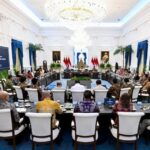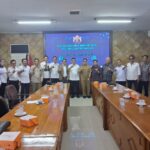


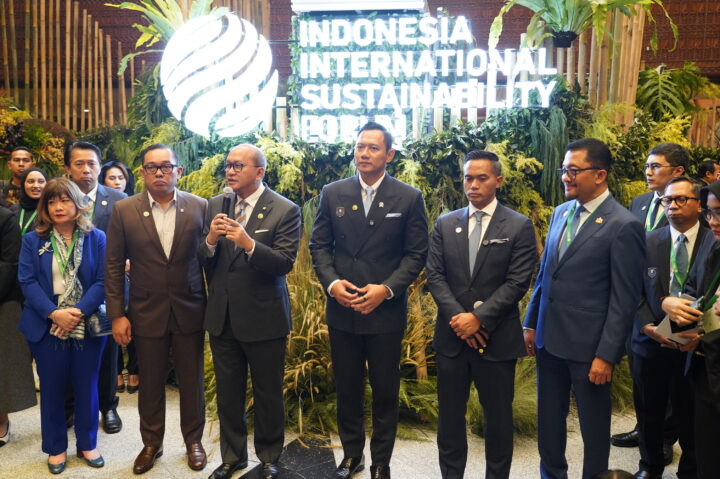

Jakarta, 10 October 2025 – Indonesia once again hosted the Indonesia International Sustainability Forum (ISF) 2025, a cross-sectoral collaborative platform aimed at driving sustainable investment and accelerating the transition towards a green economy. The event was held at the Jakarta International Convention Center (JICC) from 10–11 October 2025, co-organized by the Coordinating Ministry for Infrastructure and Regional Development, the Ministry of Investment and Downstreaming/Investment Coordinating Board (BKPM), and the Indonesian Chamber of Commerce and Industry (Kadin).
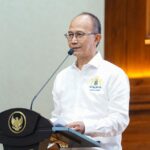
ISF 2025 was officially opened on Friday morning, 10 October 2025, by Coordinating Minister for Infrastructure and Regional Development Agus Harimurti Yudhoyono (AHY), Minister of Investment and Downstreaming/Head of BKPM Rosan P. Roeslani, and Kadin Indonesia Chairman Anindya Novyan Bakrie.
The forum welcomed over 10,000 participants from Indonesia and abroad, including representatives from government institutions, state-owned enterprises, businesses, academia, global investors, financial institutions, and international organizations.
Over the two-day forum, 62 speakers 25 national and 37 international shared their insights, including prominent leaders from global corporations, multilateral institutions, and sustainability thought leaders.
In his opening remarks, Minister AHY emphasized that sustainability should no longer be seen as a burden or an additional responsibility for businesses. Rather, it must be positioned as a fundamental pillar for Indonesia’s long-term growth.
“Sustainability is not only about protecting the environment it’s about how we grow, how our economy can be faster, more efficient, and cleaner at the same time. A sustainable economy advances progress without depleting the resources that sustain it. In this regard, sustainability is both a moral calling and an economic strategy,” said AHY.
Carrying the theme “Investing for a Resilient, Sustainable, and Prosperous World”, ISF 2025 is not just a global forum, but also a catalyst for concrete action in green, blue, and circular economy development.
Minister Rosan P. Roeslani explained that the government is currently prioritizing the development of Waste to Energy (WtE) projects, with 10 cities selected for the initial phase. The project has attracted the interest of 192 companies globally.
“Indonesia holds vast renewable energy potential nearly 3,700 gigawatts, consisting of 3,294 GW solar, 155 GW wind, 95 GW hydro, 63 GW tidal, 57 GW bioenergy, and 23 GW geothermal. However, current utilization remains below 1%, or around 15.2 GW,” Rosan stated.
“This makes Indonesia a highly attractive destination for global investors with the technology and capital to develop large-scale green energy projects,” he added.
In his remarks, Kadin Chairman Anindya Novyan Bakrie underscored the importance of strong synergy between the business sector and the government in building an inclusive and competitive green economy.
“To achieve Net Zero, Indonesia holds a USD 3.8 trillion investment opportunity equivalent to around 4% of the country’s cumulative GDP from 2025 to 2050. We must not let this opportunity pass,” said Anindya, known fondly as Anin.
“Indonesia’s private sector must lead in four critical areas: accelerating the climate transition through innovation and investment; driving green finance; tapping into the immense potential of our national carbon market; and developing future-ready green skills and talent.
This is not just a vision it’s a clear roadmap toward Indonesia’s green economy. What matters most now is how we execute it concretely and collaboratively.”
The ISF 2025 program features a dynamic agenda, including plenary sessions, thematic discussions, high-level dialogues, as well as an exhibition and science corner showcasing sustainable research and innovation from top Indonesian universities, including: Universitas Indonesia (UI), Bandung Institute of Technology (ITB), Bogor Agricultural University (IPB), Sepuluh Nopember Institute of Technology (ITS), and Gadjah Mada University (UGM).
One of the highlight sessions, the High-Level CEO Dialogue, was facilitated by the World Business Council for Sustainable Development (WBCSD) and attended by more than 30 global CEOs from across the industrial, energy, and financial sectors.