Surabaya – Indonesia’s participation in BRICS and its ongoing accession process to the Organisation for Economic Co-operation and Development (OECD) open two strategic avenues for the national economy. OECD membership could serve as an opportunity to strengthen governance, regulations, standards, and the investment climate, while BRICS offers opportunities to expand markets, investment, financing, technology, and supply chains.
The impact is expected to be felt directly in East Java, which has a strong industrial, trade, export-import, logistics, food, and manufacturing base. Therefore, business readiness will be key to ensuring that these opportunities generate added value for the regional economy.
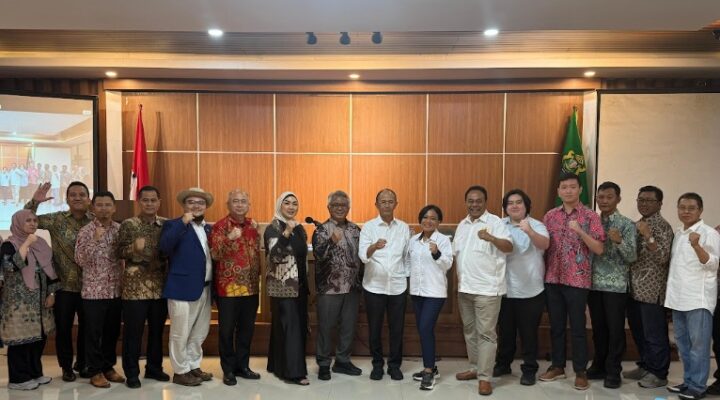
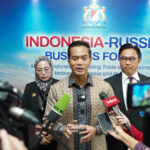
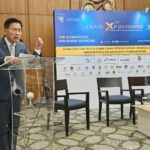
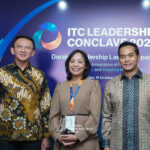
This was highlighted during the Technical Consultation Forum with Business and Industry Stakeholders, themed “Understanding Indonesia’s Strategic Interests in the OECD and BRICS,” jointly organized by the Ministry of Foreign Affairs of the Republic of Indonesia and the Coordinating Ministry for Economic Affairs of the Republic of Indonesia at Graha Kadin East Java, Surabaya, on Thursday (August 27, 2026).
Chairman of Kadin East Java Adik Dwi Putranto emphasized that the business community should not view the OECD and BRICS as competing alternatives. Instead, both can be leveraged simultaneously to strengthen Indonesia’s economic position.
“For Indonesia, the issue is not whether to choose the OECD or BRICS. More importantly, we need to determine how we can leverage both the OECD and BRICS simultaneously to strengthen our national economic position,” Adik said.
According to Adik, the success of international cooperation should be measured by tangible benefits, ranging from increased exports, stronger industries, and job creation to technology transfer and the advancement of MSMEs.
“The more options we have, the stronger our bargaining position will be. Therefore, the spirit of ‘navigating between two reefs’ does not mean that we are afraid of positioning ourselves between two major powers. Instead, we must ensure that Indonesia itself remains at the helm, with national interests as our compass and the people’s welfare as our ultimate destination. The OECD is not the final destination. BRICS is not the final destination either. The ultimate destination is Indonesia,” Adik explained.
Meanwhile, Chair of the Standing Committee on Business at OECD at Kadin Indonesia, Rina Zoet, said East Java holds an important position in assessing the tangible impact of reforms promoted by the OECD. East Java’s economic growth in 2026 stood at 5.33 percent, with a projected range of 4.9–5.7 percent, supported by manufacturing, trade, agriculture, and exports.
“The success of OECD reforms will ultimately be determined by their impact on factories, exporters, suppliers, workers, and MSMEs in East Java,” Rina said.
According to her, the greatest opportunities emerge when standards translate into market access. Improvements in quality, traceability, and efficiency can open up higher-value supply chains for manufacturers. Regulatory certainty can also attract investment, technology, and long-term partnerships, while digitalization and compliance support can create opportunities for MSMEs to enter industrial ecosystems.
“The green transition also presents business opportunities through energy efficiency, circularity, and green financing. At the same time, skills and safety standards can improve job quality and talent productivity,” she said.
Furthermore, Head of the Center for Multilateral Policy Strategy at the Foreign Policy Strategy Agency of the Ministry of Foreign Affairs of the Republic of Indonesia, Masni Eriza, said the forum provided an opportunity for the government to hear directly from the business community regarding Indonesia’s OECD accession process and its participation in BRICS.
“Our presence in Surabaya is aimed at engaging in dialogue and directly listening to the aspirations and perspectives of business and labor stakeholders, particularly on issues related to the OECD and G20,” she said.
According to Masni, input from the business community is important because international economic policies will directly affect investment, trade, and industry. The range of sectors represented at the forum also demonstrated the breadth of East Java’s interests in these developments, from coconut exporters, seafood processors, livestock, and timber to retail, food and beverages, logistics, and shipping.
She explained that the complexity of the global economy requires Indonesia to strengthen its resilience through broad and adaptive cooperation. Indonesia, she said, has consistently positioned itself as a bridge builder capable of bringing together various economic powers around the world.
“The more diverse our options are, the greater our room for maneuver in pursuing an independent and active foreign policy,” she said.
Masni explained that the OECD serves as a policy forum and knowledge hub that helps countries formulate policies, develop standards, and share best practices. The OECD currently has 38 member countries and eight countries undergoing accession processes, including Indonesia and Thailand.
Of the 240 OECD instruments included in Indonesia’s accession process, 45 instruments are fully aligned, 181 are partially aligned and still require adjustments, while 13 instruments are not yet fully aligned.
According to Masni, the accession process is not merely about aligning regulations, but also ensuring that such adjustments do not compromise national interests and instead enhance industrial competitiveness.
“We must ensure that efforts to align our regulations do not undermine our competitiveness or that of our industries. On the contrary, these adjustments must strengthen the competitiveness of the national business and industrial sectors,” she said.
Meanwhile, Indonesia’s membership in BRICS since January 2025 has expanded its scope for cooperation with developing countries and emerging economies, particularly in trade, finance, local currencies, industry, energy, and strategic resources.
Masni said changes in the global trade landscape should be leveraged to diversify markets, attract investment, and strengthen domestic production. Indonesia holds strategic positions in the energy, critical minerals, food, fertilizer, and manufacturing sectors.
“Indonesia must be able to leverage these changes in the global trade landscape to strengthen national industries. Trade is not merely about buying and selling; it is also an instrument for strengthening production, investment, and national economic resilience,” she said.
Furthermore, Acting Assistant Deputy for Multilateral Economic Cooperation at the Coordinating Ministry for Economic Affairs of the Republic of Indonesia, Cahyadi Yudodahono, added that the 38 OECD member countries account for approximately 80 percent of global trade and 41.1 percent of global GDP.
“Indonesia currently ranks 16th in the world by GDP. If Indonesia becomes an OECD member, this position would hypothetically place Indonesia at around 12th among OECD member countries,” he concluded.