


Author: Primus Dorimulu – Head of Communications, Kadin Indonesia
Jakarta – Although upper- and upper-middle-income groups account for around 70% of total household consumption, the role of the lower-middle-income segment which contributes approximately 17% of national consumption—requires serious policy attention from the government. With a population of around 70–75 million people, this group plays a crucial role in driving economic growth. However, when their incomes come under pressure due in part to layoffs and challenging business conditions they have yet to receive adequate policy support.
Approximately 35 million people, or about 12.3% of Indonesia’s population, are currently registered as recipients of government cash transfer assistance, contributing around 13% to total household consumption.
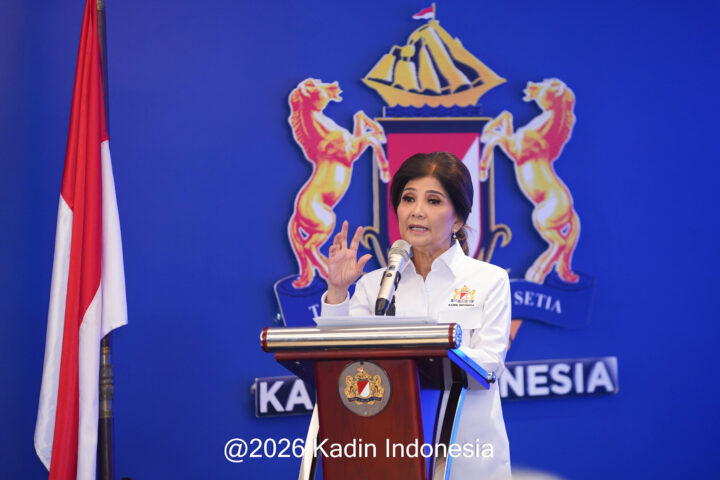
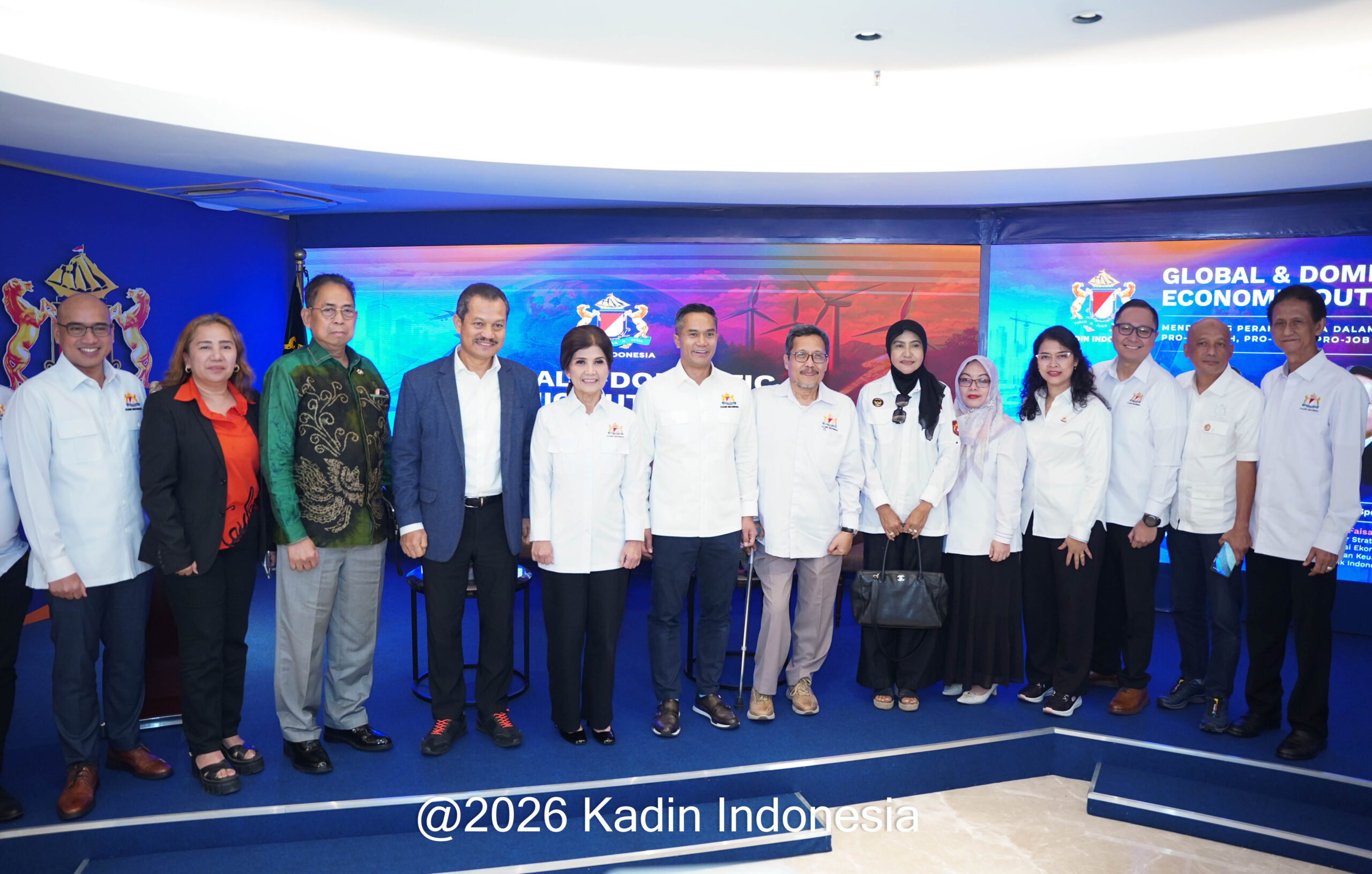
“This is clearly a homework assignment that must now become a policy priority,” said Aviliani, Vice Chairman for Macro–Micro Economic Policy Analysis at Kadin Indonesia, during the opening of the Global and Domestic Economic Outlook 2026: Encouraging the Role of the Private Sector in Economic Growth—Pro-Growth, Pro-Poor, Pro-Job, and Pro-Environment seminar hosted by Kadin Indonesia on Thursday (January 15, 2026).
Aviliani explained that household consumption remains the main pillar of Indonesia’s Gross Domestic Product (GDP), contributing approximately 56%. Meanwhile, the contribution of investment to GDP has stagnated at around 28–30%. At the same time, fiscal space has continued to narrow. In the third quarter of 2025, government spending contributed only about 7% to GDP, a sharp decline from around 12% recorded in previous decades.
“These conditions help explain why Indonesia’s economic growth over the past decade has hovered around 5%. Some even joke that at 5% growth, the economy would still expand even if the government were asleep, because people must spend simply to survive,” Aviliani remarked.
Therefore, she argued, to achieve more inclusive growth approaching 8%, investment must be accelerated aggressively. Investment is key to ensuring that the lower-middle-income group estimated at around 75 million people can access decent jobs and incomes, enabling them to gradually move up into the middle and upper-middle classes.
Government spending is still expected to act as a growth catalyst, despite increasingly limited fiscal space due to a growing number of priority programs. These include the Free Nutritious Meals (MBG) program, Sekolah Rakyat (People’s Schools), Koperasi Merah Putih, and the construction of three million housing units, all of which require substantial budget allocations.
Aviliani added that during the administration of President Joko Widodo (2014–2024), a large share of state spending was absorbed by infrastructure development. Under President Prabowo Subianto, however, budget priorities have shifted toward programs aimed at improving human capital quality, which are expected to drive more sustainable economic growth. In the 2026 State Budget, funding for the MBG program alone is estimated to approach IDR 335 trillion.
Beyond the lower-middle-income group, Aviliani also highlighted the condition of micro, small, and medium enterprises (MSMEs), often described as the backbone of the economy, yet still facing serious challenges in practice. On the supply side, access to financing such as People’s Business Credit (KUR) is relatively available. However, on the demand side, many MSMEs lack sufficient market access, resulting in suboptimal credit absorption and heightened risks of non-performing loans.
“Many of our MSMEs are merely surviving, not scaling up,” Aviliani said. She noted that most MSMEs fall within the 17% lower-middle-income segment, meaning limited market access keeps their incomes stagnant and constrains growth.
In this context, Aviliani emphasized the strategic role of the business sector—particularly Kadin members in building closed-loop ecosystems by integrating MSMEs into larger industrial supply chains. By becoming part of broader supply chains, MSMEs are expected to improve scale, income, and productivity.
The food sector was identified as the most realistic entry point for building such partnerships, in line with the government’s agenda to achieve food self-sufficiency. Farmers and livestock producers can be integrated into more structured supply chains. In addition, the manufacturing sector needs to be revitalized, given its strong multiplier effect on job creation and economic growth.
Aviliani stressed that the reason the 2026 economic outlook was discussed early in the year was to provide the business community with a clearer understanding of national and regional economic prospects, as well as evolving global geo-economic and geopolitical dynamics. With this understanding, Kadin is expected to play a more active role in promoting inclusive and sustainable economic growth.
In closing, Aviliani expressed appreciation for the strong enthusiasm shown by seminar participants, with more than 180 attendees participating offline and around 150 joining online. She also conveyed her gratitude to government officials, Kadin leaders, members of parliament, academics, and speakers who contributed to the discussion on Indonesia’s economic outlook for 2026.
According to Aviliani, comprehensive dialogue between the government, the business community, and academia is essential to formulating well-targeted policies. In this way, economic growth will not rely solely on consumption by upper-income groups, but will also lift the lower-middle-income segment and MSMEs as the foundation of Indonesia’s future economic resilience.