JAKARTA — There is no sufficient reason for Indonesia not to remain optimistic heading into 2026. Despite a challenging global environment, national economic performance has shown significant improvement. In 2025, economic growth reached 5.11%, the highest among the Group of Twenty (G20) countries. In the fourth quarter of 2025, growth even reached 5.39%, the highest level since the post-COVID-19 recovery period.
Entering 2026, several flagship programs of President Prabowo Subianto—particularly the construction of three million homes and the Free Nutritious Meals (MBG) program—have begun to show positive impacts on economic growth and job creation. Fiscal authorities have also expressed their commitment to accelerating the disbursement of the 2026 state budget from the beginning of the first quarter.
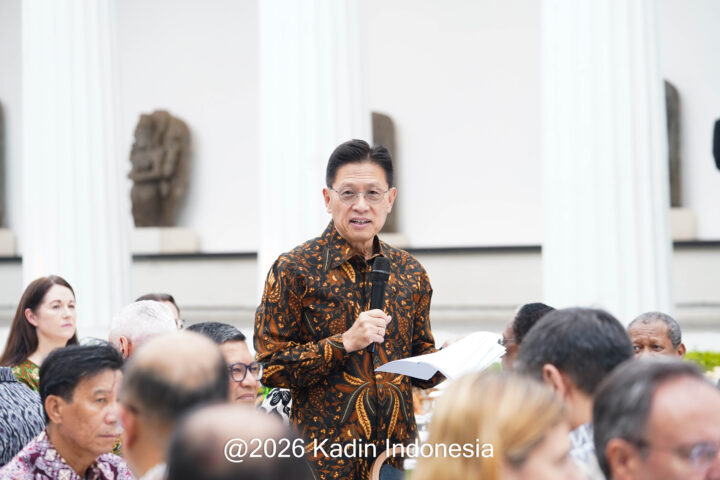
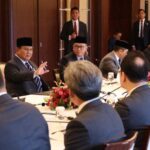
“If we look at various economic indicators, there is no strong reason for us not to be optimistic entering 2026. We are entering the year with strong economic fundamentals and healthy fiscal conditions,” said James Riady, Coordinating Vice Chair for Foreign Affairs at Kadin Indonesia, during the Kadin Indonesia Diplomatic–Economic Breakfast event at the National Museum in Jakarta on Friday (13/02/2026).
The meeting was attended by Indonesia’s Vice Minister of Culture Giring Ganesha, the Secretary General of the Ministry of Foreign Affairs, several director generals from various ministries, Vice Chair for Foreign Relations Bernardino M. Vega, Vice Chair for Trade and International Agreements Pahala Mansury, members of Kadin Indonesia’s bilateral and permanent committees for foreign affairs, as well as regional Kadin leaders. The event is part of Kadin’s monthly agenda coordinated by James Riady.
Consistent Growth Momentum
Throughout the four quarters of 2025, economic growth showed a consistent upward trend, peaking at 5.39% in the fourth quarter. One of the driving factors was increased government spending, which rose by as much as 44% during that period.
“This is a very positive momentum and an achievement worth appreciating. Indonesia has become one of the fastest-growing economies among G20 members,” James said.
The 5.39% growth recorded in the fourth quarter of 2025 was the highest since 2022, when Indonesia rebounded from the pandemic. The trend is expected to continue into 2026. Developments on the ground have also been encouraging.
Retailers are actively searching for locations to open new outlets, shopping centers are seeing rising demand, many sectors reported strong performance in the fourth quarter, and business activity in January remained solid. Domestic demand, he emphasized, remains vibrant and healthy.
Massive Housing Development
Entering 2026, several government programs—particularly the three-million-home construction initiative and the Free Nutritious Meals (MBG) program—are beginning to produce positive results. According to James, the public is now witnessing the emergence of significant structural growth drivers.
“One of the most important initiatives is the government’s large-scale housing development program. Indonesia still faces a considerable housing deficit,” he said.
The program aims to provide millions of families who do not yet own homes with real opportunities for homeownership. “This is not merely a social program, but a powerful economic engine that can drive growth and equitable development,” he added.
Sustained housing development will create large-scale employment, stimulate the construction, building materials, logistics, and financial services sectors, and could contribute an additional 1%–1.5% to GDP growth. The housing sector has a direct and rapid impact on job creation and economic expansion.
Building Trust
James emphasized that the foundations of economic growth are shaped not only by macroeconomic figures and fiscal policy but also by trust among nations. “Trade follows trust. And trust begins with understanding. Culture is where that understanding begins,” he said.
Before contracts are signed, investments realized, or factories built, nations must first learn to understand and respect one another. This is where the deep connection between diplomacy, culture, and economics is formed. For that reason, Kadin’s Diplomatic–Economic Breakfast is not merely ceremonial but a practical working forum where diplomacy meets real economic needs.
He noted that Indonesia enters 2026 amid a rapidly changing world. Global growth is uneven, trade patterns are being reshaped, supply chains reorganized, and capital flows increasingly selective. However, history shows that periods of global adjustment also create new opportunities, particularly for countries offering stability, large economic scale, and credible partnerships.
“For Indonesia, the question is not whether the world is changing, but how we position ourselves clearly and credibly within that change,” James said.
He added that Indonesia recently conducted constructive discussions with several key partners and is looking forward to the signing of an important trade agreement with the United States on February 19 in Washington, D.C., reflecting growing confidence in Indonesia as a stable and reliable economic partner.
With relatively stable investment flows, improving commodity conditions, strong domestic consumption, and more accelerated government spending programs, all major GDP components are moving in support of sustained growth in 2026.
“Our optimism is not emotional optimism. It is structural, data-driven, and rooted in real economic activity on the ground,” he stressed.
Cultural and Economic Diplomacy
However, James reminded that optimism alone is not enough. The challenge is translating stability into shared prosperity and tangible partnerships. Indonesia’s future growth will not be determined only in conference rooms but also in industrial zones, tourism destinations, agricultural regions, and emerging secondary cities across the archipelago.
He also highlighted the importance of the cultural dimension and the presence of the Vice Minister of Culture at the forum. Culture, he said, is not only historical heritage but also tourism, creative industries, culinary diplomacy, film, fashion, music, and digital content. In many cases, culture becomes a nation’s first ambassador long before trade agreements are signed.
When societies respect one another’s cultures, business relationships become easier, deeper, and more sustainable. “Cultural diplomacy and economic diplomacy are not separate tracks. They are two sides of the same coin,” he said.
Concluding his remarks, James emphasized that despite global uncertainty, Indonesia’s direction remains clear: political stability, a large and growing domestic market, strategic natural resources, and a strong commitment to long-term partnerships.
As Kadin, he affirmed the organization’s commitment to serve as a bridge between government and the business community, between foreign partners and local implementation, and between national strategy and regional readiness. “Thank you for your friendship, partnership, and trust in Indonesia,” James concluded.