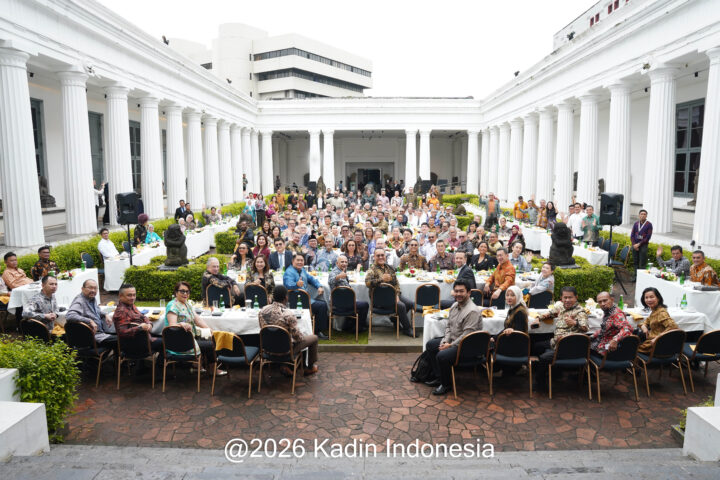
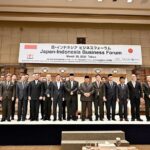
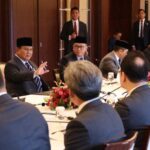
JAKARTA — The Foreign Affairs Division of Kadin Indonesia once again held its Kadin Monthly Economic Diplomacy Breakfast at the National Museum in Central Jakarta on Friday (13/02/2026).
This edition, packaged as a Special Event Ambassadors Gathering, was attended by 56 ambassadors from friendly countries and their representatives, including those from Malaysia, Singapore, India, South Korea, Vietnam, Australia, Brazil, France, Germany, the Netherlands, and New Zealand. In total, around 120 diplomats and business leaders participated in the forum.
Coordinating Vice Chair for Foreign Affairs of Kadin Indonesia, James Riady, highlighted one of the government’s strategic agendas—namely the large-scale housing program being advanced by President Prabowo Subianto.
“The most significant initiative is the government’s large-scale housing development program. Indonesia still faces a substantial housing crisis. The new housing program initiated by the President aims to address this challenge on a massive scale, providing millions of people who currently do not own homes with a real opportunity to do so. This is not merely a social issue, but also a powerful economic engine,” said James, who also represented Kadin Indonesia Chairman Anindya Bakrie at the event.
James stressed that sustained housing development will create large-scale employment while stimulating sectors such as building materials, logistics, and financial services.
“In the long term, this sector has the potential to add around 1 to 1.5 percent to GDP growth. Few sectors have such a direct and rapid impact on job creation and economic activity as housing,” he explained.
He also pointed to positive developments in the trade sector. According to James, Indonesia has engaged in constructive discussions with several key partners, which are expected to yield significant improvements. He emphasized that the Kadin Monthly Economic Diplomacy Breakfast is not merely ceremonial, but a practical forum that bridges diplomacy with real economic needs.
“This is where business leaders speak openly and partnerships move from goodwill to tangible results,” he said.
James added that this year’s collective task is to translate diplomatic goodwill into concrete projects.
“We must move from MoUs to the construction of factories, ports, agricultural estates, hotels, and digital infrastructure. Indonesia’s future growth will not be determined solely in meeting rooms, but in investment zones, tourism destinations, agricultural regions, and rapidly growing secondary cities,” he stressed.
He also underscored the importance of culture in economic diplomacy. Culture, he noted, encompasses not only heritage, but also tourism, creative industries, culinary arts, film, fashion, music, and digital content.
“In many cases, culture is a country’s first ambassador long before trade agreements are signed. When societies respect each other’s cultures, business relationships become easier, stronger, and more sustainable,” James said.
James further observed that the first year of President Prabowo’s administration demonstrated a highly successful leadership transition, laying the foundation for stronger economic growth. He noted that domestic demand remains robust, reflected in aggressive retail expansion and the opening of new outlets.
“Conditions on the ground show that the economy is performing very well, even though narratives abroad may sometimes differ,” he explained.
Meanwhile, Vice Minister of Culture Giring Ganesha, representing Minister of Culture Fadli Zon, stated that the Ministry of Culture aims to transform museums into inclusive spaces for all communities.
“The Ministry of Culture wants to show that museums are now highly inclusive spaces for everyone. When Mr. James proposed hosting a breakfast event here at the National Museum, we immediately welcomed the idea. For us, people-to-people connections through culture are also a way to facilitate smoother economic and trade relations,” Giring said.
Additionally, Secretary of the Ministry of Investment and Downstreaming/Chief Secretary of BKPM, Mohammad Rudy Salahuddin, emphasized the importance of close collaboration between the business sector and the government.
“The business community and the government must walk side by side and understand each other better than before. Only with this positive energy can we face future challenges. There is no difficulty that cannot be overcome if we understand each other and work together,” he stated.
Also present at the event were Vice Chair for Foreign Relations Bernardino M. Vega, Vice Chair for Trade and International Agreements Pahala Mansury, chairs of Kadin Indonesia’s bilateral committees and permanent foreign affairs committees, as well as several regional Kadin leaders, including Aceh Chairman Muhammad Iqbal Piyeung, North Sumatra Chairman Firsal Dida Mutyara, North Kalimantan Chairman Kilit Laing, West Nusa Tenggara Chairman Faurani, Jambi Chairman Usman Sulaiman, Central Sulawesi Chairman Moh. Nur Dg Rahmantu, and East Nusa Tenggara Chairman Bobby Lianto.