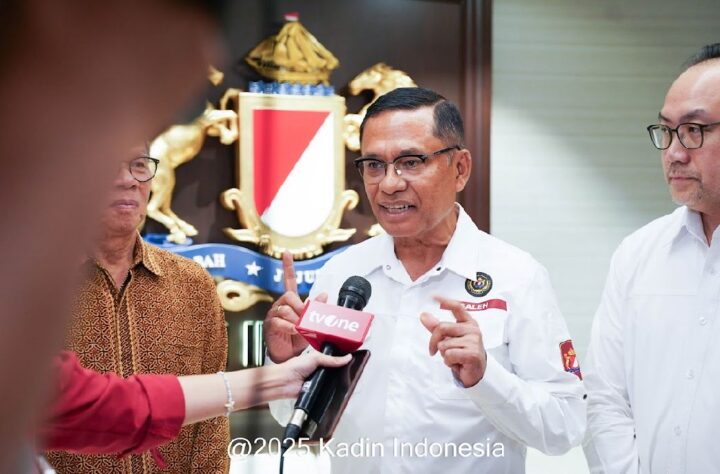
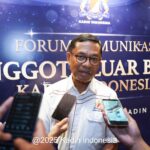
Jakarta - The Indonesian Chamber of Commerce and Industry (Kadin) has expressed its appreciation for the swift response of Deputy Speaker of the House of Representatives (DPR RI), Sufmi Dasco Ahmad. The legislator’s response not only aligns with the aspirations of industry players but also safeguards the national automotive industry from potential collapse and prevents losses that could have affected the Merah Putih Village Cooperatives (Kopdes).
“We at Kadin extend our highest appreciation to Mas Dasco and commend his prompt response. Just imagine if the 105,000 vehicles to be used by Kopdes Merah Putih were imported products—what about their after-sales service? Such a policy could turn these imported cars into scrap within a few years due to spare parts constraints,” said Kadin Vice Chairman for Industry, Saleh Husin, on Monday (February 23, 2026).
As reported by various media outlets, Dasco stated that he had advised the government to postpone the plan to import 105,000 vehicles from India for the Merah Putih Village/Sub-district Cooperative (KDKMP) program. The Gerindra Party lawmaker noted that the import plan should be delayed as President Prabowo Subianto is currently on an overseas working visit.
“I have conveyed the message to the government that the plan should be postponed for the time being, considering that the President is still abroad,” Dasco said.
According to Dasco, President Prabowo will discuss the plan in detail with various stakeholders. In addition, the President will seek input and assess the readiness of domestic companies.
“We have coordinated with automotive industry players, including component manufacturers. They have appealed to the President to halt the ongoing car imports from India,” Saleh added.
He emphasized that if Indian manufacturers are serious about entering the market, they should establish manufacturing plants in Indonesia, as has been done by Toyota, Suzuki, Honda, Daihatsu, Mitsubishi, Hino, Hyundai, DFSK, BYD, and VinFast. The government, he said, must ensure a level playing field for all business actors.
Saleh further stated that the importation of completely built-up (CBU) vehicles by PT Agrinas Pangan Nusantara could undermine the domestic automotive industry, fail to stimulate the economy, and contradict the government’s industrialization agenda. President Prabowo’s target of achieving 8 percent economic growth could be jeopardized if national industries do not expand.
All stakeholders, particularly state-owned enterprises (SOEs), must align their policies with President Prabowo’s directives. He has repeatedly underscored the importance of downstreaming and industrialization to increase value-added output, expand employment, and boost exports. The automotive industry has significant backward and forward linkages.
“We should support the President’s vision, not undermine existing investments and industries,” Saleh stressed.
National media previously reported that the government appointed PT Agrinas Pangan Nusantara to oversee the physical development of the Merah Putih Village/Sub-district Cooperative (Kopdes Merah Putih) program, a national initiative aimed at strengthening village-based cooperative economies. The assignment was granted through Presidential Instruction (Inpres) No. 17 of 2025 on the acceleration of the establishment and development of Kopdes Merah Putih.
However, Saleh noted that in implementing the program, Agrinas must coordinate with relevant ministries, particularly the Ministry of Industry and the Ministry of Cooperatives.
“We have checked directly. Both ministers were completely unaware of the Rp24.66 trillion import of 105,000 commercial vehicles. This is not a small figure. If allocated to purchase domestic products, the value-added and multiplier effects would be substantial,” said the former Minister of Industry.
Parties intending to import vehicles should carefully study the applicable regulations. The government, through the Ministry of Industry, issued Minister of Industry Regulation No. 23 of 2021 concerning licensing procedures, industrial development, and technical requirements for the four-wheeled (or more) motor vehicle industry. Effective as of September 1, 2021, the regulation serves as a foundation to strengthen the national automotive industry structure while promoting higher value-added and the use of local components.
The regulation governs the assembly of vehicles in completely knocked down (CKD) and incompletely knocked down (IKD) forms, as well as the manufacturing of four-wheeled vehicle components. Previously issued CKD/IKD approvals remain valid until their expiration, but industry players are required to comply with the new standards under Regulation 23/2021.
“The government also emphasizes the obligation to deepen the industrial structure and increase local content as part of its import substitution strategy and efforts to enhance national competitiveness,” Saleh explained.
In addition to licensing and industrial development aspects, the regulation introduces stricter technical requirements, including carbon dioxide (CO₂) emissions testing and vehicle fuel consumption standards. These provisions align with the national energy transition agenda and the development of electric vehicles.
Through this regulation, the government aims for the national automotive industry not only to grow in production volume but also to move up the value chain in terms of technology, energy efficiency, and contribution to the green economy.