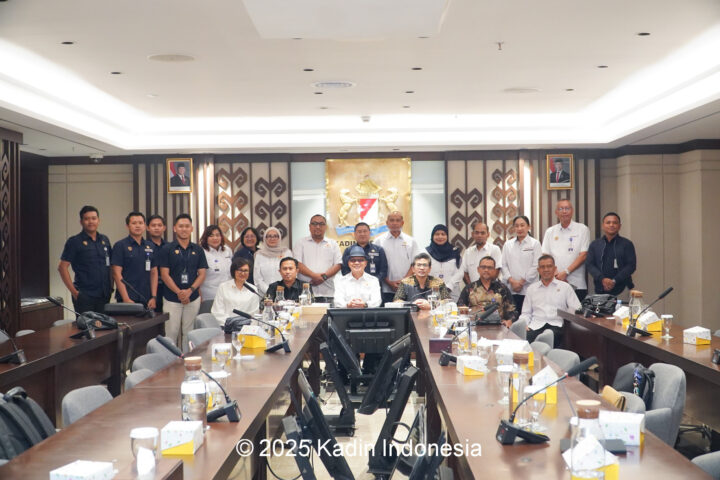
Jakarta - The Indonesian Chamber of Commerce and Industry (Kadin) and the Transportation Human Resources Development Agency (BPSDMP) of the Indonesian Ministry of Transportation (Kemenhub) will form a Transportation Human Resources Sectoral Committee as a forum for collaboration and coordination among stakeholders to strengthen human resources in the transportation sector.
Deputy Chairman of Vocational and Certification Affairs at Kadin Indonesia, Adi Mahfudz Wuhadji, emphasised that vocational development should not stop at the conceptual stage, but must be implemented in practice. He highlighted the importance of transforming vocational human resources, starting with teachers and educational institutions.
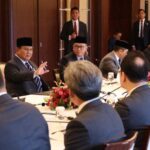
‘There are still many curricula that are not in line with industry needs, and many teachers do not have field experience,’ he said during a meeting between Kadin Indonesia and BPSDMP Kemenhub RI at the Kadin Indonesia Tower, Kuningan, Jakarta (11/12/2025).
Adi also affirmed Kadin's readiness to facilitate coordination through regular hybrid vocational meetings as a forum for coordination between Kadin at the central, provincial, and district/city levels. He conveyed that the main problems in vocational education often lie with the regulators and policy executors, so that system improvements are needed so that the input-process-output of vocational education produces quality outcomes.
The Head of BPSDMP Kemenhub RI, Djarot Tri Wardhono, explained that BPSDMP Kemenhub RI currently manages 20 vocational schools that require syllabus and curriculum updates to be responsive to global competency demands. BPSDMP targets graduates who are able to compete in the international market, especially in the more advanced maritime and aviation sectors. Meanwhile, the land sector needs further strengthening. He also emphasised the importance of regulatory corridors, aligning the curriculum with industry needs, and encouraging the acceleration of the ratification of global standards, including those relating to international licences and driving licences, which are mapped as one of the obstacles to the placement of Indonesian workers abroad.
Deputy Chairman of the Indonesian Chamber of Commerce and Industry (Kadin) for Transportation, Adrianto Djokosoetono, expressed the industry's readiness to support the alignment of human resource capacity with the needs of the transportation and logistics sector. He emphasised the importance of link and match, mapping national and global labour needs, and forming sectoral committees as structured collaborative working forums to respond to the dynamics of the transportation and logistics industry.
Secretary of the Vocational Education and Training Agency (BPSDMP), Wisnu Handoko, added that there are still vocational graduates who have not been absorbed by the industry due to a mismatch in competencies. ‘Standardisation across transport modes and harmonisation of regulations and certification are needed. We are ready to convey technical updates through the sectoral committee forum later,’ said Wisnu.
Meanwhile, Deputy Chairwoman of Tourism at the Indonesian Chamber of Commerce and Industry, Raty Ning, highlighted the issue of Meetings, Incentives, Conferences, and Exhibitions (MICE) certification being too numerous and expensive, thereby hindering implementation in regions such as Bali. She encouraged MICE to become part of the focus of the transport and logistics sectoral committee, given its role in the national competitiveness ecosystem.
Faisal, Assistant Deputy for Industry Capacity Building at the Indonesian Ministry of Tourism, shared his experience in establishing the Sectoral Committee for the Revitalisation of Vocational Education and Training (RPVPV) in Tourism as a reference. He outlined the challenges of supply and demand for human resources in the tourism sector, the imbalance between vocational and academic education, the high unemployment rate among high school and vocational school graduates, and the lack of continuity in competencies.
"The structure of the tourism committee involves ministries or institutions, professional associations, industry associations, academics, professionals, business institutions, and labour unions. The committee operates through four functions, namely advise, design, support, and manage, which are translated into programmes such as plotting job fairs, reviewing the Vocational Education and Training (PVPV) curriculum, reviewing the Indonesian National Work Competency Standards (SKKNI) for tourism, reviewing the Indonesian National Qualifications Framework (KKNI) job occupations, and compiling secretariat guidelines. Funding can be strengthened through support from the International Labour Organisation (ILO)," explained Faisal.
Going forward, Kadin and BPSDMP have agreed to develop a Joint Follow-up Matrix, covering PICs, priority programmes, forms of cross-sector collaboration, and mapping of potential cooperation. The matrix is developed following the model of the Ministry of Tourism in the Tourism Sectoral Committee. Kadin will play a role in coordinating this follow-up with BPSDM Kemenhub and Kemenpar, including the synchronisation of vocational programmes, certification, and industry needs. This effort is expected to accelerate the formation of a strong, effective, and impactful Transportation Human Resources Sectoral Committee for the development of national transportation human resources.
##