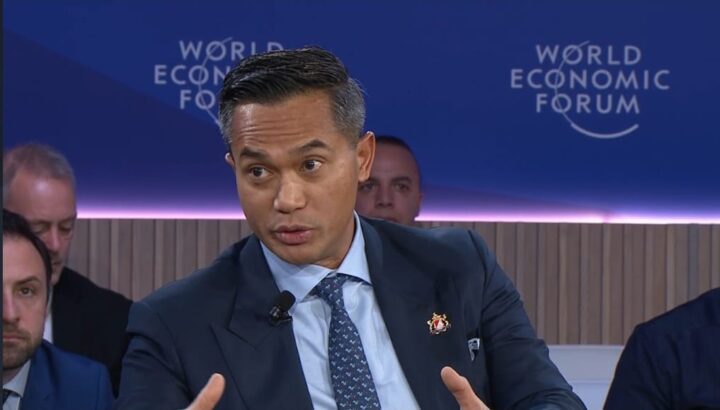
Davos, Switzerland - Chairman of the Indonesian Chamber of Commerce and Industry (Kadin Indonesia), Anindya Novyan Bakrie, emphasized that electrification is a key driver of economic growth, industrial innovation, and improved public welfare in Indonesia.
Speaking at a panel discussion titled “Rise of Electro States” during the World Economic Forum (WEF) 2026 in Davos on Thursday (January 22, 2026) local time, Bakrie—widely known as Anin—highlighted the strategic importance of electrification for Indonesia’s long-term development.
“For Indonesia, electrification truly serves as a key enabler of economic growth, industrial innovation, and social welfare,” Anin said.
He explained that with a population of approximately 285 million people, the majority of whom are young, and an average economic growth rate of around 5 percent over the past three decades, electrification has become a critical foundation for national development.
“Indonesia’s installed power generation capacity has now reached approximately 100 gigawatts, with electricity grid connectivity covering 99 percent across 17,000 islands,” Anin noted.
Nevertheless, challenges remain. He pointed out that around 1 percent of the country, encompassing roughly 10,000 villages and one million households, still lacks access to reliable electricity.
“Grid-related constraints remain a critical issue as Indonesia seeks to expand electricity capacity while ensuring service quality for the public,” he said.
At the same time, these challenges present significant opportunities. Anin stressed that Indonesia possesses strategic advantages, both demographically and in terms of natural resources. Indonesia holds the world’s largest nickel reserves, along with substantial reserves of copper and silica.
“These resources support Indonesia’s downstream industrialization agenda and efforts to maintain energy affordability, especially considering that while Indonesia is the world’s 16th-largest economy, its per capita income remains at around USD 5,000,” he explained.
Anin underscored that Indonesia cannot move forward alone, particularly in areas such as technology and talent development.
“Indonesia is a non-bloc and non-aligned country, allowing us to cooperate with various partners. However, such collaboration must be mutually beneficial and should not create dependency,” he said.
During the discussion, Anin also highlighted the importance of policy consistency and sustainability. The government, through PT PLN (Persero), has set a plan to add 75 gigawatts of new power generation capacity over the next 15 years, with 75 percent sourced from renewable energy.
This plan is particularly notable given Indonesia’s continued role as a producer of fossil fuels, including coal as well as oil and gas.
“Given Indonesia’s geographic characteristics as an archipelagic nation, conventional electrification approaches are not always effective. Therefore, the utilization of solar and wind energy, particularly in eastern Indonesia, is becoming an increasingly relevant solution,” Anin said.
He further emphasized the importance of strong and structured partnerships between the government and the private sector, noting that approximately 65 percent of Indonesia’s USD 1.5 trillion economy is driven by private sector activity.
Beyond supply-side efforts, Anin stressed the need to accelerate electric technology adoption, particularly in transportation, industry, and digitalization. Electrifying public transportation—such as buses and trucks—was cited as an effective initial step to familiarize the public with the benefits of electric vehicles, including reduced emissions, lower noise levels, and improved operational efficiency.
Currently, around 14 percent of new vehicles in Indonesia are electric-powered, a figure expected to continue rising. Indonesia also aspires to become a key player in the global electric vehicle supply chain, serving both Eastern and Western markets, with Europe viewed as a strategic partner.
“For Indonesia’s 285 million people, electrification is not merely an energy issue. It is fundamentally about equity, inclusivity, and public welfare,” Anin concluded.
The panel also featured Henrik Andersen, President and CEO of Vestas; Manon van Beek, CEO and Chair of the Board of TenneT (Netherlands); Daniel ‘Dan’ Marokane, Group CEO of Eskom Holdings (South Africa); and was moderated by Jan Rosenow, climate and energy policy expert from the University of Oxford, United Kingdom.