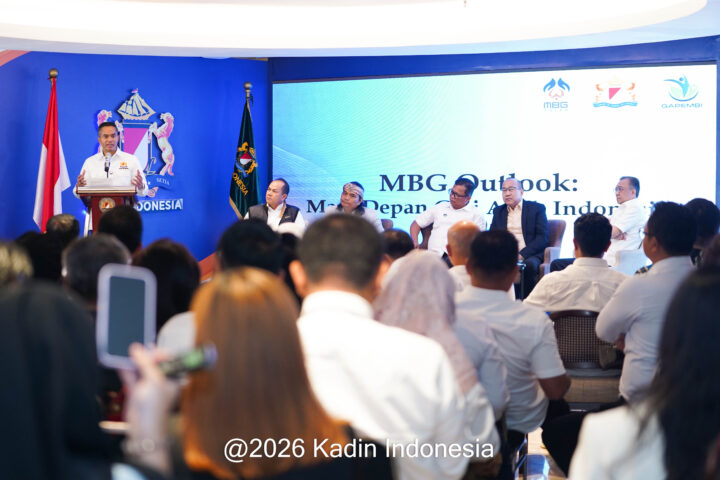
Jakarta – The Indonesian Chamber of Commerce and Industry (Kadin Indonesia), in collaboration with the Indonesian Nutritious Food Entrepreneurs Association (GAPEMBI), held a discussion on the Free Nutritious Meal (MBG) Program Outlook titled “The Future of Indonesian Children’s Nutrition” at the Kadin Indonesia Tower in Jakarta on Wednesday (January 14, 2026).
In his opening remarks, Kadin Indonesia Chairman Anindya Novyan Bakrie emphasized that the MBG program delivers significant benefits both for human capital development and for the business sector.
“If we talk about the national interest, especially children as the future generation, the impact is very clear. From the target of 82 million beneficiaries, the program has currently reached around 55 million children. This is highly meaningful, because we want to produce more engineers, doctors, teachers, and athletes in the future. This is where it all begins,” said Anindya, who is familiarly known as Anin.
Anin revealed that the government has set a target to build 30,000 Nutrition Fulfillment Service Units (SPPG), or MBG kitchens, with more than 20,000 of them already completed.
Within the program, Kadin is actively contributing by developing approximately 1,000 SPPG units, supported by contributions from Kadin members with a total estimated investment value ranging from Rp1.5 trillion to Rp2 trillion.
“The MBG program serves as a strategic entry point for strengthening national food security. The end goal of food security is downstreaming. Agricultural downstreaming only makes sense when there is certainty of demand. Through MBG, food demand is very real. From 52 million beneficiaries today toward 82 million, this means a daily requirement of around 52 million eggs, along with chicken, vegetables, fish, and other food commodities,” Anin explained.
Furthermore, Anin noted that each region has its own leading protein potential, making the MBG program a strong driver of regional involvement. Local governments and business players are competing to secure MBG kitchen locations so they can directly participate in the program.
“What is truly encouraging is that, to date, most MBG kitchens are still operated through independent funding. Kadin is proud to be part of this program. If one kitchen requires around 50 workers, multiplied by 30,000 kitchens, there is a potential absorption of approximately 1.5 million workers. Economically, this could contribute up to an additional 3.5 percent to GDP growth. This is not a small figure and could become one of the key drivers in achieving national economic growth targets,” Anin elaborated.
Anin also stressed that the MBG program opens vast opportunities for Kadin members in the regions and business associations, ranging from supplies of chicken, eggs, tofu, tempeh, vegetables, fruits, and milk. Opportunities are also available in upstream sectors, cold chain systems, food logistics, cooperatives, and the establishment of Protein Task Forces.
Meanwhile, Deputy for Systems and Governance at the National Nutrition Agency (BGN), Tigor Pangaribuan, who attended the event representing BGN Head Dadan Hindayana, underlined that the main challenge for BGN going forward is maintaining stability in food supply and prices.
“The most challenging target for BGN is preventing inflation and food shortages. We hope Kadin, particularly business players in the agriculture and livestock sectors, can expand production capacity. Rice demand alone could reach up to 3 million tons per year,” Tigor stated.
Separately, GAPEMBI Chairman Alven Stony said that discussions surrounding the MBG program represent a strategic issue that has become a major national focus. According to him, the MBG program is one of the priority agendas of President Prabowo Subianto’s administration and has received broad support from various stakeholders.
“This is a hot topic in Indonesia right now. We all support the MBG program as a priority initiative of President Prabowo. Of course, throughout its implementation, criticism is inevitable, and that is important for future improvements,” he said.
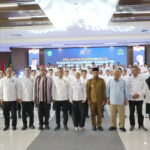
Also attending the event were Kadin Indonesia Vice Chairman and Coordinating Vice Chairman for Export Development Juan Permata Adoe; Vice Chairman for Strategic Infrastructure Development, Rural Development, and Transmigration Thomas Djusman; Head of the Kadin Indonesia MBG Gotong Royong Task Force Chandra Tirta Wijaya; Regional Coordinator of the Kadin Indonesia MBG Gotong Royong Task Force Desi Arianti; Chairman of Kadin West Sumatra Buchari Bachter; and Chairman of Kadin West Nusa Tenggara Faurani.