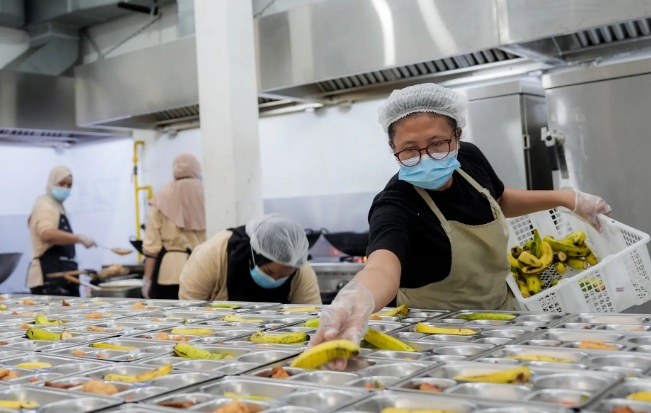
Jakarta - The Chairman of the Bali Provincial Chamber of Commerce and Industry (Kadin Bali), Made Ariandi, has proposed a region-based Standard Operating Procedure (SOP) for the implementation of the Free Nutritious Meals (Makan Bergizi Gratis, or MBG) program. This proposal stems from the understanding that challenges faced by each kitchen vary and cannot be treated uniformly.
“Kadin Bali believes that operational SOPs should not be rigid. The SOP for urban areas in Java, for example, will differ significantly from those in rural or island regions outside Java,” said Made Ariandi in a statement on Thursday (September 25, 2025).
Made Ariandi explained that flexible SOPs would enable the optimization of local food resources, reduce logistics costs, and ensure the freshness of raw ingredients.
He emphasized that the MBG program is a strategic initiative that fundamentally reflects the government's commitment to securing the nation's future through guaranteed access to education, nutrition, and overall welfare. It is a concrete step towards building a strong, resilient, and competitive young generation aligned with the Indonesia Emas 2045 vision.
From a business perspective, the MBG program opens vast opportunities for collaboration between the public and private sectors to drive inclusive and sustainable economic growth. However, a one-size-fits-all approach cannot be applied if the program is to be effective across Indonesia’s diverse regions.
“The geographical, cultural, and resource diversity in each region demands adaptive strategies,” he added.
In addition to region-based SOPs, Made Ariandi also called for continuous improvement strategies to address kitchen-specific challenges. For this, he proposed a digital monitoring system using an application that allows daily reporting and cross-auditing between kitchens.
This flexibility, he said, would not only optimize the use of local food resources and cut logistics costs, but also ensure ingredient freshness.
“It will enable central monitoring teams to better oversee quality and field efficiency,” he noted.
Ariandi underscored that food quality and safety are non-negotiable in the MBG program. Therefore, the implementation of scalable Hazard Analysis and Critical Control Points (HACCP) systems is essential from kitchen operations to the student’s plate.
“This means that every stage from the reception of ingredients, processing, to serving must have critical control points to prevent contamination and ensure hygiene. As a result, the food quality served will be consistently high, regardless of location,” he explained.
Economic Impact of the MBG Program
On this occasion, Made Ariandi also highlighted that the MBG program fundamentally encourages direct participation from the private sector. Assuming a monthly capital and ingredient turnover of IDR 1.2 billion per kitchen, the program has the potential to become a major economic engine at the local level.
Most of the funds would be spent on purchasing raw materials from local farmers, fishers, livestock breeders, and micro, small, and medium enterprises (MSMEs). This would create a large and stable market demand, providing income security for grassroots entrepreneurs.
“It is a tangible economic stimulus that flows directly into the hands of the people, driving grassroots economic growth,” he stated.
Made believes this financial turnover will give rise to new business ecosystems around MBG kitchen sites, including local transportation providers, packaging services, and labor supply agencies.
“It not only creates job opportunities but also builds sustainable business infrastructure,” he added.
On the other hand, Made pointed out that saving IDR 20,000 per child per day on meals and snacks is a substantial benefit. A family with two children could save around IDR 880,000 per month through the MBG program funds that could be reallocated to education savings, micro-business capital, or overall improvements in family welfare.
“This program provides a financial safety net that allows low-income families to move up the economic ladder,” he said.
More than just an economic initiative, Made stressed that the MBG program is a strategic investment in the competitiveness of Indonesia’s next generation. By ensuring proper nutrition from an early age, children can grow up healthy, intelligent, and ready to compete globally. He noted that reducing stunting and improving nutritional intake would significantly enhance children's cognitive development and learning concentration.
“This is the key foundation for building a productive, innovative, and globally competitive workforce in the lead-up to Indonesia Emas 2045,” he explained.
In conclusion, Made emphasized that the Free Nutritious Meals program is a visionary initiative that embodies the state's presence in protecting and preparing the future generation. With strong synergy between the government and private sector, the program not only ensures food provision but also acts as a catalyst for economic growth, drives community participation, and strengthens national competitiveness.
“Kadin is ready to collaborate to ensure this program runs effectively and delivers maximum impact for all Indonesian people,” he affirmed.
Source: Investortrust.id