Jakarta - The Indonesian Chamber of Commerce and Industry (Kadin) has urged President Prabowo Subianto to cancel the plan to import 105,000 commercial vehicles worth Rp 24.66 trillion from India to support the operations of the Merah Putih Village/Subdistrict Cooperatives (KDKMP). The import of completely built-up (CBU) vehicles is deemed likely to undermine the domestic automotive industry, fail to stimulate the national economy, and contradict the government’s industrialization agenda. Moreover, the national automotive industry has expressed readiness to supply the pickup trucks required by KDKMP.
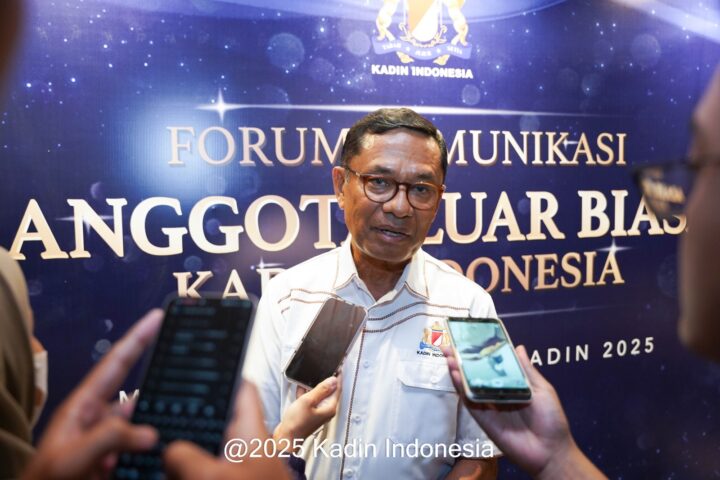
“After receiving input from automotive industry players and associations, we urge the President to cancel the plan to import 105,000 units of commercial vehicles,” said Saleh Husin, Vice Chairman for Industry at Kadin Indonesia, on Sunday (February 22, 2026). The former Minister of Industry added that domestic automotive companies have stated their readiness to meet KDKMP’s demand.
According to Saleh, the pickup truck requirement should serve as momentum to strengthen the national automotive industry. The import of fully built vehicles would have broad implications for the domestic automotive sector that has been carefully developed. He explained that the automotive component industry serving as the backward linkage of vehicle assembly would be adversely affected, threatening the sustainability of domestic car production.
Automotive component industries—including engines, body parts, chassis, tires, batteries, seats, and electronics are crucial to the strength of the automotive supply chain. “The stronger our local component production, the higher the local content (TKDN), job absorption, and multiplier effect on the economy. Conversely, if the market is dominated by fully imported vehicles, the national component industry will come under pressure and the downstreaming and industrialization agenda could weaken,” Saleh emphasized.
In his 17 priority programs and eight priority agendas, President Prabowo has underscored the importance of downstreaming and industrialization to create jobs and achieve economic justice. These programs are believed to increase value-added production, expand employment opportunities, and generate multiplier effects across the economy. Through downstreaming and industrialization, technology transfer and local human resource development can also take place.
Indonesia has actively conducted roadshows in various countries to attract foreign investment in building industries domestically, including in the automotive sector. Therefore, industries already established in the country must be safeguarded through sound regulation. “Importing CBU vehicles is tantamount to killing a growing domestic automotive industry,” Saleh said.
As reported by national media, the government has appointed PT Agrinas Pangan Nusantara to implement the physical development of the Merah Putih Village Cooperative (Kopdes Merah Putih) program, a national initiative designed to strengthen village-based cooperative economies. The assignment was formalized through Presidential Instruction (Inpres) No. 17 of 2025 on the acceleration of the establishment and development of Kopdes Merah Putih.
PT Agrinas Pangan Nusantara is currently proceeding with the import of 105,000 vehicles from India to support KDKMP operations. The imports consist of 35,000 units of 4x4 pickup trucks produced by Mahindra & Mahindra Ltd., 35,000 units of 4x4 pickups from Tata Motors, and 35,000 six-wheel trucks from the same manufacturer. Deliveries will be carried out gradually throughout 2026. To date, 200 Mahindra pickup units have arrived in Indonesia.
At present, several manufacturers including Suzuki, Isuzu, Mitsubishi, Wuling, DFSK, Toyota, and Daihatsu produce light commercial vehicles domestically. National pickup production capacity exceeds 400,000 units per year, much of which remains underutilized.
Most domestically produced vehicles are 4x2 variants with local content (TKDN) exceeding 40% and are supported by extensive after-sales service networks. For 4x4 variants, domestic manufacturers are also capable of production, although preparation time would be required. Industry players hope the government will provide opportunities for national manufacturers to participate in fulfilling the operational vehicle needs of Kopdes Merah Putih as part of strengthening the domestic automotive ecosystem.
Saleh noted that vehicle import policy under the authority of the Ministry of Trade must be aligned with the industrialization mandate of the Ministry of Industry. Synchronization between the two ministries is crucial to ensure that President Prabowo’s broader agenda of strengthening domestic industry is not undermined by overly lenient trade policies.
From a regulatory standpoint, motor vehicles are classified as freely importable goods. Under Ministry of Trade regulations, cars are not categorized as prohibited or restricted goods. Therefore, vehicle imports do not require an Import Approval (PI) or additional technical recommendations. Importers only need a Business Identification Number (NIB), an Importer Identification Number (API), and compliance with customs and technical standards.
However, the Ministry of Industry is mandated to strengthen the national automotive sector as a priority industry under the Making Indonesia 4.0 roadmap. The government has consistently promoted higher local content (TKDN), provided incentives for low-emission vehicle production, and developed the domestic component ecosystem. National pickup production capacity already reaches hundreds of thousands of units annually, with average local content exceeding 40%.
In the context of the KDKMP program, this difference in approach has drawn attention. Legally, importing operational vehicles is permissible and does not violate regulations. “However, from an industrial policy perspective, the government must exercise caution so that village cooperative development does not inadvertently weaken domestic automotive factory utilization,” Saleh stated.
President Prabowo’s eight priority agendas explicitly emphasize continuing downstreaming and industrialization based on national resources. The spirit of this policy is clear: economic development must rely on strengthening national production capacity rather than increasing import dependence.
Therefore, Saleh continued, trade policy cannot stand alone. The government has regulatory space to design schemes that better support domestic industry for example, prioritizing high-TKDN vehicles, implementing domestic assembly schemes (CKD and IKD), or encouraging local manufacturing partnerships. Imports may still be necessary for specifications not yet available domestically, but policy design must ensure national industry participation.
“Synchronization between the Ministry of Trade and the Ministry of Industry will be an early test of the government’s consistency in implementing its industrialization vision,” Saleh concluded. Village development and cooperative strengthening should drive domestic industry, not the other way around. An integrated policy framework will ensure that downstreaming and economic self-reliance progress in line with Indonesia’s national development goals toward Indonesia Emas 2045.