Jakarta - Amid a global crisis that has driven up prices and disrupted worldwide food supply chains, food security has increasingly become a strategic issue for Indonesia. The government has stressed that food self-sufficiency is a fundamental prerequisite for safeguarding national sovereignty, ensuring the country does not rely on imports amid ongoing global geopolitical uncertainty.
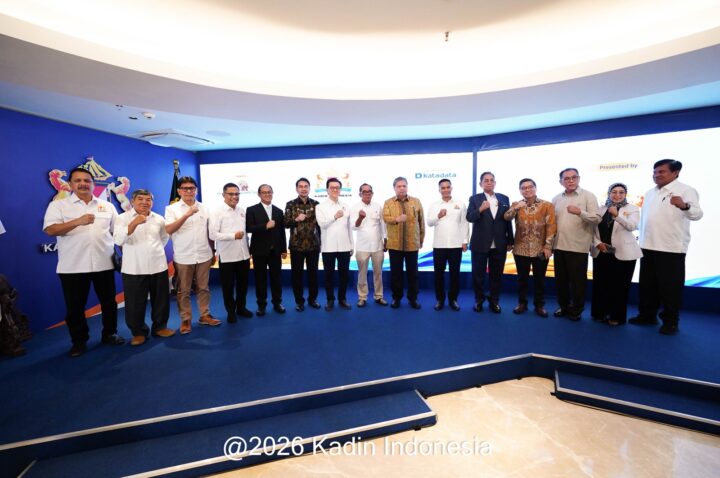
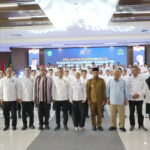
This issue took center stage at the Road to Jakarta Food Security Summit (JFSS) 2026, themed “Food Security to Safeguard National Sovereignty,” held at the Kadin Indonesia Tower in Jakarta on Tuesday (13 January 2026).
The event served as a preliminary series leading up to the main Jakarta Food Security Summit 2026, scheduled to take place on 20-21 May 2026.
Initiated by the Indonesian Chamber of Commerce and Industry (Kadin Indonesia) in collaboration with Katadata, the discussion forum was organized in response to increasingly complex global dynamics, ranging from food and energy crises and geopolitical tensions to the impacts of climate change, all of which are exerting tangible pressure on global agricultural and food systems, including in Indonesia.
In his presentation, Coordinating Minister for Economic Affairs of the Republic of Indonesia, Airlangga Hartarto, emphasized that food security is a strategic issue amid heightened global volatility.
“Therefore, Indonesia must be food self-sufficient in order to build resilience in facing any crisis,” Airlangga said.
He also noted that the government has designated agriculture and food as national priority sectors. Indonesia’s rice production last year reached 34.71 million tons one of the highest levels in history representing an increase of 3.52 million tons.
Meanwhile, food inflation was recorded at 6.21 percent, accompanied by an improvement in the Farmer Exchange Rate (NTP), which reached its highest level in several years.
The government has also ensured the continuity of the Free Nutritious Meal Program (MBG), supported by a state budget (APBN) allocation of Rp335 trillion.
Airlangga further highlighted the threat of climate change to national food production. The El Niño and La Niña phenomena in 2024 were reported to have reduced rice output by approximately 4 million tons.
To address these challenges, the government is promoting the development of food estates based on modern farming practices, which are considered to have significant potential as food and energy hubs.
He underscored that food security is a shared responsibility that requires strong collaboration between the government and the business sector. Airlangga expressed appreciation for Kadin’s initiative in promoting an Inclusive Closed Loop System in the agriculture and food sectors.
“Kadin’s Inclusive Closed Loop System initiative is highly commendable and can be implemented in 80,000 villages to support the MBG program,” he said.
According to him, the implementation of an integrated upstream-to-downstream system would generate multiplier effects for rural economies while strengthening the sustainability of the national food security program.
Chairman of Kadin Indonesia, Anindya Novyan Bakrie, welcomed the government’s support for JFSS 2026. He noted that the forum marks its sixth edition, spanning administrations from President Susilo Bambang Yudhoyono to President Prabowo Subianto.
“Kadin has always sought to work hand in hand with the government on food security. One example is the MBG program, where around 1,000 out of the targeted 30,000 SPPG facilities or kitchens have involved Kadin’s participation,” said Anindya, who is commonly known as Anin.
He also highlighted the potential for expanding the closed-loop system to the horticulture sector and other food commodities, particularly if implemented across approximately 80,000 Merah Putih Village Cooperatives.
According to Anin, Kadin’s forward focus is on strengthening the food and mineral sectors to improve public welfare while creating employment opportunities.
With ample preparation time remaining, Anin emphasized the importance of developing a clear and measurable roadmap. JFSS 2026 is expected to go beyond discussion and deliver concrete actions with a tangible impact on food security and the national economy.
Meanwhile, Special Staff to the Minister of Agriculture, Sam Herodian, stated that Indonesia has demonstrated significant achievements, including attaining rice and corn self-sufficiency earlier than initially targeted.
“From the outset, the President set a target of achieving food self-sufficiency within four years, which was then accelerated to three years, and even one year. This reflects extraordinary seriousness and work intensity in the agricultural sector,” Sam said.
He explained that the accelerated progress was achieved through various breakthroughs, including deregulation in the agricultural sector, streamlined licensing, strengthened financing, and the establishment of cross-ministerial and inter-agency task forces.
“Food security is not solely about production; it also involves efficiency, distribution, fair pricing for farmers, and market certainty. That is why collaboration with the business sector is crucial,” he added.
Separately, Director General of General Legal Administration (AHU) at the Ministry of Law, Widodo, stressed the importance of legal certainty as the foundation of national food security.
“Food security can only be realized if it is supported by strong legal certainty from upstream to downstream. Farmers, corporations, and investors alike require a clear and integrated legal ecosystem,” he said.
Widodo also highlighted the importance of legal instruments such as fiduciary guarantees and intellectual property as financing collateral for the agricultural sector. “Agricultural products, seed research outputs, and collective brands must be empowered as economic assets with clear legal certainty,” he noted.
Through the Road to JFSS 2026 forum, the government and business stakeholders reaffirmed their shared commitment to strengthening food and energy security toward the realization of Indonesia Incorporated. The forum served as a strategic cross-sector dialogue platform to formulate concrete solutions and foster tangible collaboration.
The event was attended by Kadin Indonesia executives, including Coordinating Vice Chairman for Economic Affairs Franky O. Widjaja, Coordinating Vice Chairman for Food Mulyadi Jayabaya, Coordinating Vice Chairman for Export Development Juan Permata Adoe, and Coordinating Vice Chairman for Law, Human Rights, and Infrastructure M. Aziz Syamsuddin.
Also present were Vice Chairman for Agrarian Affairs, Spatial Planning, and Regional Economic Development Sanny Iskandar; Vice Chairman for Industry Saleh Husin; Vice Chairman for Agriculture Devi Eka Rachmawati; Vice Chairman for Export Capacity Building and Financing Rahmat Samulo; Vice Chairman for National Resilience and Risk Mitigation Reginald FM Engelen; Vice Chairman for Inter-Regional Trade Development Ali Dupa; Vice Chairman for Trade and International Agreements Pahala Mansury; Chairman of Kadin North Kalimantan Province Kilit Laing; and Chairman of Kadin West Sumatra Province Buchari Bachter.