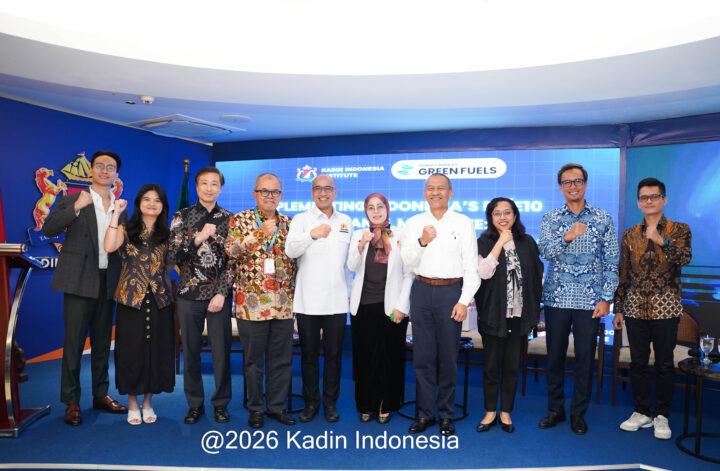
Jakarta – The Indonesian Chamber of Commerce and Industry (Kadin) Institute, in collaboration with the Global Centre for Green Fuels (GCGF), held a workshop titled “Bioethanol and Indonesia’s Energy Security: Opportunities, Challenges, and Partnerships” at Kadin Indonesia Tower, South Jakarta, on Wednesday (June 17, 2026).
The forum took place amid growing concerns over national energy security. The Strait of Hormuz crisis earlier this year once again highlighted Indonesia’s vulnerability to disruptions in global energy supplies and reinforced the importance of policies aimed at reducing dependence on fossil fuels through the development of domestic biofuels.
Minister of Energy and Mineral Resources Decree No. 113.K/EK.05/MEM.E/2026 has established a roadmap for the implementation of E5 fuel blending in six provinces starting in the second half of 2026, with a nationwide transition to E10 beginning in 2028. However, bridging the gap between regulatory ambitions and on-the-ground readiness remains a key challenge.
Kadin Indonesia Institute Insights Director Fakhrul Fulvian said that developments in the global energy market over recent years have demonstrated that energy security is no longer merely a matter of energy supply, but has evolved into an issue of economic resilience and national strategic interest.
“Energy security is no longer just an energy issue; it has become an economic issue and a matter of national interest. Disruptions in global energy supply chains have shown how vulnerable countries are to external shocks,” said Fakhrul.
He explained that bioethanol offers benefits beyond serving as an alternative fuel. The development of a bioethanol industry could increase value creation in the agricultural sector, attract new investment, generate employment opportunities, and support the transition toward a more sustainable economy.
“Bioethanol represents more than just an alternative fuel. It is an opportunity to diversify the energy mix, strengthen the agricultural sector, attract investment, create jobs, and support Indonesia’s transition toward a more sustainable economy,” he said.
Meanwhile, GCGF Managing Director Clarence Woo highlighted India’s success in increasing ethanol blending from below 5% to 20% within just eight years through a combination of clear mandates and investment incentives for producers.
“Thailand demonstrated this year, when oil prices surged, that higher ethanol blends can actually protect consumers from price shocks. E20 in Thailand is around 14% cheaper per liter than E10. Indonesia has every reason to move forward with confidence,” Clarence said.
Also attending the event were Kadin Indonesia Vice Chairman for Agriculture Devi Erna Rachmawati and Kadin Indonesia Institute Director Mulya Amri.