Surabaya – The revision of the 2025 Indonesian Standard Industrial Classification (KBLI), implemented starting July 18, 2026, has drawn sharp criticism from business players. Rather than streamlining risk-based licensing procedures, the changes are deemed to potentially add administrative burdens, complicate bureaucracy, and create operational uncertainty.
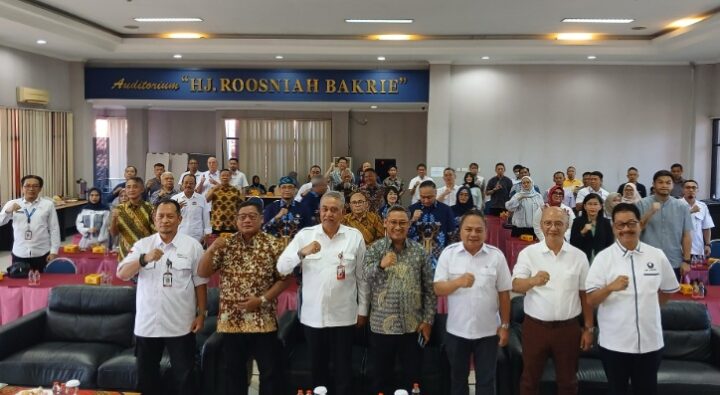
The issue came to light during a Focus Group Discussion (FGD) titled "The Effectiveness of KBLI Rule Implementation: Ease or Obstacle?", organized by the East Java Provincial Chamber of Commerce and Industry (Kadin East Java) in Surabaya, East Java, on Wednesday (07/15/2026). The forum brought together business owners, government representatives, academics, and law enforcement officials to seek solutions regarding the implementation of the latest KBLI.
Muhammad Makruf Syah, Vice Chairman for Law and Business Ethics at Kadin East Java, stated that KBLI serves as a vital instrument in the business licensing system. Therefore, its implementation must ensure legal certainty while fostering a healthy investment climate and economic growth.
"This FGD is not merely a platform to hear grievances from business operators, but also an opportunity to present ideas regarding the effectiveness and challenges of implementing the KBLI. Kadin aims to act as a strategic bridge between the government and the business sector so that regulations do not only offer legal certainty, but also drive economic growth and job creation," he said.
Meanwhile, Riswanda, Deputy Chairman of the Standing Committee on Investment Licensing at Kadin East Java, explained that the transition from the previous version to KBLI 2025 was originally intended to adapt to evolving business landscapes. However, in practice, the changes have introduced more complex bureaucracy, falling short of the goal to enhance ease of doing business.
According to him, a significant number of business operators who have fully complied with administrative requirements still face inspections from various agencies and even receive summonses regarding their business legality.
"This issue compounds existing obligations already faced by the business sector, ranging from waste management, water usage compliance, BPJS (social security) enrollment, and minimum wage adherence, to KBLI adjustments," Riswanda added.
Furthermore, Sebastian Wibisono, Chairman of the Regional Leadership Board of the Indonesian Logistics and Forwarders Association (ALFI) East Java, highlighted that the KBLI updates—particularly in the logistics services sector—do not alter the substance of business operations. Only the classification codes have changed; however, the consequence has been an influx of additional reporting requirements.
"The core of our business remains identical; only the code numbers have changed. Yet, the reporting demands have increased significantly and become extremely burdensome. Businesses require not just regulatory compliance, but also efficiency. Compartmentalizing businesses continuously creates operational inefficiencies," Wibisono emphasized.
On the other hand, Aftabuddin Rijaluzzaman, Head of the East Java Provincial Energy and Mineral Resources (ESDM) Office, commended Kadin East Java's initiative to highlight this strategic issue. He reassured that the government never intends to pass regulations that hinder business owners.
"The government never intends to make things difficult for the business community. Instead, the goal is to facilitate operations while preparing businesses to adapt to changes. If there are obstacles, let us align our perceptions and find joint solutions," he stated.
He added that the business sector remains the primary backbone of East Java's economy. With the industrial sector contributing over 30 percent to the regional economy and East Java recording economic growth of around 5.9 percent alongside well-controlled inflation, synergy between the government and the business world must continue to be strengthened.
Echoing this sentiment, Edi Yuwono, Head of the Industrial Infrastructure, Control, and Supervision (SP3I) Division at the East Java Provincial Industry and Trade Office, explained that the KBLI refinement was undertaken due to the emergence of new economic activities not covered in previous classifications. These include digital transformation, artificial intelligence (AI) developments, digital intermediation services, crypto assets, shifting global business models, and environmental issues.
"KBLI is a classification system designed to group economic activities based on shared characteristics. The adjustments were made to accommodate global economic dynamics and emerging business sectors. In principle, this regulation is not meant to complicate matters for business operators, but rather to provide certainty in administering risk-based licensing," he concluded.