Jakarta – Indonesia possesses natural and cultural wealth that is difficult for other countries to match, but has yet to fully translate these advantages into tourist arrivals, foreign exchange earnings, investment, and employment. Therefore, tourism development must focus on strengthening an ecosystem that connects destinations with transportation, accommodation, promotion, services, and high-quality tourism experiences.
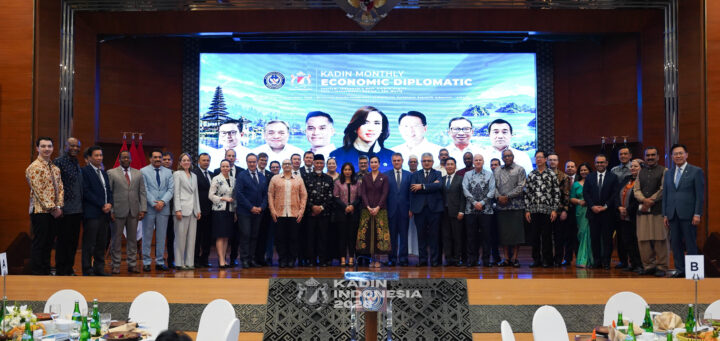
This was conveyed by Kadin Indonesia Coordinating Deputy Chairman for Foreign Affairs James T. Riady at the opening of the Kadin Monthly Diplomatic Economic Breakfast, themed “Tourism: Indonesia’s Next Growth Engine Jobs, Investment, Region and The World,” at the Ministry of Tourism office in Jakarta on Friday (September 11, 2026).
The forum was attended by representatives from 67 countries, comprising 39 ambassadors and 28 other members of the diplomatic corps. According to James, the attendance marked the largest diplomatic participation since Kadin began organizing its monthly economic breakfast forum.
“Indonesia actually does not have a problem with tourism assets. We have a conversion problem,” James said.
The issue, he explained, is how Indonesia can turn natural beauty into destinations that are easily accessible, accessibility into travel experiences, experiences into tourist spending, spending into investment, and investment into jobs and greater prosperity for local communities.
James emphasized that most of Indonesia’s tourism fundamentals are already in place. The country has beaches, seas, world-class diving and surfing destinations, thousands of islands, volcanoes, forests, rich cultural heritage, culinary diversity, and people known for their hospitality.
However, these assets are not always supported by an adequate tourism ecosystem. Indonesia still needs to strengthen flight connectivity, hotel capacity, public transportation, shopping centers, restaurants, event organization, destination cleanliness, ease of travel, digital connectivity, and consistency in promotion.
“We have been talking about this potential for decades. The challenge now is how to turn that potential into tourist arrivals, longer stays, higher spending, investment, jobs, and repeat visits,” he said.
Amid global economic growth pressures, high capital costs, and limited fiscal space, James said Indonesia must identify sectors that can move and deliver results more quickly. In addition to artificial intelligence and technology and the housing sector, tourism is one of the key opportunities that should receive greater attention in the national growth strategy.
Unlike developing entirely new industries, Indonesia does not need to create tourism assets from scratch. What is needed is the determination to build supporting infrastructure, simplify regulations, improve services, enhance human resource quality, and package the country’s natural and cultural wealth into tourism products that appeal to international markets.
According to James, tourism development does not always have to begin with large-scale projects. Changes in the way an MRT station is packaged, the opening of a new flight route, the development of a marina, improvements to visa policies, social media campaigns, the development of shopping areas, or better access from airports can generate significant economic impacts.
The forum also brought together several business players to provide practical input. Founder of Tomorrow Retail Group Kenny Koesoemo discussed the development of urban tourism in Jakarta, particularly the increasing number of Southeast Asian tourists, especially from Malaysia, visiting culinary destinations, the Blok M area, shopping centers, lifestyle venues, as well as traveling by the Whoosh high-speed train to Bandung.
The phenomenon, James said, demonstrates how tourists are changing the way they choose destinations. Tourism flows are no longer driven solely by conventional campaigns, but also by content distributed through TikTok and Instagram. When a place, food, or experience goes viral, thousands of people can be encouraged to visit and experience it themselves.
The international travel industry perspective was presented by Kadin Indonesia Deputy Chairman for Tourism and CEO of Pacto Raty Ning. Meanwhile, diplomatic representatives from Singapore and Qatar were expected to share their experiences in developing tourism in their respective countries.
James said Singapore had successfully built one of the world’s most advanced tourism economies despite having limited natural resources. Its success has been supported by its ability to package experiences, connectivity, events, infrastructure, and services. Qatar, meanwhile, has also been considered successful in utilizing aviation, infrastructure, hospitality, international events, and global branding strategies to increase its visibility as a destination.
At the forum, West Sumatra Governor Mahyeldi Ansharullah outlined the province’s potential, including culinary offerings, cultural heritage, mountains, beaches, islands, and internationally recognized surfing destinations. West Sumatra is considered to have significant opportunities to strengthen its links with the Indian Ocean economy and position itself as an international destination rather than merely a domestic tourism destination.
Meanwhile, Central Papua Governor Meki Nawipa presented the perspective of developing destinations in a new province with extraordinary natural wealth and landscapes. Central Papua faces the challenge of developing government institutions, infrastructure, connectivity, and human resources almost simultaneously.
According to James, the participation of the two governors underscored that the future of Indonesian tourism will not be built only in Jakarta and Bali, but also across various regions. As they are closest to destinations, on-the-ground issues, and local businesses, Regional Kadin chapters have an important role in bridging investment opportunities with the concrete needs of local communities.
Tourism, James continued, has a broad multiplier effect that can be directly felt by communities. Hotel development creates jobs, restaurants absorb workers, and the opening of new flight routes drives transportation and supporting services. Even a cup of coffee purchased by a tourist can generate income for coffee shops, distributors, processors, and farmers.
Similarly, diving businesses create employment for guides, boat crews, accommodation providers, and coastal communities. As a destination develops, opportunities also emerge for the transportation, culinary, retail, handicraft, entertainment, and micro, small, and medium enterprise sectors.
“Tourism is not merely about tourists. Tourism is about jobs, regional growth, foreign exchange, entrepreneurship, and national confidence,” James stressed.
James added that Indonesia is not lacking in tourism potential. What is needed, he said, is to unlock and develop that potential on a larger scale.
“Tourism is one of the most tangible ways to turn what God has bestowed upon Indonesia—nature, culture, people, and diversity—into jobs, investment, and prosperity for the people,” he said.
He expressed hope that the meeting, which brought together the government, diplomatic corps, regional leaders, investors, businesspeople, practitioners, and Kadin officials, would generate ideas that could quickly be translated into concrete action. All input from the forum would subsequently be submitted to Minister of Tourism Widiyanti Putri Wardhana for her response and further consideration together with the ministry’s officials.
James also conveyed greetings from Kadin Indonesia Chairman Anindya Bakrie, who was in New Delhi to attend a series of BRICS meetings. Several Kadin officials were scheduled to follow him to India after the event.
“We must be more deliberate in turning Indonesia’s natural and cultural advantages into economic activity. That is why Kadin believes tourism deserves a much greater place in Indonesia’s growth strategy,” James concluded.
Meanwhile, Minister of Tourism of the Republic of Indonesia Widiyanti Putri Wardhana emphasized the importance of developing quality tourism that is not only oriented toward increasing tourist arrivals, but also toward creating better experiences, greater economic value, and sustainable benefits for communities and businesses.
“For me as Minister, this is a very valuable opportunity to share with all of you about the development of Indonesia’s tourism sector under the leadership of President Mr. Prabowo Subianto, where we are today, what we are working on, and the opportunities for us to grow together,” Widiyanti said.
She also expressed her appreciation to James T. Riady and Kadin Indonesia for organizing the meeting and placing tourism among the key areas of discussion.
“I very much look forward to continued exchanges of views, not only to share Indonesia’s story, but also to listen, learn, and explore how we can build stronger partnerships and create greater value together,” she said.
On the same occasion, Kadin Indonesia Deputy Chairman for Tourism Raty Ning said Kadin was targeting an increase in inbound tourism to Indonesia. To achieve this target, she said, several aspects need to be strengthened, particularly accessibility and infrastructure.
“Our target is to increase inbound tourism into Indonesia. With so much inbound potential itself, we have identified several notes, several things that we really need to improve. What is already good, we need to improve further, such as perhaps the most crucial aspect, which is accessibility to enter Indonesia,” Raty said.
Raty said Indonesia already has several major gateways, such as Bali and Jakarta. However, both areas are considered relatively congested, creating a need for new gateways that can represent various regions across Indonesia.
“We need to have more gateways representing all of Indonesia so that tourists entering Indonesia can do so much more easily,” she concluded.
Also present at the event were Kadin Indonesia Deputy Chairman for Legal and Human Rights, Facilities and Infrastructure M. Azis Syamsuddin; Kadin Indonesia Deputy Chairman for Foreign Relations Bernardino M. Vega; Kadin Indonesia Deputy Chairman for Maritime Tourism Ismail Ning; and Kadin Indonesia Deputy Chairman for Marketing, Promotion, Innovation and MSME Product Development Rifda Ammarina.
Also in attendance were several Provincial Kadin chairpersons, including Chairman of West Sumatra Provincial Kadin Buchary Bachter, Chairman of Jambi Provincial Kadin Usman Sulaiman, Chairman of Ritchie Glen Yapranadi, Chairman of East Nusa Tenggara Provincial Kadin Bobby Lianto, Chairman of South Kalimantan Provincial Kadin Shinta Laksmi Dewi, and Chairman of Papua Provincial Kadin Jeqline Yoku.