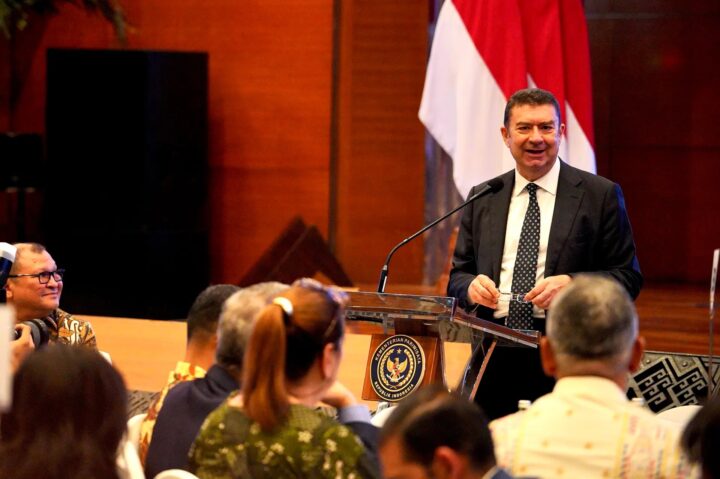
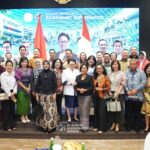
The Ambassador of the Republic of Italy to the Republic of Indonesia, Roberto Colaminè, encouraged the development of intangible infrastructure and tourism support services as part of efforts to improve the quality of Indonesia’s tourism industry.
According to Colaminè, tourism infrastructure is not limited to physical development, but also includes information, healthcare, safety, and destination management services.
He made the remarks during the Kadin Indonesia Monthly Economic Diplomacy Breakfast (K-MED), which brought together government representatives, business leaders, and diplomats from partner countries.
He said Italy has around 150,000 tourists visiting Indonesia each year. The figure is considered significant by the Italian Embassy and indicates potential that needs to be further developed.
According to Colaminè, the high number of tourists also presents challenges, particularly regarding the need for support services when tourists face emergency situations while in Indonesia.
Therefore, he suggested that the Indonesian Chamber of Commerce and Industry (Kadin Indonesia) should look beyond material infrastructure and explore opportunities to develop intangible infrastructure or service infrastructure needed by tourists.
One sector with significant investment potential, he said, is the provision and dissemination of information to tourists, particularly in emergency situations. Colaminè cited the experience of his home region in Italy, which is located near Mount Vesuvius, one of the world’s most famous volcanoes.
According to him, disaster risks need to be taken into account in tourism development, particularly in a geographically vast country such as Indonesia. Therefore, the private sector can play a role in assisting the government in providing and disseminating information to tourists during times of crisis.
“If an emergency occurs, because it may happen, it does happen, there is room to engage and assist government authorities in disseminating information during a crisis, also through certain private-sector activities that can support the government,” Colaminè said at the Ministry of Tourism office on Friday (September 11, 2026).
He said this need is becoming increasingly important given Indonesia’s vast territory, which stretches approximately 3,500 kilometers from north to south. This geographical condition makes information systems and emergency services an important part of ensuring tourists’ safety and comfort.
In addition to disaster-related information, Colaminè identified healthcare services as another sector that could be developed through private investment. According to him, tourists need assurance that healthcare costs can be covered, either through direct payment or insurance arrangements made before or during their trip.
Colaminè also highlighted the importance of providing hyperbaric chambers to support the development of diving tourism. He said the availability of such facilities could serve as an important parameter in increasing tourists’ confidence, particularly among those interested in diving activities.
Although hyperbaric chambers are relatively rarely used, tourists would naturally hope that they never need to use them. Nevertheless, the availability of accessible facilities when needed can provide added value for diving destinations.
“The availability of a hyperbaric chamber and the fact that it can be accessed can be another element in communicating this mission to a niche market such as this,” he said.
Preserving Cultural Heritage
Colaminè also highlighted the importance of maintaining a balance between tourism development and the preservation of cultural heritage. According to him, the management of historic sites can serve as one of the best examples of creating a balance between preservation, restoration, and tourists’ needs to enjoy destinations.
He said effective heritage management allows tourists to have the best possible experience without compromising the preservation of the sites that serve as major attractions.
For Colaminè, this experience demonstrates that quality tourism development requires a broader approach.
He emphasized that the government continues to play an important role in establishing regulations and developing basic infrastructure, while the private sector can contribute by providing various services that enhance tourists’ experiences and safety.
The input is expected to encourage Indonesian businesses to view the tourism sector from a broader perspective, including investment opportunities in information, healthcare, safety, and destination management services.
“I hope that I have also contributed in terms of what the private sector can do for tourists and for the country itself,” he concluded.