The Embassy of Singapore encouraged Indonesia to strengthen collaboration between the government and the private sector to develop the national tourism industry.
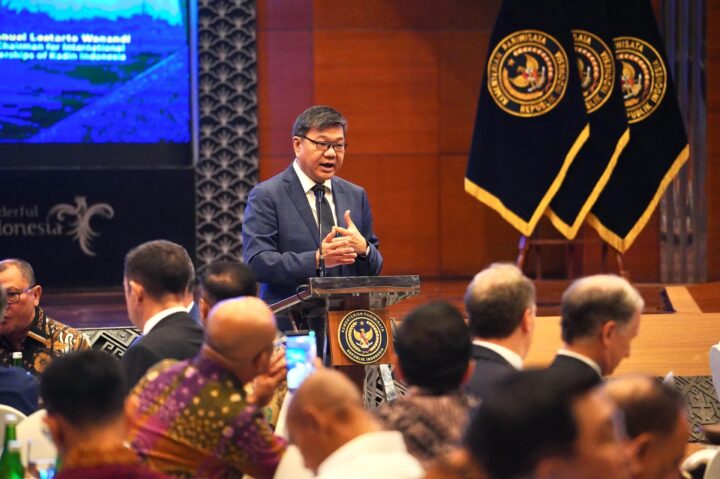
According to Singapore’s Ambassador to Indonesia, Kwok Fook Seng, developing the tourism sector cannot rely solely on intergovernmental or government-to-government (G2G) cooperation, but also requires the active involvement of the business sector.
He said Indonesia’s tourism development currently presents significant opportunities to improve connectivity, investment, and destination quality through government-private sector partnerships.
He cited the development of Labuan Bajo as one of the destinations that has received particular government support. The development has included hotel construction and improvements to local infrastructure, involving several entities, including Danantara and InJourney.
According to Kwok Fook Seng, a similar collaboration model has been implemented between Singapore and Indonesia through an economic working group that has been operating for 16 years. One of the sub-pillars of the cooperation has consistently focused on the tourism sector.
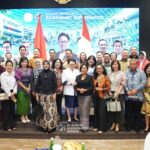
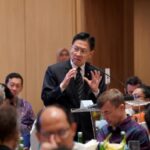
“When Mr. James Riady spoke about tourism as an engine of growth, with the presence of InJourney, we have been working in strong synergy and in a structured manner for more than 16 years,” he said at the Kadin Indonesia Monthly Economic Diplomacy Breakfast (K-MED) on Friday (September 11, 2026).
Kwok said connectivity is one of the key factors in increasing tourist flows. He cited the Singapore Airlines Group network, which connects 18 points in Indonesia with Singapore’s Changi Airport. In addition, there are also flights to Belitung twice a week.
Connectivity to Labuan Bajo has also continued to expand. Kwok noted that AirAsia operates flights from Kuala Lumpur, while Scoot now operates flights from Singapore to Labuan Bajo two to three times a week.
He said the improvement in connectivity demonstrates that tourism growth can begin with the fundamentals, namely the availability of air access.
Kwok then cited the development of connectivity between Singapore and the Maldives. He noted that there is a street in Malé called Singapore Street.
According to him, the name has a practical historical background, as Singapore was once the only air connection to Malé. As a result, some of the goods entering the area were transported by air cargo from Singapore.
“It used to be only twice a week. But today, there are three flights a day from Singapore to Malé,” he added.
According to Kwok, the experience demonstrates the significant potential that can be developed when air access is opened and expanded. Therefore, he encouraged Indonesia to continue expanding connectivity to various potential tourism destinations.
In addition to connectivity, he emphasized the importance of strengthening private-sector involvement in the tourism ecosystem. He cited Changi Airport Group, which operates as a commercial entity and has a partnership with Garuda Indonesia. The two entities conduct joint marketing and work to increase air traffic from Changi to Indonesia.
Singapore Airlines and Garuda Indonesia also have a joint venture that goes beyond a codeshare arrangement and includes revenue sharing. According to Kwok, the collaboration has also helped expand air connectivity to various regions across Indonesia.
Private-sector collaboration is also taking place between the Singapore Tourism Board and Traveloka. According to Kwok, the digital platform plays an important role as many tourism product transactions are now conducted online.
“The private sector is very resourceful when we, as governments, have the ability or incentives to give them room to grow,” he emphasized.
Meanwhile, he said Indonesia and Singapore are also developing cruise tourism. The two sides are still exploring ways to increase tourist traffic arriving through Singapore and encourage visitors to continue their journeys to various destinations in Indonesia.
According to him, developing cruise tourism presents its own challenges as cruise ship capacity continues to increase. Infrastructure that was previously designed for ships carrying around 4,000 to 5,000 passengers and crew members must now accommodate vessels with capacities of 7,000 to 8,000 people.
This requires capable inbound operators that can transport tourists from cruise ships to various destinations within a short period, whether for half-day or full-day excursions. This challenge has been part of the cooperation between Indonesia and Singapore over the past several years.
“This is a journey that needs to be undertaken. And we will see how we can develop this potential,” he concluded.