West Sumatra Governor Mahyeldi Ansharullah called for stronger connectivity and improved tourism services to increase international tourist arrivals to West Sumatra.
According to Mahyeldi, West Sumatra is rich in natural, cultural, historical, and culinary attractions that can be developed into an integrated tourism experience. However, the province still requires greater collaboration to improve accessibility and the quality of its destinations.
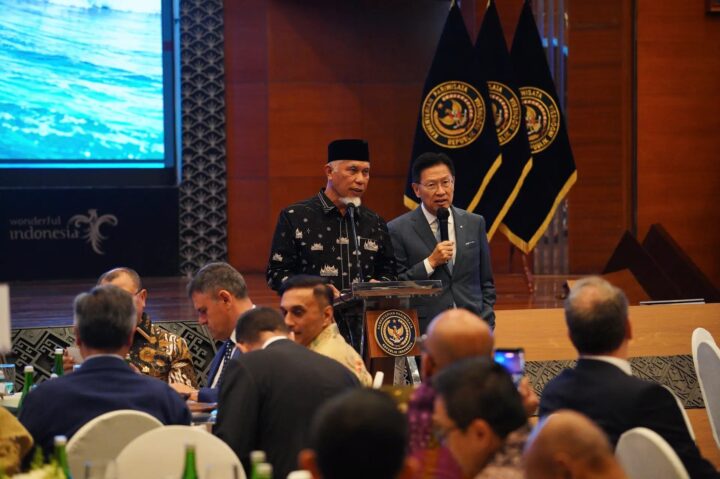
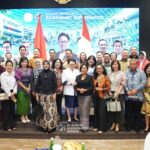
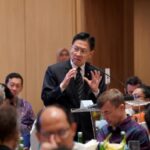
“We want to invite everyone to imagine a journey from the waves of the Indian Ocean in Mentawai, then on to Mandeh, up to the Minangkabau highlands, and then meeting communities with their rich culture and culinary heritage. That is West Sumatra,” Mahyeldi said at the Kadin Indonesia Monthly Economic Diplomacy Breakfast (K-MED) on Friday (September 11, 2026).
He said the Indian Ocean is not merely a geographical boundary for West Sumatra, but also a space for travel, trade, encounters, and cooperation. Therefore, the West Sumatra Provincial Government is inviting partners from various countries to explore opportunities for tourism cooperation through the experiences the province has to offer.
“We do not want tourists to simply come, take pictures, and then leave. We want them to travel from the sea to the mountains, from nature to culture, and from destinations to the lives of local communities,” he added.
He noted that West Sumatra is not starting tourism development from an empty market. From January to July 2026, West Sumatra recorded around 14.6 million domestic tourist trips, while the accommodation and food and beverage sectors grew by 17.7%.
However, the number of international tourists entering through Minangkabau International Airport remains relatively low, at around 43,000 visits. This indicates significant room to increase West Sumatra’s appeal in the international market.
One destination considered to have strong potential in the global market is the Mentawai Islands. Mahyeldi said the name Mentawai is even more widely recognized than West Sumatra in several international markets, particularly due to its reputation as a world-class surfing destination.
However, he said Mentawai’s potential goes beyond its waves. The islands also offer tropical forests, natural wealth, and the unique way of life of the Mentawai people, all of which can become part of the tourism experience.
“This is the combination of world-class nature and living culture,” he said.
Challenges for West Sumatra
To develop this potential, Mahyeldi acknowledged that several challenges remain, particularly in terms of accessibility and service quality. Mentawai Airport currently has a 1,500-meter runway, but inter-island connectivity, accommodation, safety, tour guides, and service standards all need to be developed in an integrated manner.
He expressed hope that cooperation with various stakeholders could help West Sumatra address these challenges, making potential destinations more accessible to tourists while providing high-quality experiences.
Beyond Mentawai, Mahyeldi said Minangkabau culinary and cultural heritage could serve as a gateway to extending tourists’ length of stay. Tourists could be encouraged to visit traditional markets, learn to cook, stay with local communities, and experience traditional rumah gadang houses and living cultural traditions.
“For us, rendang is not the end of the story. Rendang is the beginning of the journey,” he said.
The journey could then continue to Sawahlunto, home to a coal mining heritage site recognized by UNESCO as a World Heritage Site. With this combination, West Sumatra has opportunities to develop various forms of tourism, ranging from cultural heritage tourism and culinary journeys to local guiding services, creative products, and community-based experiences.
Mahyeldi emphasized that the success of tourism should not be measured solely by the number of tourists who visit. More importantly, it should be measured by how long they stay, how many services they use, and how much economic benefit reaches local communities.
Therefore, West Sumatra needs collaboration with various stakeholders, including international partners.