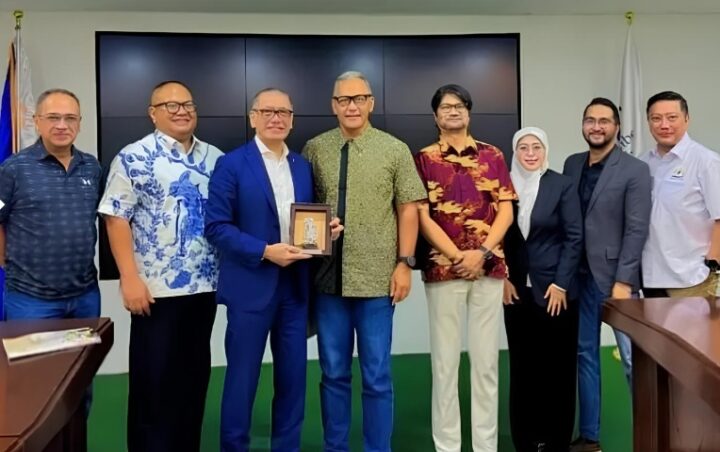
Manila, Philippines – Indonesia and the Philippines are strengthening their strategic partnership across agriculture, food security, technology, security, and energy ahead of the ASEAN Summit scheduled for November 2026 in the Philippines. This commitment to enhanced cooperation was discussed during a meeting between a delegation from the Indonesian Chamber of Commerce and Industry (Kadin) and leaders from the Philippine Chamber of Commerce and Industry (PCCI) and the Philippine–Indonesia Business Council in Manila on Friday (07/17/2026).
The Indonesian delegation was led by Devi Erna Rachmawati, Kadin Indonesia’s Vice Chairperson for Agriculture, and Iman Arif, Chairman of Kadin Indonesia’s Philippine Committee. The meeting served as part of the final preparations for the ASEAN Business Advisory Council (ASEAN-BAC) Agriculture Task Force ahead of the 2026 ASEAN Summit.
Both parties agreed that economic ties between Indonesia and the Philippines should extend beyond trade expansion. Cooperation needs to evolve into a long-term partnership built on investment, innovation, technology transfer, supply chain resilience, and human resource development.
Agriculture and food security were central to the discussions. As agrarian-based economies with large populations and growing food demands, both nations share similar challenges.
Identified areas of collaboration include boosting agricultural productivity, developing cultivation technology, superior seed production, fertilizers and farm inputs, mechanization, digital agriculture, post-harvest management, and downstream agricultural processing.
Indonesia is recognized for its expertise in developing agricultural technology, organic fertilizers, sustainable farming systems, and building agribusiness ecosystems. Conversely, the Philippines offers significant land production potential, a strong workforce, and vast domestic and regional markets.
This collaboration is expected to materialize through demonstration farms, pilot projects, joint research and development, technology transfer, joint ventures, and partnerships between corporations and local farmers.
Agricultural cooperation also aims to raise farmer productivity and income, revitalize rural economies, create jobs, and add value to agricultural commodities.
Driving Technology Transfer and Innovation
Beyond agriculture, Indonesia and the Philippines explored technology transfer opportunities to enhance their competitive edge amid rapid digital transformation.
Potential joint initiatives encompass information technology, artificial intelligence (AI), digital agriculture, smart farming, cybersecurity, digital governance, and data-driven systems.
This collaboration is anticipated to unlock opportunities for technology firms, startups, research institutes, universities, and micro, small, and medium-sized enterprises (MSMEs).
Technology transfer will not only occur through product and service transactions, but also via knowledge exchange, capacity building, joint research, the establishment of innovation hubs, and joint investments.
Both nations view ASEAN’s expanding digital economy as an avenue to build complementary business ecosystems that spur regional growth.
Strengthening Digital Security and Infrastructure
Security emerged as another strategic focus. The advancement of surveillance systems, digital security, critical infrastructure protection, and security technologies is increasingly vital to address global challenges.
Private sector collaboration can target integrated security systems, cybersecurity, smart city security, data protection, and tech-based security solutions.
Indonesia and the Philippines share a common interest in creating a safe and stable business environment, as sustained security is essential to support investment and long-term economic growth.
Unlocking Clean Energy Investments
Economic growth and industrial development in both Indonesia and the Philippines require a secure, affordable, and sustainable energy supply.
To this end, both countries discussed investment prospects in renewable energy, bioenergy, energy efficiency, clean energy technology, agri-based energy solutions, and energy access for rural and remote areas.
Energy sector collaboration is expected to support the transition toward a green economy, reinforce energy security, and open new investment avenues for the business communities of both nations.
Private sector engagement is considered crucial to accelerating technology adoption, financing, and the development of sustainable energy projects across the ASEAN region.
Preparations for the ASEAN-BAC Agriculture Task Force
The meeting also contributed to finalizing the ASEAN-BAC Agriculture Task Force framework. The task force aims to provide a platform for ASEAN businesses to advocate for investments, innovations, and policies that drive transformation in the agricultural sector.
While agriculture plays a fundamental role in maintaining social and economic stability across ASEAN, the region continues to face challenges such as climate change, food price volatility, technological limitations, low productivity, and supply chain vulnerabilities.
Indonesia advocated for a more integrated approach to ASEAN agricultural cooperation—spanning production, technology, financing, logistics, processing, trade, investment, and market access.
The joint effort between Indonesia and the Philippines aims to shape a regional agenda capable of building a more resilient, inclusive, and sustainable ASEAN food system prepared for future disruptions.
Business Sector as the Engine of ASEAN Integration
Kadin Indonesia and the Philippine business community share the view that the private sector must serve as a primary engine for ASEAN economic integration.
Bilateral ties should not rely solely on government diplomacy, but also on direct engagement among business operators, chambers of commerce, trade associations, investors, research institutions, universities, and business networks.
Collaboration between Kadin Indonesia, PCCI, and the Philippine–Indonesia Business Council will focus on enhancing bilateral trade, driving investments and joint ventures, facilitating technology transfer, conducting joint research, fostering innovation, and strengthening regional supply chains.
The partnership will also address MSME development, IT, digital transformation, cybersecurity, sustainable energy, and human resource exchange.
The meeting is envisioned as the catalyst for a partnership that delivers tangible, actionable programs rather than ceremonial agreements.
Leveraging their combined market size, human capital, technology, and strategic regional positions, Indonesia and the Philippines are well-positioned to play a larger role in advancing ASEAN economic growth and integration.
Kadin Indonesia reaffirmed its commitment to deepening ties with the Philippine business community and other strategic partners to unlock new opportunities for Indonesian businesses.
Synergy between government, business leaders, academia, research institutions, and civil society is expected to foster a stronger, more innovative, resilient, sustainable, and competitive ASEAN.