Jakarta – The future of Indonesia’s healthcare system can no longer be viewed merely as a medical service sector. Instead, it must be regarded as a strategic investment in human capital that will determine the nation’s competitiveness in the decades ahead. The number of hospitals alone will no longer define the future quality of Indonesia’s healthcare system.
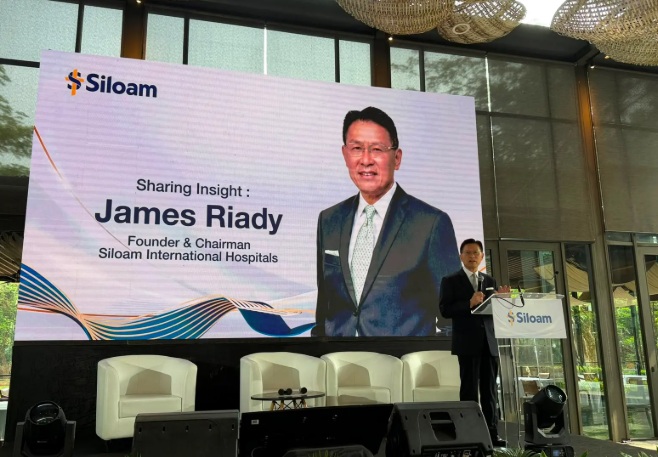
Speaking at the Healthcare Power Breakfast 2026 themed “Beyond Today: Designing Tomorrow’s Healthcare Ecosystem” in Jakarta on Wednesday (June 24, 2026), James T. Riady, Founder and Chairman of Siloam International Hospitals, emphasized that the global healthcare paradigm is undergoing a fundamental shift—from a treatment-centered approach to one focused on building the overall quality of human capital.
“For the past 50 years, healthcare has often been viewed as a cost. For the next 50 years, healthcare must be viewed as an investment,” James said.
According to him, the countries that will thrive in the future will not necessarily be those with the greatest natural resources, but those with healthier populations, longer productive lifespans, and stronger human capital. He therefore commended government policies that prioritize nutrition, access to healthcare, preventive services, and human capital development as national priorities.
Under this new paradigm, healthcare is no longer merely a medical issue—it has become an issue of economics, productivity, and national competitiveness.
“Ultimately, Indonesia’s future will not be determined solely by the natural resources we possess, but by the quality of our people, the health of our society, our productivity, and our ability to extend productive life expectancy,” he said.
From Treatment to Prevention
James also highlighted the major transformation currently taking place within the global healthcare ecosystem. Traditionally, healthcare systems have been designed to respond to illness after people become sick. Hospitals provide treatment, insurance companies cover the costs, and the entire system functions only after problems arise.
According to him, such a model is becoming increasingly expensive and unsustainable over the long term. As a result, the future of healthcare must shift upstream toward prevention and early disease detection.
The healthcare ecosystem of the future will not be built solely within hospitals, but also in homes, schools, workplaces, communities, and digital platforms.
“The future is prevention. The future is early detection. The future is wellness and healthy lifestyle management,” he said.
James even argued that the success of a healthcare system should not be measured by the number of patients treated, but by the number of illnesses successfully prevented.
“The best hospitalization is often the one that never happens. The best surgery is often the one that can be avoided,” he remarked.
This approach requires a shift in mindset among all stakeholders, including hospitals, insurance providers, businesses, governments, and the public.
AI Is Transforming Healthcare
James also discussed the role of technology, particularly Artificial Intelligence (AI), which he believes will drive the most significant transformation in healthcare over the next decade.
According to him, AI is already reshaping multiple aspects of healthcare, including diagnostics, radiology, pathology, predictive medicine, hospital operations, and patient engagement.
However, he cautioned that technology should not be viewed as an end in itself.
“Technology must remain a tool. Healthcare, at its core, will always be a profoundly human endeavor,” he said.
Patients will continue to require empathy, trust, wisdom, professional judgment, and human connection—qualities that machines cannot fully replace.
As such, the defining story of healthcare over the next decade will not simply be the construction of new hospitals, but the ability to combine artificial intelligence with human expertise.
“The future belongs to organizations that can integrate advanced technology with the human touch. Not one or the other, but both simultaneously,” he stressed.
James also encouraged Indonesia not only to become a user of healthcare technology, but to aspire to become one of ASEAN’s leading hubs for AI-driven healthcare innovation and services.
Trust as the Most Valuable Asset
Beyond technology and innovation, James emphasized that trust remains the fundamental cornerstone of the healthcare industry.
Unlike many other sectors, healthcare deals directly with human lives. Patients entrust their lives, their families, and their futures to healthcare institutions.
“Technology matters. Capital matters. Scale matters. But trust matters most,” he said.
This trust extends to relationships between patients and physicians, hospitals and insurers, healthcare providers and businesses, as well as healthcare institutions and society at large.
“Everything meaningful can be built on a foundation of trust. But nothing meaningful can be built without it,” he added.
Partnership and Collaboration
Concluding his remarks, James stressed that the future of Indonesia’s healthcare system will not be determined by the number of hospitals built, but by the ability of all stakeholders to transform healthcare into a vehicle for human capital development, disease prevention, productivity enhancement, innovation, and trust-building.
According to him, such transformation can only be achieved through close collaboration among hospitals, insurance companies, businesses, government institutions, technology providers, and all participants within the healthcare ecosystem.
“If we work together, we will not only have the opportunity to improve healthcare services. We will have the opportunity to help shape Indonesia’s future,” James said.
His statement underscores the reality that amid rapid technological change, demographic challenges, and intensifying global competition, healthcare is no longer merely a public service sector—it is a fundamental pillar of future economic growth and national progress.
“Hospital buildings can be constructed with capital, and technology can be purchased with money. But a nation’s future can only be built by healthy people. Therefore, Indonesia’s greatest investment is not in concrete and buildings, but in the health of its people.”