Jakarta - The Indonesian Chamber of Commerce and Industry (Kadin) is urging the widespread adoption of biochar technology as a strategic solution to combat the country’s worsening agricultural land degradation crisis.
Devi Erna Rachmawati, Vice Chair of Kadin Indonesia for Agriculture, emphasized that biochar is essential for restoring damaged agricultural land and ensuring long-term soil sustainability.
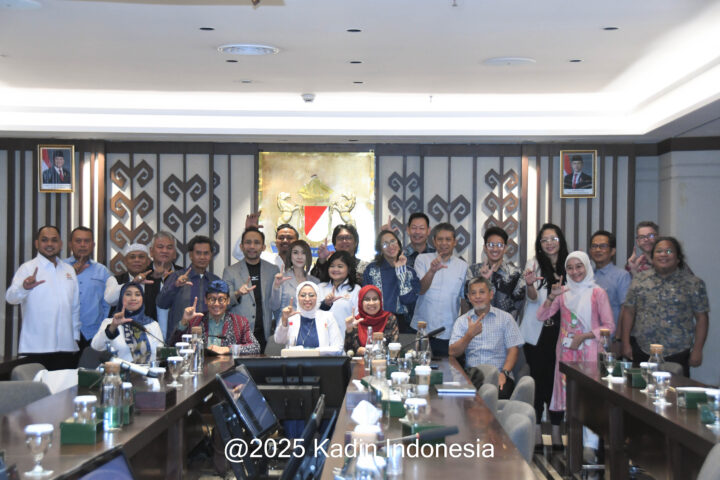
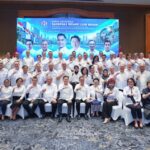
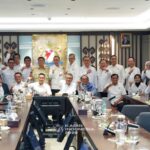
"Right now, Indonesia is in urgent need of biochar technology. More than 60% of our agricultural land is degraded and no longer healthy. Biochar offers a practical solution, and the raw materials are abundant across Indonesia," Devi said during a Focus Group Discussion (FGD) titled "Biochar for Soil Improvement: Sustainable Innovation to Build the Future of Agriculture", held at Kadin Tower, Jakarta, on Thursday (August 28, 2025).
The discussion highlighted three main themes:
-
The role of biochar as a future-oriented agricultural technology;
-
The application of microbial and humus-based soil treatments;
-
The implementation prospects and challenges of biochar usage in Indonesia.
Biochar is a stable, carbon-rich form of charcoal produced through the pyrolysis of organic materials such as wood, straw, or leaves. It is known to improve soil fertility by enhancing its physical, chemical, and biological properties. Additionally, biochar helps sequester carbon in the soil, significantly contributing to the reduction of greenhouse gas emissions.
Kadin plans to formally recommend the adoption of biochar to key government stakeholders.
“We will send a recommendation letter to the Ministry of Agriculture, the House of Representatives (DPR), and other relevant policymakers. Biochar cannot work in isolation; it requires synergy with fertilizers and microbial technology to successfully restore degraded land,” Devi explained.
She warned that if the land degradation issue is not addressed urgently, Indonesia's food security goals will remain out of reach.
“Our first priority must be restoring the soil. Once the land improves, productivity will follow. Ultimately, the economic benefits will trickle down to the people, especially farmers,” she added.
To support this agenda, Kadin Indonesia has established a research and development site in Lebak, Banten, spanning 180 hectares. The facility is open for collaboration with the Ministry of Agriculture, the National Research and Innovation Agency (BRIN), and private sector stakeholders.
“This R&D center supports not only agriculture but also livestock and fisheries. It serves as both a research hub and a training ground for farmers. Kadin is also providing farmer education through both offline and online platforms,” Devi said.
Echoing Devi's remarks, Dedi Nursyamsi, Senior Expert at the Ministry of Agriculture, emphasized the crucial role of biochar in promoting productive and sustainable farming. According to research, biochar can enhance soil productivity, rehabilitate contaminated land, and reduce dependence on chemical fertilizers.
"Biochar is a game-changer. It serves as a habitat for beneficial microbes, improves soil aeration, water retention, nutrient availability, and helps remediate soils contaminated with pesticides or heavy metals," Dedi explained.
He also pointed out that biochar holds great potential in the emerging carbon trading market, offering both environmental and economic value.
One such innovation is Biotron, a 3-in-1 biochar formula developed by the Ministry of Agriculture, enriched with microbes and liquid organic fertilizer.
"We are currently promoting Biotron to farmers across regions in Kalimantan, Sumatra, and Java. With industry collaboration, this initiative could be scaled up rapidly," Dedi said.
However, he noted that the supply of biochar is still limited, calling for greater support from the business sector.
"I'm confident we can meet the supply challenge what remains is effective implementation in the field," he added.
Etty Pratiwi, Researcher at BRIN, highlighted the potential to utilize agricultural waste as raw materials for biochar production.
“There are agricultural waste hotspots in various regions that can be harnessed through farmer education and community engagement programs,” she said.
Etty stressed the need for an integrated approach, combining biochar with organic fertilizers and microbial treatments to tackle critical land degradation issues caused by soil quality decline and climate change.
Maria Wahono, CEO of PT Bhetochar Energi Nusantara, discussed the untapped potential of Indonesia’s biomass waste, which produces millions of tons annually.
“Through pyrolysis technology, this waste can be transformed into high-value biochar that lasts in the soil for centuries and contributes to long-term carbon sequestration,” she said.
Biochar, Maria noted, is also effective for post-mining land rehabilitation and contaminated soil remediation. However, the growth of this industry depends on an enabling ecosystem, including product standardization, production infrastructure, and market education.
Yuventius Nicky, Director of R&D at PT Bhetochar Energi Nusantara, added that the economic potential of biochar is substantial.
“Economically, biochar directly benefits farmers. The raw materials are sourced from them, and once degraded lands become productive again, yields increase,” Yuventius explained.
With 12.7 million hectares of critical land in Indonesia, he stressed that tackling the issue requires more than just one or two companies.
“Biochar is not a fertilizer. That’s why collaboration with fertilizer producers and microbiologists is essential,” he said.
He also emphasized the importance of farmer awareness and practical demonstration plots to accelerate adoption.
“Many farmers won’t adopt new technologies unless they see real results. So, widespread demonstration plots are critical,” Yuventius added.
Similarly, IPJ. Arnawa from PT Nex Bio Tech International believes that biochar can gain wide acceptance if properly introduced and explained.
“It all depends on how we educate and socialize the concept,” he said.
His company has partnered with Kadin to launch the Next Bio Academy, a hybrid educational platform aimed at changing farmers’ mindsets.
“We focus on reshaping perceptions emphasizing the importance of soil health, the consequences of degraded land, and the potential of biochar and advanced technologies,” he explained.
Arnawa introduced nano-technology-based solutions where nutrients are delivered directly through plant stems or leaf pores, bypassing the soil altogether.
“Practical innovations like this can shift the perception that organic farming is expensive. Over time, farmers will see that it’s actually more cost-effective and leads to better yields,” he concluded.
The FGD, organized by Kadin Indonesia in collaboration with PT Bhetochar Energi Nusantara and PT Nex Bio, attracted over 100 participants, including business players, researchers, and agricultural experts, attending both in-person and online. The event served as a platform for sharing concrete solutions to the complex challenges facing Indonesia’s agricultural sector.