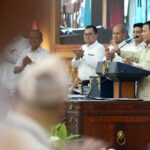



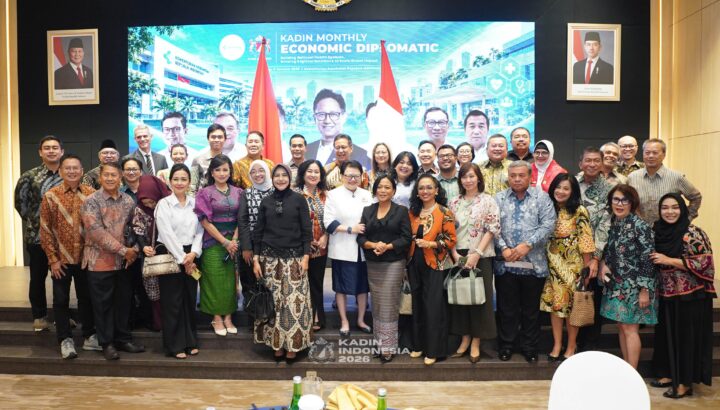
Jakarta – Indonesian Chamber of Commerce and Industry (Kadin Indonesia) Chairman Anindya Novyan Bakrie highlighted the healthcare sector’s significant potential to drive national economic growth while strengthening international cooperation. He made the remarks during the Kadin Monthly Economic Diplomatic Breakfast, themed “Building National Health Systems, Growing Regional Resilience to Scale Global Impact,” at the Ministry of Health’s office in South Jakarta on Friday (October 9, 2026).
Anindya, popularly known as Anin, said the healthcare sector contributed approximately US$60 billion to Indonesia’s economy annually. He noted that the sector also generated substantial economic benefits through its multiplier effect, stimulating activity across various industries.
“When we talk about healthcare, we believe this is a sector that can help Indonesia increase its economic growth from 5% to 6%, 7%, and even 8%,” Anin said.
Anin also highlighted the implementation of the Free Health Screening Program (PKG) in 2025, which had reached 70 million Indonesians. He added that Kadin had supported the program as one of the organization’s rapid initiatives to help improve public health.
Anin said strengthening the national healthcare system needed to go hand in hand with increased investment, job creation, and the development of the healthcare industry.
“That is why Kadin continues to build partnerships with the government, including the Ministry of Health, to strengthen Indonesia’s healthcare industry ecosystem,” Anin said.
Looking ahead, Indonesia is scheduled to host the fourth WHO World Local Production Forum in Bali in 2027. Anin expressed hope that the event would strengthen Indonesia’s position in developing local healthcare production and expand cooperation with the international community.
“We want to make the healthcare sector a stronger pillar of our partnerships with Indonesia,” Anin said.
Meanwhile, Kadin Indonesia Coordinating Deputy Chairman for Foreign Affairs James T. Riady said healthcare was not merely a social issue, but was also closely linked to human capital quality, productivity, economic resilience, investment, and technology.
According to James, major developments in healthcare increasingly involved cross-border cooperation in areas ranging from pharmaceuticals, medical technology, and artificial intelligence (AI) to research, training, supply chains, and knowledge exchange.
“That is why this morning’s meeting is fundamentally about connecting Indonesia’s healthcare transformation with the international community,” James said.
Amid global challenges, including the need to create jobs, socioeconomic pressures, and growing polarization, James said leadership capable of bringing diverse interests together was becoming increasingly important. Addressing healthcare challenges also requires cooperation that transcends national borders and sectors.
In this context, James expressed his support for Indonesian Health Minister Budi Gunadi Sadikin’s candidacy for Director-General of the World Health Organization (WHO). He said Indonesia’s experience could contribute to improving global health outcomes. He also called for discussions that addressed worldwide challenges, including how healthcare services could be financed sustainably, managed effectively, and made accessible to more people.
“We want to hear not only about Indonesia, but also about the global health situation and what can be done,” James said.
Meanwhile, Indonesian Health Minister Budi Gunadi Sadikin highlighted the substantial growth opportunities in the domestic healthcare sector. He said that, in line with the President’s directives, Kadin had been encouraged to help drive gross domestic product (GDP) growth and job creation in the sector.
“The healthcare sector is very promising and could grow by more than 8%, with similarly strong potential for employment growth. The market and investment opportunities in this industry are enormous,” Minister Budi said.
Addressing the dynamics surrounding the participation of major countries, including the United States, in international organizations, Minister Budi emphasized the importance of inclusive global cooperation. Drawing lessons from the COVID-19 pandemic, he said no country could overcome global health challenges alone in an interconnected world.
“We are one family of eight billion people on planet Earth. It is not good when one member of the family leaves. Our approach is to embrace all countries and bring them together again to improve the global healthcare system,” Minister Budi said.
The event was also attended by Kadin Indonesia Coordinating Deputy Chairman for Legal Affairs, Human Rights, and Facilities and Infrastructure M. Azis Syamsuddin; Deputy Chairman for Foreign Relations Bernardino M. Vega; and Deputy Chairman for Marketing, Promotion, Innovation, and MSME Product Development Rifda Ammarina.
Also in attendance were several provincial Kadin chairpersons, including Faurani of West Nusa Tenggara, Usman Sulaiman of Jambi, Bobby Lianto of East Nusa Tenggara, and Shinta Laksmi Dewi of South Kalimantan.

National Economy
Regional Economy
National Economy
Regional Economy