Jakarta – The government is moving swiftly to protect small-scale layer poultry farmers amid egg price fluctuations in several national production centers. The Ministry of Agriculture (Kementan), together with the National Food Agency (Bapanas), the National Nutrition Agency (BGN), poultry farmer associations, and business stakeholders, has conducted a national consolidation effort to restore egg prices to levels that protect farmers while maintaining food affordability for the public.
Director General of Livestock and Animal Health at the Ministry of Agriculture, Agung Suganda, emphasized that the government is not remaining idle as farmgate egg prices fall below the government’s reference price.
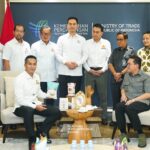
“The purpose of today’s meeting was to discuss several issues, particularly the stabilization of egg prices at the farmer level, which have recently declined slightly below the government’s reference price,” Agung said while leading a coordination meeting on the stabilization of broiler egg prices and supply at the Ministry of Agriculture office in Jakarta on Tuesday (12/05/2026).
According to Agung, cooperatives and farmer associations have agreed to maintain egg prices so they gradually return to the government’s producer reference price of Rp26,500 per kilogram.
“Our cooperatives and associations have agreed to safeguard prices so they move toward the producer-level or on-farm reference price established by Bapanas at Rp26,500 per kilogram,” he stated.
Agung further stressed that Minister of Agriculture and Head of the National Food Agency Andi Amran Sulaiman had issued direct instructions for immediate corrective measures.
“The Minister of Agriculture, who also serves as Head of the National Food Agency, instructed us to immediately take corrective action. Starting tomorrow, we expect prices at the farmer level to increase toward the reference price. The Food Task Force and the Price Stabilization Task Force will also continue monitoring,” Agung affirmed.
The government considers national egg production to currently be in a strong position. Egg production in 2026 is projected to reach around 7.3 million tons, while national demand stands at approximately 6.4 million tons.
According to Agung, the increase in production has been driven by rising investment in layer poultry farming and growing food demand, including for the Free Nutritious Meals (MBG) Program.
“The year-on-year increase in egg availability is quite significant, around 30 percent, due to the emergence of new poultry farmers as a result of the MBG program,” he explained.
Deputy for Food Availability and Stabilization at Bapanas, I Gusti Ketut Astawa, stated that the government would soon issue concrete measures to maintain egg prices at the farmer level.
“We will issue a circular regulating egg purchasing prices at the producer level, and this must be complied with,” Ketut Astawa said.
The government is also strengthening oversight of the distribution chain to ensure farmer-level prices do not remain under pressure.
“We must better regulate the role of middlemen so that conditions like this do not recur,” he added.
In addition, the government continues to strengthen support through the distribution of feed corn and field monitoring in coordination with the Food Task Force.
Meanwhile, the National Nutrition Agency (BGN) confirmed that the Free Nutritious Meals (MBG) Program serves as a concrete instrument to absorb egg production from smallholder farmers.
BGN Deputy for Provision and Distribution, Suardi Samiran, emphasized that every MBG kitchen facility is required to source eggs from nearby local farmers.
“Each Nutrition Fulfillment Service Unit (SPPG) is required to procure eggs from surrounding farmers. In addition to supporting nutritional needs, this policy is intended to strengthen local economies,” Suardi said.
Business actors and poultry farmer associations welcomed the government’s swift response. Chairman of the National Poultry Organizations Association (GOPAN), Herry Dermawan, stated that current egg prices do not reflect actual market conditions.
“Today’s prices are not the real market prices. Egg prices are highly sensitive to issues and speculation,” Herry remarked.
Meanwhile, Chairman of the National Layer Farmers Association (PLN), Musbar Mesdi, expressed hope that egg absorption through the MBG program would continue to increase.
“We hope egg absorption through the MBG program can be expanded because current absorption levels are still relatively low. In the future, egg prices should not fall below Rp25,000,” he said.
The Ministry of Agriculture reiterated that egg price stabilization efforts will continue to be closely monitored through strengthened distribution systems, market absorption, downstream industrial development, and protection for smallholder farmers to ensure the national poultry subsector remains strong and competitive.