Jakarta – Indonesia's Minister of Micro, Small, and Medium Enterprises (MSMEs), Maman Abdurrahman, announced that, effective July 1, 2026, two-wheeled online motorcycle taxi (ojek online/ojol) drivers are officially recognized as online transportation micro-entrepreneurs.
The policy forms part of the government's broader effort to strengthen protection and empowerment for micro-enterprises while improving the welfare of drivers within Indonesia's digital transportation ecosystem.
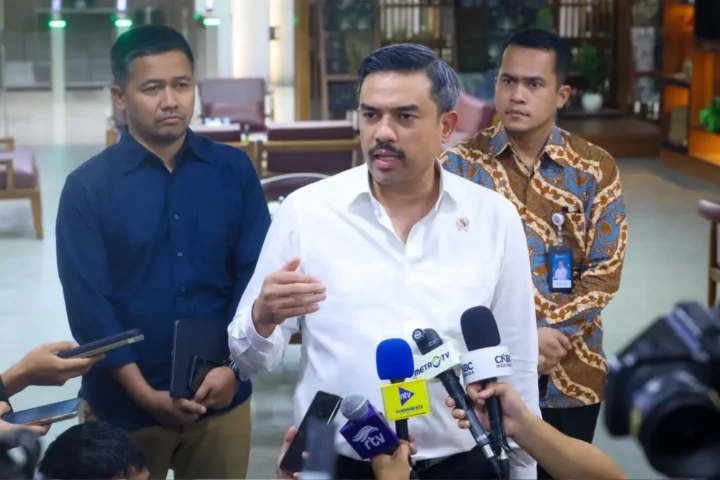
"Starting today, the maximum commission charged to two-wheeled ride-hailing drivers is capped at 8 percent, and they are officially recognized as online transportation micro-entrepreneurs," Minister Maman said in Jakarta on Wednesday (July 1).
The designation coincides with the implementation of a policy limiting platform commissions for two-wheeled passenger transportation services to a maximum of 8 percent.
With their new status, online motorcycle taxi drivers will receive the same treatment as other micro-enterprises. They will be eligible to access various government programs for protection, business empowerment, and support that have previously been available to micro-business owners.
In addition, two-wheeled ride-hailing drivers will now receive 92 percent of each fare under the implementation of Presidential Regulation No. 27 of 2026. Previously, drivers received 80 percent of the fare, while digital platforms retained the remaining 20 percent as commission.
Minister Maman explained that the Ministry of Transportation will officially announce the implementation of the revised commission structure. He added that, as micro-entrepreneurs, ride-hailing drivers will also be entitled to various government incentives, including tax provisions for micro-enterprises.
"Online motorcycle taxi drivers are now entitled to all the facilities available to micro-entrepreneurs. One of them is that they are exempt from income tax because their average annual revenue remains below the Rp500 million turnover threshold," Maman said.
The government is also preparing an empowerment stimulus package aimed at expanding business opportunities for ride-hailing drivers beyond their work as digital transportation partners. The initiative is expected to create new income streams for drivers and their families.
The package will include access to business financing, entrepreneurship training and capacity-building programs, as well as mentoring to support the development of productive businesses.
"They have flexible working hours. With their status as micro-entrepreneurs, they also have the opportunity to build and grow other businesses independently together with their families," the minister said.
According to Maman, the new status will take effect automatically in response to proposals submitted by various ride-hailing driver associations. The government will coordinate with ride-hailing platform companies and driver associations to ensure that the transition proceeds smoothly without disrupting day-to-day operations.
The minister emphasized that the policy reflects the government's commitment to strengthening the people's economy, particularly by supporting super micro, ultra micro, and micro enterprises.
"We will continue accelerating policies that favor super micro, ultra micro, and micro enterprises so that public protection and empowerment can be delivered more effectively," he said.
Regarding administrative requirements, Maman assured that the transition will be carried out gradually without disrupting drivers' activities.
"The primary objective of this policy is to provide protection and empowerment for our online motorcycle taxi drivers. Administrative requirements should never become a burden. What matters most is ensuring that the policy is implemented effectively through coordination among all relevant stakeholders," he said.
He also stressed that the government is preparing a strong legal framework to ensure the policy can be implemented sustainably while maintaining a balanced online transportation ecosystem.
"We have a responsibility to keep this ecosystem healthy because it involves platform companies, drivers, merchants, and MSMEs that rely on digital platforms. Therefore, every policy is designed to create an ecosystem that is healthy, conducive, and fair," Minister Maman concluded.