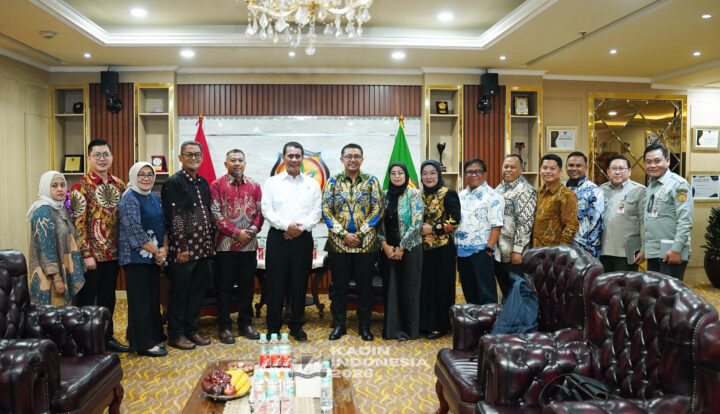
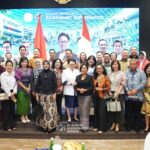
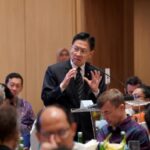
Jakarta – Deputy Chairman of the Indonesian Chamber of Commerce and Industry (Kadin Indonesia) for Livestock and Chairman of the Protein Task Force, Cecep Muhammad Wahyudin, together with Kadin Indonesia Deputy Chairman for Agriculture and Deputy Chair for Internal Cooperation of the Protein Task Force, Devi Erna Rachmawati, held a meeting with Minister of Agriculture of the Republic of Indonesia Andi Amran Sulaiman at the Ministry of Agriculture in South Jakarta on Thursday (August 27, 2026).
The meeting discussed several strategic agendas aimed at strengthening the national protein supply ecosystem, particularly to support the needs of the Free Nutritious Meals (Makan Bergizi Gratis/MBG) program.
Cecep said that during the meeting, Kadin Indonesia presented four key programs under the Protein Task Force that are considered essential to strengthening the availability and supply chain of protein products from upstream to downstream.
“First is downstream processing for agricultural and livestock products related to protein. Second, the decentralization of laying-hen farming. Third, the development of dairy cattle production areas in Indonesia. Fourth, the digitalization of the system from upstream to downstream,” Cecep said.
According to Cecep, the four programs are expected to establish a more integrated protein ecosystem while engaging communities and businesses across various regions.
During the meeting, Kadin Indonesia also presented several potential areas of cooperation that could be immediately developed with the Ministry of Agriculture. One of them concerns the utilization of 3% of the People’s Business Credit (Kredit Usaha Rakyat/KUR) allocation for agricultural machinery and equipment (Alsintan) to support clusters or business ecosystems that contribute to the protein supply chain.
“We proposed that 3% of the KUR allocation for agricultural machinery and equipment be included for these clusters. Since this will involve communities, it will become part of an integrated supply chain ecosystem,” Cecep explained.
In addition, Kadin Indonesia called for an acceleration of dairy cattle development in Indonesia. To support the program, Kadin Indonesia hopes the government can facilitate the importation process and provide access to financing through more affordable and long-term credit schemes.
“Second, regarding dairy cattle development, we hope the government can further facilitate imports, as well as provide affordable and long-term financing,” Cecep said.
Kadin Indonesia also considers the availability of reliable off-takers to be an important factor in establishing a sustainable protein ecosystem. In this regard, Kadin Indonesia hopes that the Ministry of Agriculture can create opportunities for collaboration with the National Nutrition Agency (Badan Gizi Nasional/BGN), which is currently one of the largest potential off-takers within the MBG ecosystem.
“We want to have reliable off-takers. We hope the Ministry of Agriculture can open up opportunities for collaboration with BGN, which is currently the largest off-taker,” he said.
Furthermore, Cecep said that Minister of Agriculture Andi Amran Sulaiman responded positively to the various aspirations and proposals put forward by Kadin Indonesia during the meeting. He added that the Minister demonstrated a commitment to accelerating follow-up actions on several of the programs discussed.
“The Minister’s response was very positive. Alhamdulillah, it was even beyond our expectations. The Minister appears keen to move quickly because the proposals we put forward are aligned with his priorities,” Cecep concluded.