Indonesia’s Minister of Tourism, Widiyanti Putri Wardhana, is optimistic that international tourist arrivals to Indonesia in 2026 will surpass the pre-COVID-19 level of 16 million visits per year, in line with the government’s efforts to strengthen connectivity with the business sector, particularly the Indonesian Chamber of Commerce and Industry (Kadin Indonesia).
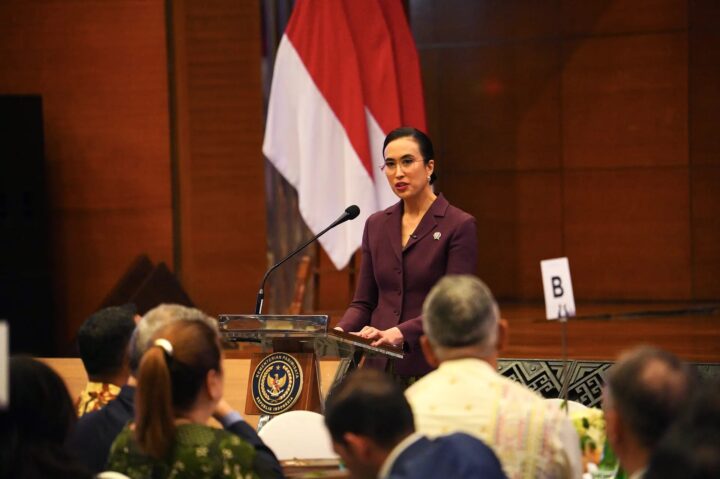
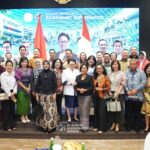
“This optimism is driven by growth in the tourism sector as well as the government’s efforts to strengthen connectivity, infrastructure, investment, and collaboration with the business sector,” Widiyanti said at the Kadin Indonesia Monthly Economic Diplomacy Breakfast (K-MED) at the Ministry of Tourism office in Jakarta on Friday (September 11, 2026).
Minister Widiyanti emphasized that Indonesia’s tourism development is not solely aimed at increasing the number of tourist arrivals.
“Tourism is also about creating better experiences, greater economic value, and sustainable benefits for our communities and businesses,” she said.
At the event, which also brought together Kadin Indonesia with ambassadors and representatives of partner countries, Widiyanti emphasized that Indonesia has significant potential to become one of the world’s leading tourism destinations.
However, she said this potential still needs to be developed by strengthening the tourism ecosystem, improving connectivity, developing infrastructure, facilitating investment, and creating business opportunities.
“These efforts are important to strengthen economic growth from the tourism sector, which continues to show positive growth,” she said.
The Ministry of Tourism recorded that tourism’s contribution to gross domestic product (GDP) increased from Rp729.1 trillion in 2022 to Rp1.14 quadrillion in 2025. Its contribution to national GDP also rose from 3.73% to 4.78%.
Minister Widiyanti explained that this growth represented a compound annual growth rate of 16.03% over the past four years. In 2026, the Ministry of Tourism estimates that tourism GDP could reach Rp1.19 quadrillion for the full year.
On the demand side, international tourist arrivals and domestic tourist trips have also continued to grow. In 2025, both grew by 10.8%. Domestic trips alone reached around 1.2 billion, representing year-on-year growth of 17.65%.
Widiyanti said the size of Indonesia’s domestic market is one of the country’s key tourism strengths, providing scale, growth, and resilience to the sector.
According to Widiyanti, entering 2026, the government continues to monitor various geopolitical factors that could affect international tourist mobility. Nevertheless, she remains optimistic that international tourist arrivals this year will surpass pre-pandemic levels.
She said that over the medium term, Indonesia is targeting 20 million to 23.5 million international tourist arrivals by 2029. To achieve this target, the government plans to continue improving tourism competitiveness, including by expanding visa-free access to make travel to Indonesia more convenient.
In addition, the Minister said tourism development will be directed toward ensuring that economic benefits are not concentrated in specific regions.
“The government has also designated 13 targeted and regenerative tourism destinations, whose development forms part of the national development agenda through 2045,” she said.
Strengthening Collaboration with Kadin
On the same occasion, Minister Widiyanti welcomed Kadin Indonesia’s initiative to make tourism one of the main topics of discussion at the meeting with ambassadors and representatives of partner countries.
She expressed her appreciation to Kadin Indonesia Deputy Coordinating Chairman for Foreign Affairs James T. Riady for organizing the meeting. The event provided a platform for exchanging ideas while strengthening partnerships among the government, business sector, and partner countries.
She said the forum provided an opportunity not only to showcase developments in Indonesia’s tourism sector, but also to receive input, learn from the experiences of other countries, and explore new opportunities for cooperation.
“I very much look forward to continued exchanges, not only to share Indonesia’s story, but also to listen, learn, and explore how we can build stronger partnerships and create greater value together,” Widiyanti said.
She expressed hope that collaboration with Kadin and international partners would further strengthen the national tourism ecosystem, particularly by improving connectivity and opening up investment and business opportunities.
The Minister emphasized that with continued growth in tourism’s contribution to the economy, a strong domestic market, and improving connectivity and international cooperation, the government sees significant opportunities for Indonesia to enhance its competitiveness.
“We are also confident that Indonesia will be able to achieve its international tourist arrival targets in the coming years,” she concluded.