


Author: Primus Dorimulu – Head of Communications, Kadin Indonesia
Jakarta – By adopting the Sumitronomics approach, the government will continue to accelerate inclusive economic growth while ensuring equitable distribution of development benefits and maintaining dynamic economic stability. To achieve stronger growth, fiscal policy in 2026 will be more expansionary while remaining anchored in fiscal discipline. Meanwhile, the private sector is positioned as the primary engine of economic growth. The government will also continue de-bottlenecking efforts to further expand the role of the private sector in cross-sector investment.
The 2026 State Budget (APBN) is formulated based on an assumed economic growth rate of 5.4 percent, an unemployment rate maintained at around 4.4–4.9 percent, and the creation of approximately 3.6 million new jobs.
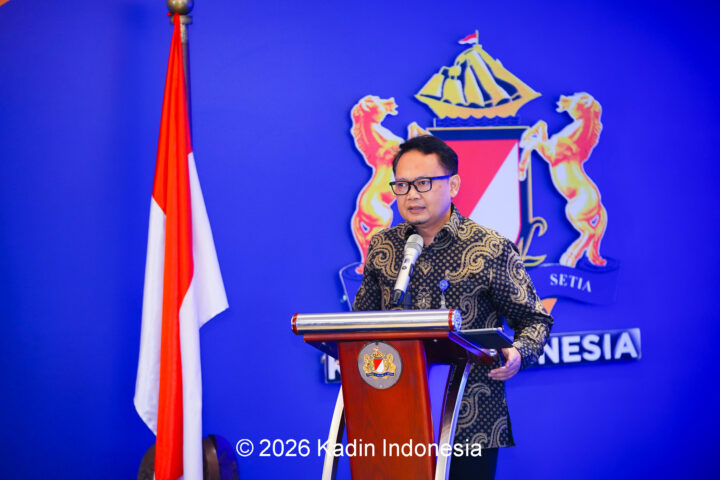
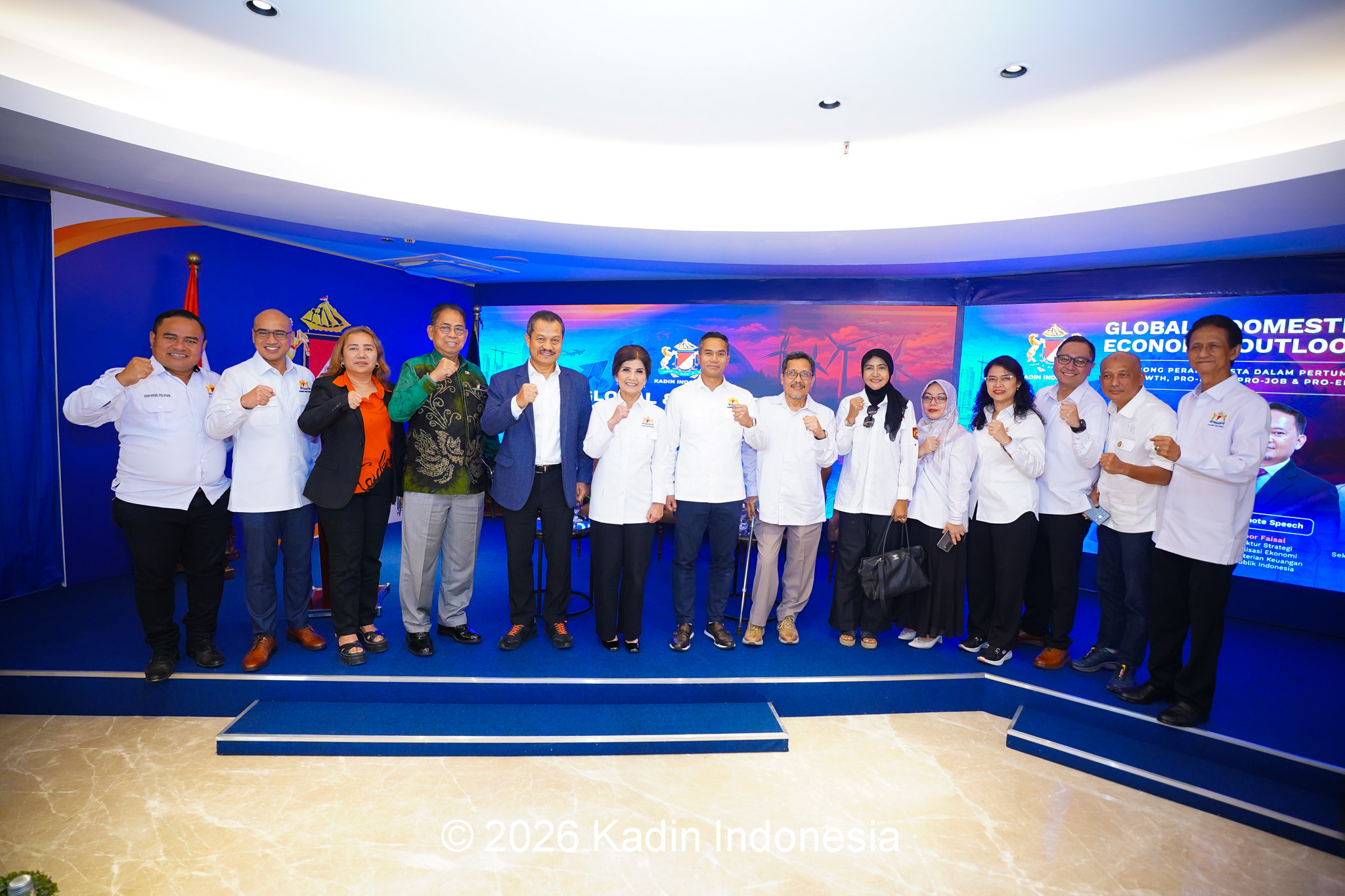
“The development strategy being implemented is not only aimed at pursuing economic growth, but also at promoting equity and economic resilience,” said Director of Economic Stabilization Strategy at the Ministry of Finance, Noor Faisal Achmad, during the seminar “Global and Domestic Economic Outlook 2026: Strengthening the Role of the Private Sector in Economic Growth: Pro-Growth, Pro-Poor, Pro-Job, and Pro-Environment” hosted by Kadin Indonesia on Thursday (15/1/2026).
Quoting Minister of Finance Purbaya Yudhi Sadewa, Noor Faisal emphasized that the private sector will serve as the main driver of growth, while the State Budget will act as a catalyst. Through this approach, the government is targeting economic growth to accelerate to the range of 6–8 percent over the coming years.
Economic growth, he added, must be inclusive, supported by equitable welfare distribution, massive job creation, and sustainability.
“Macroeconomic stability will continue to be safeguarded, while fostering an economy that is not only resilient but also adaptive to global dynamics,” he said.
Development Strategy
According to Noor Faisal, future development strategies will be anchored in collaboration to achieve high growth alongside improved welfare. Three main pillars form the foundation of this policy framework.
The first pillar is a growth strategy focused on developing high value-added sectors across all industries, while revitalizing labor-intensive sectors to become more efficient and competitive. These efforts are supported through deregulation and de-bottlenecking measures to accelerate economic activity.
The second pillar relates to fiscal strategy. Through the State Budget, the government performs its roles in driving growth, stabilization, and equitable development. The APBN also functions as an instrument to strengthen long-term economic fundamentals, including serving as a countercyclical policy tool during periods of economic pressure.
The third pillar is an investment strategy emphasizing synergy between the government and the private sector. In this context, Danantara, as the government’s operational arm, is projected to play a key role in accelerating development and mobilizing investment.
APBN 2026
The 2026 State Budget is designed to serve as a development engine to realize a resilient, self-reliant, and prosperous Indonesia, in line with the President’s vision and mission. Policy priorities are outlined in eight key agendas, ranging from food and energy security, mineral resource management, and the free nutritious meals program, to improving the quality of education.
In addition, budget allocations are directed toward strengthening healthcare services, village development, cooperatives and MSMEs, as well as comprehensive national defense. The APBN is consistently positioned as a catalyst to accelerate investment and trade in support of inclusive and sustainable economic growth.
The 2026 APBN posture remains expansionary yet measured, with the deficit maintained below 3 percent, at approximately 2.68 percent. State expenditure is targeted at Rp3,842.7 trillion, with transfers to regional governments amounting to Rp693 trillion. Financing is focused on sustainability to ensure the APBN remains adaptive in mitigating economic shocks.
From a macroeconomic perspective, economic growth in 2026 is projected at 5.4 percent, higher than the 2025 target of 5.2 percent. Inflation is expected to be maintained at 2.5 percent ±1 percent, reflecting effective price control amid potential global pressures.
The yield on 10-year government bonds is projected at around 6.9 percent, lower than the 2025 APBN assumption of 7 percent, indicating more competitive financing costs. The rupiah exchange rate is projected to remain stable at Rp16,500 per US dollar, while the Indonesian Crude Price (ICP) is expected to decline to around US$70 per barrel, providing greater fiscal space.
De-bottlenecking Efforts
To strengthen the role of the private sector, the government continues to intensify de-bottlenecking initiatives. One key instrument is the Lapor Satgas grievance channel, involving the Ministry of State Secretariat, Coordinating Ministries, the Ministry of Finance, and 29 other ministries and government agencies.
To date, 42 complaints are currently being processed. This channel is expected to function as a problem solver for businesses facing various obstacles, including licensing, spatial planning, environmental issues, taxation, customs, energy, electricity, financing, export-import procedures, logistics, and public procurement.
Through this mechanism, the government aims to accelerate problem resolution in a more coordinated manner while enhancing business certainty.
A Solid 2025 Economy
Amid global volatility, Indonesia’s economy throughout 2025 demonstrated solid resilience. Economic growth in the first through third quarters of 2025 remained around 5 percent, reflecting sustained production activity and domestic consumption.
Inflation was successfully contained at 2.92 percent in December 2025, indicating stable prices despite external pressures and weather-related disruptions. Several macroeconomic indicators further confirmed positive economic fundamentals, including a trade surplus of US$46 billion, a manufacturing PMI in expansionary territory at 51.6, and a decline in 10-year government bond yields to 6.01 percent.
The Jakarta Composite Index (JCI) recorded year-to-date growth of 22.1 percent, supported by foreign exchange reserves of US$156.5 billion. Growth in base money (M0) of 11.4 percent also reinforced signals of sustained macroeconomic stability.
Entering the fourth quarter of 2025, the economy strengthened further, supported by fiscal stimulus totaling Rp37.4 trillion and deregulation measures. Household consumption began to recover more evenly, while the manufacturing sector returned to expansion for five consecutive months.
Capital flows, which had been under pressure in the first half of 2025, turned positive in the fourth quarter with inflows reaching Rp31.2 trillion. Trade performance also showed a structural shift, with manufactured exports growing by 6.2 percent and imports of capital goods increasing by 17.1 percent—signaling expanding business capacity.