



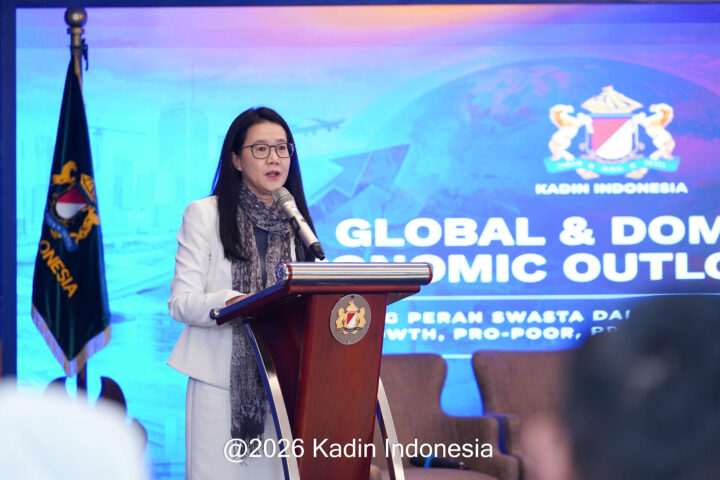
Jakarta – Indonesia has yet to enter the global semiconductor map. Compared to its ASEAN neighbors, Indonesia remains significantly behind. Singapore has reached the second stage of the semiconductor industry, contributing around 5% of global wafer fabrication production. Meanwhile, Malaysia, which focuses on the third stage of the semiconductor industry, has captured approximately 11% of global chip assembly, testing, and packaging activities. Indonesia, despite being the largest country in ASEAN in terms of population and territory, has yet to make a meaningful contribution to the global semiconductor value chain.
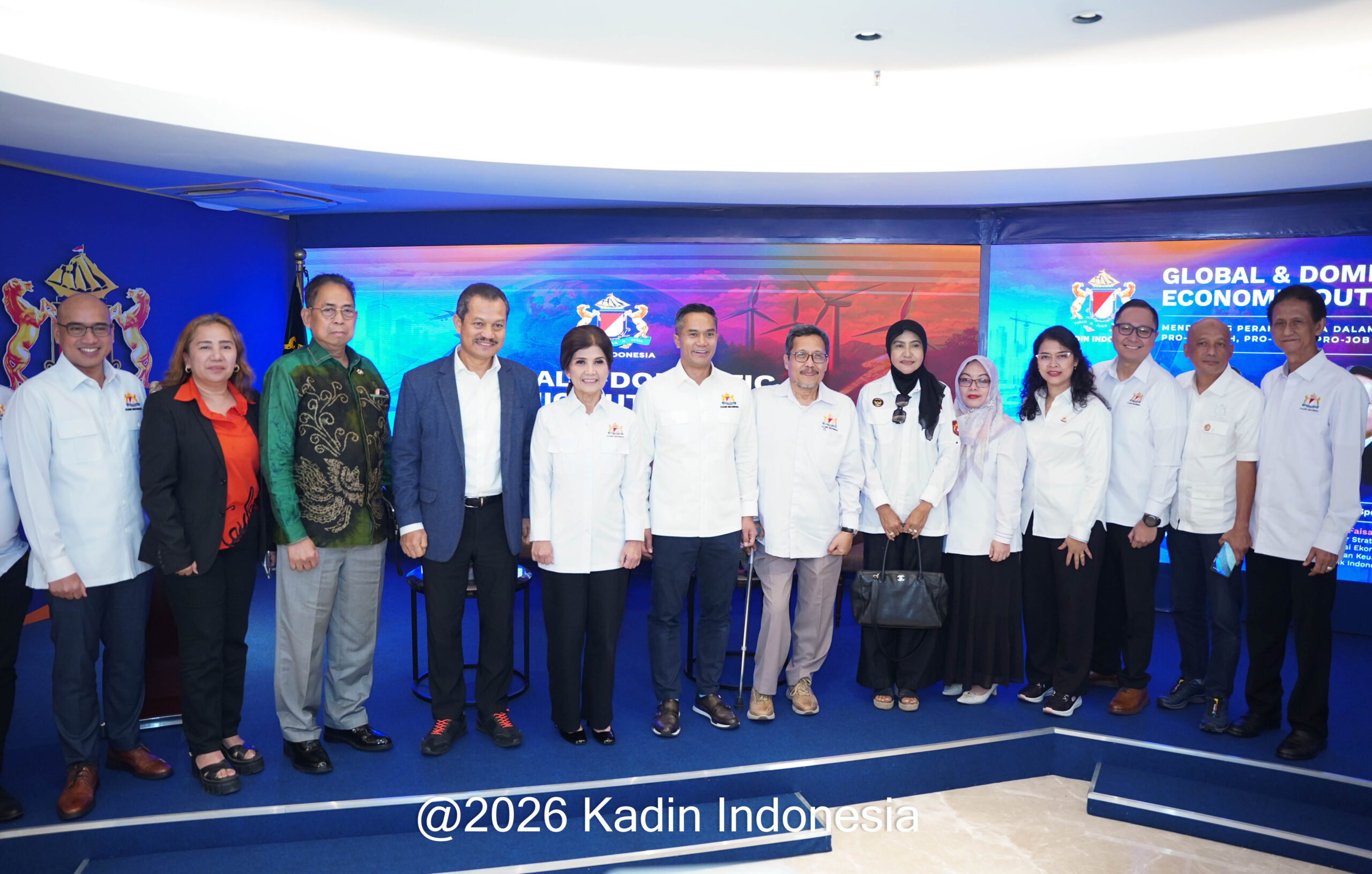
“Indonesia has indeed not entered any of the three main stages of the semiconductor industry, but the country has enormous potential to develop its semiconductor industry going forward,” said Lili Yan Ing, Secretary General of the International Economic Association, during the seminar Global and Domestic Economic Outlook 2026: Strengthening the Role of the Private Sector in Economic Growth: Pro-Growth, Pro-Poor, Pro-Job, and Pro-Environment, held on Thursday (15/1/2026).
The semiconductor industry is one of the most complex yet most strategic industries in the world. Its value chain is divided into three main stages, each requiring different levels of technology, capital, and human resources. Not all countries are able to master all stages comprehensively.
The first stage is chip research and design. At this stage, engineers design chip architectures, including functionality, performance, energy efficiency, and transistor size. The design process relies on specialized electronic design automation (EDA) software and requires highly skilled human capital.
The research and design stage is knowledge-intensive but does not require physical investment on the scale of wafer fabrication plants. As a result, many countries and global firms choose to specialize in design even without owning chip manufacturing facilities. The value added at this stage is extremely high, as design determines a chip’s performance and differentiation.
The second stage is wafer fabrication, the process of imprinting chip designs onto silicon wafers. This is the most complex, capital-intensive, and strategic stage of the semiconductor industry. Wafer fabrication is carried out in specialized facilities known as fabs, with investment requirements that can reach tens of billions of US dollars.
The fabrication process involves hundreds of highly precise steps—ranging from lithography, etching, and deposition to doping—conducted in ultra-clean rooms with extremely high sterility standards. Only a handful of countries are capable of mastering this stage competitively, one of which is Singapore, currently contributing around 5% of global wafer production.
Once wafers are completed and cut into individual chips, the industry moves to the third stage: assembly, testing, and packaging (ATP). At this stage, chips are assembled into packages, tested for performance, and prepared for use in a wide range of electronic devices.
The ATP stage is relatively more labor-intensive and requires lower capital investment compared to wafer fabrication. As a result, many developing countries enter the semiconductor industry through this segment. Malaysia is one successful example, contributing around 11% of total global ATP activities.
Over the past five years, Lili noted, China’s semiconductor industry has doubled in size. ASEAN has also recorded significant growth, with semiconductor exports rising from approximately US$52 billion to US$165 billion—an increase of threefold.
“The figure has tripled, and that shows enormous potential,” she said.
Countries that control wafer fabrication essentially control the heart of the semiconductor industry. Without wafers, there are no chips. Without chips, the digital industrial chain—ranging from artificial intelligence (AI) and electric vehicles to defense systems—cannot function.
Semiconductors as a Strategic Commodity
Amid the acceleration of global digital transformation, semiconductors have become one of the most strategic commodities in the modern economy. These microscopic components play a critical role in nearly all electronic devices, from smartphones and computers to electric vehicles and solar panels.
Semiconductors are materials whose electrical conductivity lies between that of conductors and insulators. This unique property allows them to be engineered to precisely regulate the flow of electricity according to technological needs.
The most commonly used semiconductor material is silicon, followed by germanium and gallium arsenide. Through a process known as doping, the electrical properties of these materials can be modified to produce N-type and P-type semiconductors, which form the basis of transistors and integrated circuits.
Due to their pervasive role, semiconductors are now viewed not merely as technological components, but as strategic economic and geopolitical assets. Disruptions in chip supply can cripple manufacturing industries, delay vehicle production, and slow global digital transformation.
Indonesia has not yet joined the ranks of the world’s major semiconductor chip producers. However, it is not entirely outside the global supply chain. At present, Indonesia’s role remains in downstream segments, particularly assembly, testing, and packaging.
One example is the presence of Infineon’s facility in Batam, Riau Islands, which operates as a global chip assembly and testing center. This segment serves as Indonesia’s entry point into the semiconductor industry, although it has yet to reach the highest value-added stages.
Upstream, Indonesia is also beginning to demonstrate potential as a supplier of strategic raw materials. PT Freeport Indonesia’s smelter in Gresik has produced selenium, a key material for the semiconductor industry. In addition, Indonesia possesses abundant reserves of silica and tin.
Investment Challenges and Structural Reforms
According to Lili, Indonesia’s lagging position is closely linked to its weak attractiveness for foreign direct investment (FDI). Indonesia’s FDI-to-GDP ratio currently stands at around 1.2%, the lowest among ASEAN countries. By comparison, Singapore records an FDI-to-GDP ratio of around 27%, while Vietnam reaches 4.2%.
“Under current global conditions, we are truly competing for investment. The government can no longer operate on a business-as-usual basis. Structural reforms and improvements in the business climate are imperative,” she stressed.
Geopolitical tensions between the United States and China, she added, have opened opportunities for ASEAN through the relocation of global value chains. FDI inflows into ASEAN have increased by around 47% compared to the pre-trade war period. However, most of these flows have gone to Singapore, Malaysia, Thailand, and Vietnam, while Indonesia continues to lag behind.
Digital Economy, AI, and Energy
Beyond semiconductors, Lili views the digital economy as the main growth engine for ASEAN. With a population of 692 million and internet penetration of around 70%, ASEAN’s digital economy is estimated to reach US$300 billion by 2025 and could surge to US$1 trillion by 2030.
However, Indonesia is still overly reliant on e-commerce and digital payment systems. Going forward, digital adoption and AI must be expanded into productive sectors such as agriculture, manufacturing, healthcare, and education.
This digital transformation, Lili noted, is highly dependent on reliable energy supply. Currently, renewable energy accounts for only around 26% of ASEAN’s energy mix, far below the global average of 40%.
“The green energy transition is not a choice, but a necessity to reduce costs and improve efficiency,” she said.
Criticism of MBG and Appreciation for President Prabowo’s Programs
In the context of domestic policy, Lili expressed appreciation for President Prabowo Subianto’s ideas on strengthening human capital, including the concept of Sekolah Rakyat (People’s Schools). However, she argued that the approach should be universal, with a focus on improving teacher quality, curricula, and skills aligned with business needs.
Meanwhile, she delivered a sharp critique of the Free Nutritious Meals (MBG) program. Based on survey results, fewer than 4% of students indicated that they needed a free lunch program.
“It makes no sense for the state to provide free lunches to middle- and upper-income groups,” she said.
She argued that the MBG program should be highly targeted and limited to students from poor families, with a restrained budget allocation.
“The budget should not exceed Rp8 trillion and must be truly well-targeted,” Lili said.
Concluding her presentation, Lili emphasized that if Indonesia wants to catch up in strategic industries such as semiconductors, the government must act as a facilitator, while the private sector becomes the main driver of growth.
“Without real reforms and policy consistency, Indonesia’s vast potential will remain merely potential,” she concluded.