


Jakarta - Minister of Investment and Downstreaming / Head of the Investment Coordinating Board (BKPM), Rosan Perkasa Roeslani, stated that Indonesia’s realized investment reached Rp3,923.2 trillion from the fourth quarter of 2024 through the third quarter of 2026. According to Rosan, this achievement demonstrates that investors' long-term commitment to Indonesia remains strong despite capital market pressures and rising global uncertainty.
Rosan emphasized that this figure represents capital that has actually been invested in Indonesia, rather than mere pledges, memorandums of understanding (MoUs), or project plans. The investment was materialized through capital expenditures for constructing production facilities and executing various business operations.
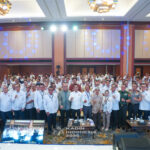
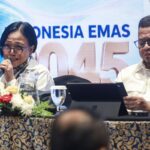
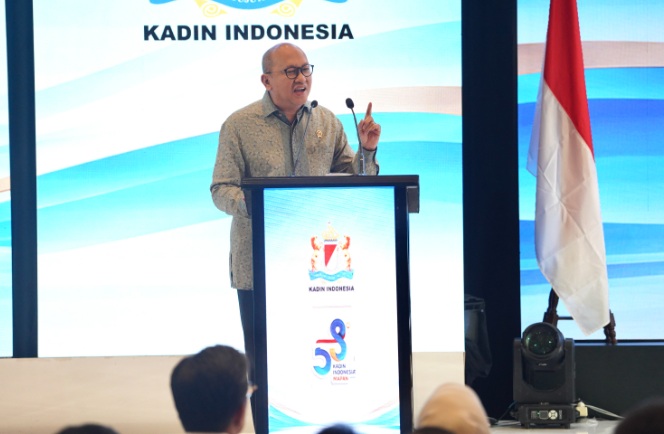
"The total figure over the past two years has reached nearly Rp4,000 trillion, or Rp3,923.2 trillion to be exact. This was achieved during the two years of President Prabowo Subianto's administration," Rosan said at the opening of the Indonesian Chamber of Commerce and Industry (Kadin Indonesia) National Leadership Meeting (Rapimnas) at Hotel Borobudur, Jakarta, on Thursday (October 29, 2026).
During the forum, Rosan also reaffirmed that Danantara is directed toward empowering national entrepreneurs through investment partnerships. Private sector involvement, including regional business actors, serves as a vital component in expanding production capacity and creating added value for the economy.
According to Rosan, while public attention has recently been focused on capital market volatility, the state of direct investment must also be examined to gain a more comprehensive picture of business confidence in Indonesia.
He explained that direct investment—such as building factories, smelters, and production facilities—is a long-term decision. Investors must allocate capital, construct assets, onboard workforce, and account for business sustainability over many years.
"When people invest—whether our colleagues in Kadin or international investors—it is a long-term commitment," he noted.
Rosan contrasted this nature with securities trading in capital markets, which allows investors to execute rapid buy and sell transactions. In contrast, developing production facilities reflects an investor's deep commitment to business operations that cannot easily be relocated overnight.
"When we invest and build a factory or a smelter, it stays there. It is not just for one, two, or five years," said the CEO of Danantara.
Rosan emphasized that long-term investment decisions rely heavily on stability and certainty. Investors evaluate political stability, security, and the consistency of the investment climate before committing capital.
Such certainty is essential for business actors to formulate plans, quantify risks, and project investment returns. Unpredictable policy shifts can disrupt business calculations and project execution.
"We don’t like surprises. We dislike unpredictable elements. Everyone wants things to be measurable, structured, and filled with certainty," Rosan asserted.
He explained that investment realization is recorded based solely on capital that has actually been spent. For example, if an investor plans a Rp10 trillion project but has only spent Rp2 trillion on initial execution, only Rp2 trillion is logged as realized investment.
If the investor spends an additional Rp3 trillion the following year, that expenditure is subsequently logged. Consequently, the total planned value of a project is not immediately recognized as realization.
"The investment realization we record consists of figures that have already been disbursed and spent in Indonesia. It is not hypothetical, nor is it based on MoUs or agreements," he said.
Rosan noted that the investment target for the administration's five-year term is set at Rp13,032.8 trillion. He illustrated the scale of this challenge by comparing it to the cumulative investment realized between 2014 and 2024, which totaled approximately Rp9,100 trillion according to his presentation.
Achieving this heightened target will require expanding project pipelines, improving the business environment, and actively engaging both domestic and foreign investors. Rosan stressed that the government must continuously ensure that investment interest successfully translates into project execution.
For the period of January through September 2026, Rosan reported that investment realization reached Rp1,539.2 trillion, or 75.4% of the annual target. According to the data presented, this realization absorbed 2,194,496 workers.
He explained that the target benchmarking his ministry's performance is established within the national development planning framework by Bappenas. Its fulfillment forms part of broader efforts to support national economic growth. "From January to September 2026, total incoming investment stood at Rp1,539.2 trillion," he said.
Rosan emphasized that investment plays a pivotal role in driving the economy. Second only to household consumption, investment serves as a primary pillar of growth by building production capacity, acquiring capital goods, and creating jobs. Sustaining investment momentum is therefore critical to maintaining economic activity and boosting Indonesia's capacity to produce goods and services.
One notable trend highlighted by Rosan is the growing contribution of downstream processing (hilirisasi) to total investment realization. According to Rosan, the share of downstream investment rose from approximately 25% in 2024 to around 31% in 2026. In the third quarter of 2026 alone, its contribution reached approximately 34%.
These figures, Rosan noted, demonstrate that the development of processing industries is assuming an increasingly crucial role in Indonesia’s investment structure. Downstream policies are designed to extend value chains and capture greater added value domestically.
He pointed out that approximately 78% of downstream investments are located outside Java, heavily concentrated in Sulawesi and North Maluku. This geographical distribution highlights the role of resource-based investments in catalyzing regional industrial activity.
However, Rosan stressed that successful investment must be evaluated beyond the total volume of incoming capital. The government seeks high-quality investment that enhances the skills of Indonesian workers, facilitates knowledge and technology transfer, and generates better-paying jobs.
"By quality investment, we mean investments that elevate our human capital. There must be a transfer of knowledge and technology, and, crucially, the creation of quality employment," he stated.
Rosan cited the development of the nickel industry as an example of shifting from raw material exports to higher-value-added products. In his presentation, he compared nickel export values before downstream implementation—which hovered around US$3.3 billion—with exports of nickel and its derivative products in 2025, which reached approximately US$30 billion.
This comparison was used by Rosan to illustrate the benefits of domestic processing on export value, foreign exchange receipts, job creation, and Indonesia’s standing within global supply chains.
According to Rosan, industrial expansion must be accompanied by opportunities for domestic entrepreneurs to grow alongside major projects. Large corporations and investment ventures need to foster business linkages that allow local suppliers to scale up their operations.
In this context, Rosan urged that the success of Micro, Small, and Medium Enterprise (MSME) empowerment be measured by upward mobility in business scale. He envisioned more micro-enterprises growing into small businesses, small businesses advancing to medium scale, and medium enterprises evolving into large corporations. "If they remain MSMEs forever, when will they scale up?" he remarked.
Rosan clarified that his wish to see the count of registered small-scale MSMEs decline refers to business owners upgrading to higher operational brackets. He expressed hope that companies would not remain stagnant at the same capacity year after year.
He stressed that a large base of business actors must be paired with gains in productivity, sales revenues, managerial capabilities, and market access. Such progress will ultimately amplify the contribution of grassroots businesses to the economy.
He reiterated that established corporations under Kadin carry a fundamental responsibility to assist smaller enterprises. This support is particularly crucial for regional MSMEs to integrate into industrial and investment supply chains. "For our established colleagues at Kadin, helping MSMEs is an absolute obligation," he said.
In his presentation, Rosan noted that approximately 1,000 MSMEs have participated in partnership programs facilitated by his ministry, with total transaction values reaching around Rp20 trillion. He expressed hope that these partnerships would deliver tangible impacts on local business development.
Rosan views Kadin’s extensive network—extending down to provincial, regency, and municipal levels—as a vital asset to expand these linkages. Kadin can bridge the operational requirements of investment projects with the capabilities of local suppliers while helping regional enterprises build capacity.
He asserted that the synergy between investment inflow and regional economic development must be continuously strengthened so that growth benefits a broader range of market participants.
Rosan also outlined Danantara's role in advancing national investment strategies. He affirmed that Danantara seeks to build collaborations that empower the private sector and expand economic activity. "Danantara's role is precisely to instill momentum and build shared strength alongside the business community and the private sector," he said.
As an example, Rosan cited waste-to-energy projects. He explained that Danantara mandates foreign technology providers to partner with local companies.
Such partnerships are intended to drive knowledge and technology transfer while bolstering the capability of Indonesian enterprises to execute similar projects independently. Involving local businesses also ensures that investment benefits accrue to both national and regional entrepreneurs. "We require them to partner with local companies," he noted.
Rosan assessed that Indonesia’s economic landscape offers vast room for development, requiring broad participation from the business sector. Danantara cannot carry out the entire investment agenda alone. The active role of domestic entrepreneurs remains critical to expanding projects, scaling production capacity, and creating new market opportunities.
He likened this strategy to enlarging the economic pie: as overall economic capacity expands, opportunities for private companies are expected to multiply.
"It is precisely the role of everyone here that will play a far more vital part," he told Rapimnas attendees.
At the same time, Rosan acknowledged that the government still has considerable work ahead to improve the investment climate. He underscored the importance of good governance, transparency, accountability, and integrity in asset management and business operations.
Regarding the management of Danantara and its subsidiary enterprises, Rosan identified asset optimization, productivity enhancement, and operational efficiency as ongoing key priorities.
Rosan also announced plans to expand structured consultations with the business community on an ongoing basis starting next year. This dialogue is intended to help both the government and business actors identify operational needs and foster investment collaboration.
Amid these initiatives, Rosan cautioned that geopolitical tensions and global economic shifts continue to pose risks. A spike in global oil prices, for instance, could increase pressure on the state budget and constrain fiscal space for government spending needs.
He urged business leaders to remain resilient in navigating market dynamics. Facing adversity, he noted, ultimately strengthens corporate maturity, resilience, and decision-making capabilities.
As leaders of the business community across their respective regions and sectors, Kadin members hold the responsibility to maintain optimism among fellow business actors. The mindset of business leaders, he concluded, directly influences the confidence and resolve of enterprises to push forward. "We in this room are the engines of our business community," Rosan said.
He called on Kadin to preserve the spirit of "fighting entrepreneurs" (pengusaha pejuang) by continuing to unlock opportunities, strengthen partnerships, and advance investment. The vast capital already realized must translate into enhanced industrial capabilities, MSME advancement, and quality employment for the public.

National Economy
Regional Economy
National Economy
Regional Economy