Surabaya - Chairman of the East Java Provincial Chamber of Commerce and Industry (Kadin East Java), Adik Dwi Putranto, has emphasized that regulations on the maximum allowable levels of nicotine and tar in cigarette products could have a significant impact on the sustainability of Indonesia’s tobacco products industry. He noted that the impact would be particularly pronounced in East Java, which has long been one of the country’s main centers of the cigarette industry.
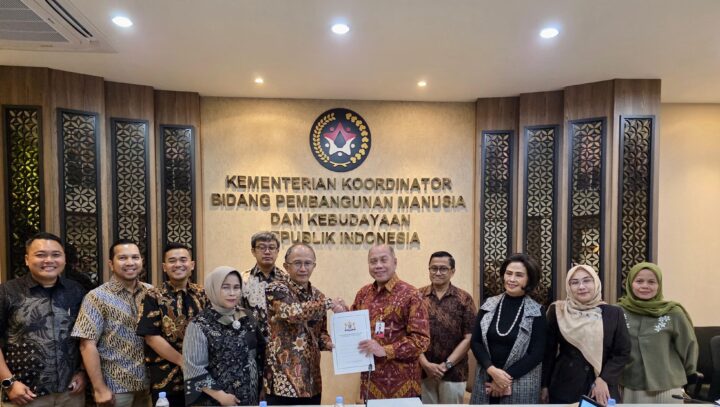
Adik made the remarks during an audience between Kadin East Java and the Coordinating Ministry for Human Development and Cultural Affairs (Kemenko PMK) in Jakarta on Wednesday (January 7, 2026).
During the meeting, Adik conveyed concerns over the implementation of Government Regulation No. 28 of 2024 on Health, particularly Article 431 paragraph (1) letter b, which stipulates maximum limits on nicotine and tar content in cigarette products. According to him, the regulation is highly sensitive as it affects a labor-intensive sector with a long and complex supply chain.
“This new regulation has the potential to disrupt production processes, as manufacturers must redefine quality standards, testing methods, and make adjustments to machinery. This is not a short process and could halt production for a considerable period,” Adik said.
Adik explained that there are around 670 legal cigarette factories in East Java employing hundreds of thousands of workers. Regulatory uncertainty arising from the required adjustments poses a risk to industrial stability and could lead to reduced production capacity and potential layoffs.
In addition, Kadin East Java highlighted the potential serious impact on tobacco farmers. The natural characteristics of East Java tobacco, which typically has a relatively high nicotine content, may no longer be absorbed by the industry if standards are aligned with global white cigarette benchmarks that generally require nicotine levels below 1 milligram. This condition could suppress farmers’ incomes while increasing demand for imported tobacco.
“If local raw materials are no longer absorbed, tobacco farmers will be severely affected, and dependence on imports will increase,” Adik explained.
Furthermore, Adik noted that limits on nicotine and tar levels could also increase the circulation of illegal cigarettes. The loss of the distinctive kretek flavor in legal products could open market space for illicit cigarettes that are not subject to regulation, potentially reducing state and regional revenues, including Tobacco Excise Revenue Sharing Funds (DBHCHT).
Adik added that the hand-rolled kretek cigarette (SKT) segment is the most vulnerable. SKT is the largest labor-intensive industry in East Java and a major employer of women. Its product characteristics, which involve relatively high nicotine and tar levels, make the sector particularly sensitive to restrictive policies.
“We are concerned that SKT, which has long supported the livelihoods of lower- and middle-income communities, will instead come under pressure. If production capacity declines, the impact could include relocation and layoffs,” he said.
During the audience, Adik also delivered several policy recommendations to the government. While tobacco consumption control is considered an important objective, he stressed that policies must be designed in a balanced manner so as not to undermine labor-intensive industries and community livelihoods.
“Kadin East Java encourages that nicotine and tar standards should not be fully harmonized with global cigarette standards, given the dominance of kretek cigarettes and the characteristics of Indonesia’s local tobacco. Any limits should take into account the real conditions of the types and varieties of tobacco cultivated by farmers, so that local raw materials can continue to be absorbed by the industry,” Adik said.
In addition, Adik explained that the SKT industry should receive a differentiated regulatory approach as a labor-intensive sector and part of Indonesia’s national cultural heritage. Overly strict limits on tar and nicotine levels, particularly for small-scale producers and SKT manufacturers, could close off opportunities for absorbing local tobacco and clove supplies, and directly affect the sustainability of small cigarette businesses, regional economies, and the incomes of farmers and farm workers.
“If the restrictions are to be implemented, a gradual transition period with an adequate timeframe around two to five years is needed to allow industries and farmers to adapt. Moreover, cross-ministerial and inter-agency coordination under the Coordinating Ministry for Human Development and Cultural Affairs is essential to ensure that public health control policies run in parallel with labor protection, business sustainability, and regional economic stability,” Adik concluded.