Dalian, China – Chairman of the Indonesian Chamber of Commerce and Industry (Kadin Indonesia), Anindya Novyan Bakrie, emphasized that Indonesia is strategically positioned to play a significant role in the development of software-defined vehicles (SDVs), supported by its abundant critical minerals, renewable energy potential, and demographic dividend.
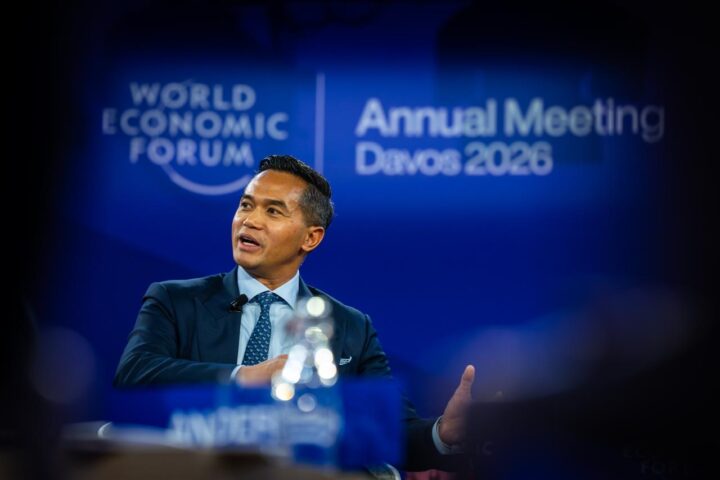
Anindya, popularly known as Anin, made the remarks while speaking at the session titled “When Cars Became Software” during the 17th Annual Meeting of the New Champions 2026 (Summer Davos) organized by the World Economic Forum (WEF) in Dalian, China, on Tuesday (June 23, 2026).
Anin explained that the transformation of the automotive industry toward software-defined vehicles extends far beyond data and digital technologies. It also involves advanced materials, energy resources, and high-tech manufacturing capabilities.
“When we talk about cars becoming software, we are also talking about a platform—not only for software and data, but also for materials science, critical minerals, energy, and, of course, advanced manufacturing,” he said.
According to Anin, Indonesia possesses nearly all the critical minerals required for the development of electric vehicles and SDVs. Indonesia is currently the world’s largest producer of nickel and ranks among the top five global producers of copper, zinc, bauxite, and tin.
“Indonesia’s ability to process these critical minerals will significantly support the growth of software-defined vehicles,” he said.
In addition to its natural resource wealth, Anin highlighted Indonesia’s renewable energy potential as another key advantage. The country currently has approximately 100 gigawatts of installed power generation capacity, most of which is still derived from conventional energy sources. Going forward, around 75 percent of new power generation capacity is expected to come from renewable sources such as solar, wind, geothermal, and hydropower.
According to Anin, this energy transition presents a major opportunity to accelerate Indonesia’s transformation toward a more sustainable and globally competitive industrial sector.
Beyond natural resources, Indonesia also benefits from a strong human capital foundation. With a population of approximately 285 million people and around five million births annually, industrialization is essential to creating new employment opportunities.
“We must create jobs for them. That is why industrialization is so important,” Anin said.
However, Anin believes the greatest opportunity for SDV adoption in Indonesia lies not primarily in passenger vehicles, in-car entertainment systems, or advanced driver-assistance technologies. Instead, he sees the most significant potential in fleet management and logistics.
Indonesia currently operates approximately 6.5 million trucks, mining vehicles, and logistics vehicles, along with around 300,000 buses, all of which require more efficient management systems.
“These assets need to be managed effectively if Indonesia is to move to the next level while strengthening its industrialization efforts,” he said.
As an archipelagic nation consisting of more than 17,000 islands, Indonesia continues to face relatively high logistics costs. According to Anin, SDV technologies and artificial intelligence could play a critical role in improving the efficiency of goods and service distribution across the country.
He stressed that the transition toward intelligent vehicles does not diminish the importance of hardware. On the contrary, demand for advanced materials will become even more intensive.
“Dependence on materials is not decreasing—it is becoming more intensive. Battery materials must be more efficient, have higher energy density, and remain thermally stable. This requires nickel, greater quantities of copper for electrical conductivity, and lightweight aluminum derived from bauxite,” Anin explained.
According to him, four key drivers will propel Indonesia toward higher-value industrial activities: strong domestic demand, the need for industrialization, maximizing the value-added potential of natural resources, and the pressures arising from climate change and urbanization.
Anin also highlighted the strong enthusiasm among Indonesia’s younger generation for the energy transition. Approximately 60 percent of Indonesia’s population is under the age of 30.
As an example, he pointed to Jakarta’s ongoing public transportation electrification program. Over the next five years, the city’s Bus Rapid Transit (BRT) fleet, comprising approximately 10,000 buses, is expected to transition to electric vehicles.
“This has become a public movement that is driving electrification not only in Jakarta but throughout Indonesia,” he said.
During the discussion, Anin underscored the importance of international collaboration in accelerating the development of Indonesia’s electric vehicle and SDV ecosystem. He noted that technological capabilities cannot be developed overnight, making partnerships with global investors and companies essential.
“Battery material processing and battery manufacturing require partners. These partners bring foreign direct investment, create jobs, and help strengthen economic stability,” Anin said.
Looking ahead, he expressed hope that the advancement of software-defined and AI-powered vehicles would significantly reduce Indonesia’s logistics costs over the coming years. Indonesia’s logistics costs are currently estimated at around 17 percent of Gross Domestic Product (GDP). According to Anin, reducing that figure closer to 5 percent would substantially enhance the country's economic competitiveness.
“When we talk about shared mobility, it is certainly important. But for Indonesia, what matters even more is how technology can reduce logistics costs and drive economic growth. That is what I hope we can achieve within the next three years,” Anin concluded.
Joining Anin as speakers during the panel discussion were Elaine Buckberg, Senior Fellow at the Salata Institute for Climate and Sustainability at Harvard University; Zhenghua (Jack) Yu, Chief Executive Officer of Motovis; and Ni Jun, Chief Manufacturing Officer of Contemporary Amperex Technology Co. Limited (CATL).
During his visit to China, Anindya Novyan Bakrie also participated in a series of strategic engagements. These included a meeting with Indonesian Ambassador to China H.E. Djauhari Oratmangun, an exclusive interview with China Global Television Network (CGTN), participation in the APEC China CEO Forum alongside members of the APEC Business Advisory Council (ABAC), and attendance at the Welcoming & Networking Banquet held in conjunction with the China International Supply Chain Expo.