Brussels, Belgium – Chairman of the Indonesian Chamber of Commerce and Industry (Kadin), Anindya Novyan Bakrie, emphasized the importance of strengthening the economic partnership between Indonesia and the European Union through increased trade, investment, industrial cooperation, and technology transfer.
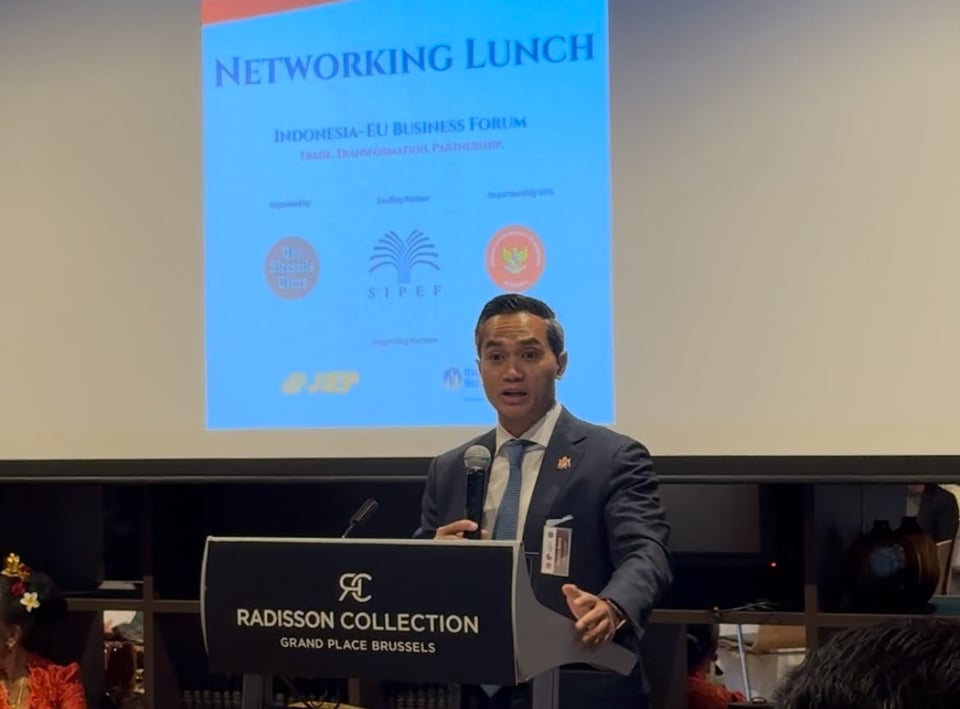
Anindya, widely known as Anin, delivered the remarks during his keynote speech at the Indonesia-EU Business Forum Networking Lunch, held at the Radisson Collection Hotel in Brussels, Belgium, on Friday (November 6, 2026), local time.
Anin said the Indonesia-European Union Comprehensive Economic Partnership Agreement (IEU-CEPA) must deliver tangible business opportunities for the business communities on both sides.
“Indonesia and Europe have a longstanding relationship built on trade, investment, and cooperation across various sectors. The Partnership and Cooperation Agreement, which has been in force since 2014, has provided an important foundation for this relationship,” Anin said.
Anin noted that the European Union is one of Indonesia’s key trading and investment partners. Bilateral trade in goods between the two sides reached approximately EUR 29 billion in 2025.
According to Anin, strengthening economic ties between Indonesia and Europe has become increasingly important amid global economic changes, including growing uncertainty surrounding trade, supply chains, energy security, and investment. Both sides have opportunities to leverage their complementary strengths to create new sources of economic growth.
Anin described the IEU-CEPA as an important milestone in a new chapter of economic relations between Indonesia and the European Union. Following nearly a decade of negotiations, both parties concluded the negotiations in September 2025, paving the way for the agreement's signing and implementation.
However, Anin stressed that the benefits of the CEPA must extend beyond an agreement on paper. Tariff reductions are expected to improve Indonesian products' access to the European market while creating greater opportunities for European companies to invest and expand their businesses in Indonesia.
“Beyond trade, the CEPA can promote investment, technology transfer, stronger industrial partnerships, and closer supply chain integration. Its success should be measured by business growth, realized investments, and the creation of jobs on both sides,” Anin said.
Furthermore, Anin highlighted Indonesia's significant potential as a strategic partner for European businesses. With a population of more than 280 million, Indonesia is the largest economy in ASEAN, supported by a growing domestic market, expanding industrial capacity, and abundant natural resources.
“Indonesia can also serve as a gateway for European companies to access the wider ASEAN regional market,” Anin added.
On the occasion, Anin identified three key areas where cooperation between Indonesian and European businesses could be further developed.
First, trade and industrial cooperation, through stronger links between Indonesian producers and European buyers, as well as the development of joint manufacturing, technology transfer, and increased value-added production.
Second, investment and infrastructure. He noted that European capital, engineering capabilities, and industrial expertise could complement Indonesia's growing needs in infrastructure development, logistics, digital connectivity, and industrial expansion.
Third, clean energy and sustainable mobility. Indonesia's energy transition presents significant opportunities in renewable energy, electricity grids, and electrification.
“In this regard, Europe has the potential to contribute through technology development and financing,” Anin said.
Anin cited the development of electric commercial vehicles through VKTR, part of Bakrie Group, including electric buses used to support Jakarta's public transportation system, TransJakarta.
“This is one example of how industrial development and sustainability can go hand in hand, creating opportunities for cleaner cities, stronger manufacturing, and new partnerships,” Anin explained.
Anin expressed hope that similar cooperation would continue to grow between Indonesian and European companies by combining investment, technology, and local industrial capabilities.
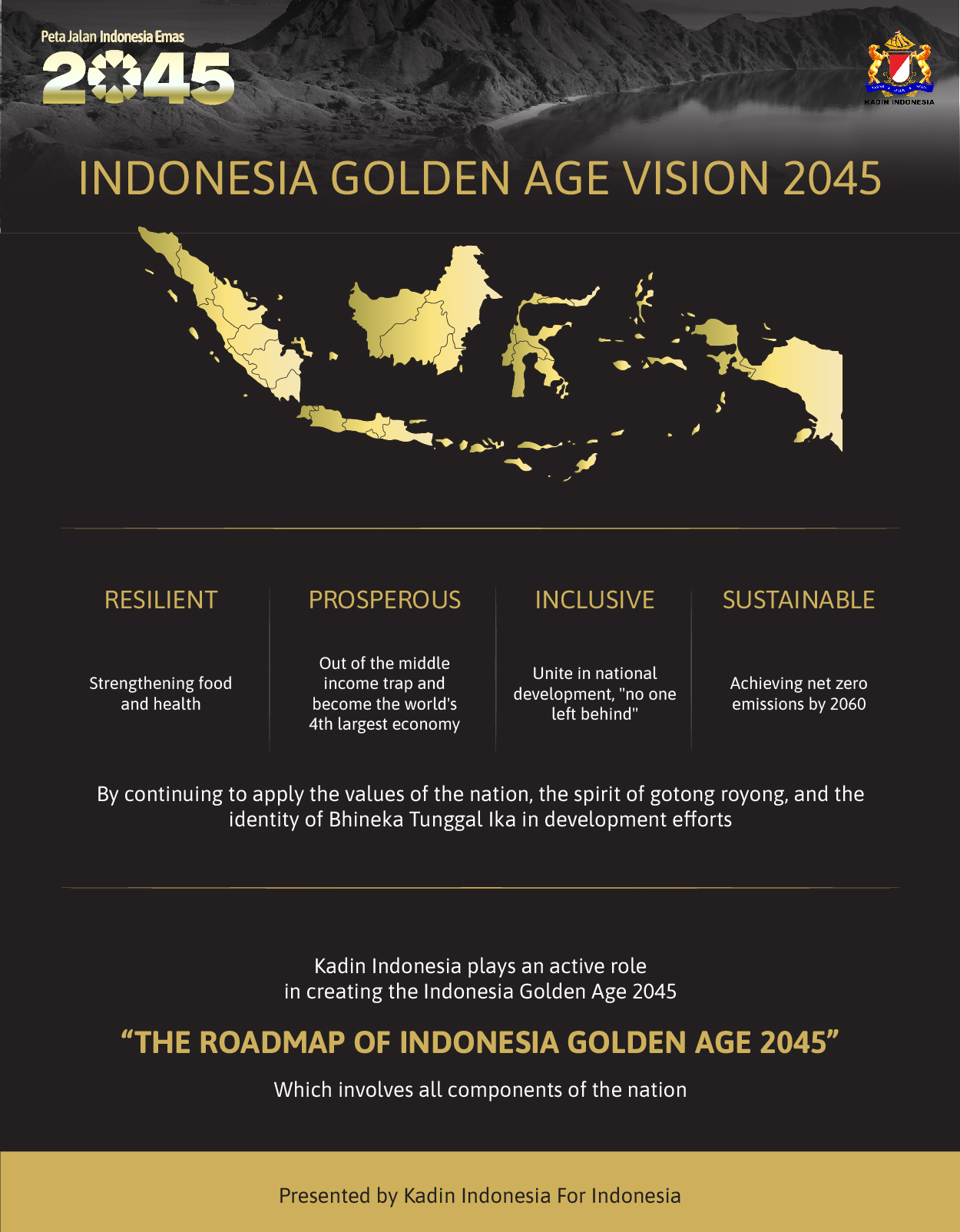
Furthermore, Anin reaffirmed Kadin Indonesia's commitment to translating the momentum of stronger bilateral relations into tangible business opportunities. As the country's highest statutory business organization, Kadin represents the private sector while serving as a strategic partner to the government.
Through the Indonesia Incorporated concept, Kadin seeks to bring together the government, businesses, and investment institutions to advance national economic priorities. In this effort, Danantara also serves as an important partner, both domestically and in fostering international cooperation.
Kadin is also continuing to strengthen its ties with various partners across Europe.
“Last year, Kadin engaged with businesses and stakeholders in Brussels, including through a dialogue with the Benelux-Indonesia Association,” Anin said.
Going forward, Kadin hopes to build on these relationships through more business delegations, sectoral dialogues, and direct partnerships between companies from both sides. With the IEU-CEPA moving toward its signing and implementation stages, businesses need to prepare themselves to capitalize on the opportunities ahead.
“Indonesia and Europe have much to gain from a closer partnership. The CEPA can open the door, but it is up to businesses to walk through it. Let us make this new chapter an opportunity to establish concrete cooperation and shared prosperity,” Anin concluded.