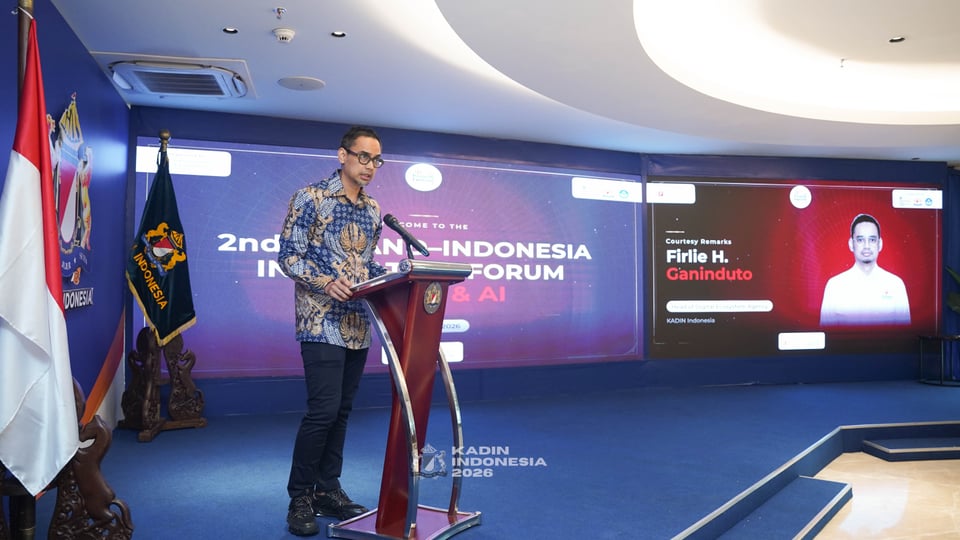
Jakarta - Head of the Digital Ecosystem Agency of the Indonesian Chamber of Commerce and Industry (Kadin), Firlie H. Ganinduto, emphasized the importance of leveraging artificial intelligence (AI) to generate tangible economic value for businesses. He said technology adoption should go beyond simply keeping pace with digital developments and deliver measurable improvements in productivity, competitiveness, and business efficiency across various sectors.
Firlie made the remarks at the 2nd Poland-Indonesia Innovation Forum EdTech & AI, themed “Connecting Poland and Indonesia for the AI-Ready Generation,” held at the RGE Lounge, Menara Kadin Indonesia, South Jakarta, on Tuesday (November 10, 2026).
Firlie said that, from the business community’s perspective, a fundamental question that needs to be addressed is whether investments in and adoption of new technologies are merely intended to keep up with the times or are genuinely capable of creating economic value.
"AI should not benefit only large-scale technology companies. It should also serve as a practical tool that businesses across various sectors can leverage to improve productivity and competitiveness," Firlie said.
For example, small businesses can use AI to better understand customer needs, manage inventory, and improve their marketing strategies. Meanwhile, manufacturing companies can leverage the technology to enhance production efficiency and reduce operational waste.
In the agricultural sector, AI also has the potential to help businesses make better-informed decisions, improve supply chain efficiency, and connect producers with markets more effectively.
"Technology must help businesses address real-world challenges. Technology adoption itself is not the ultimate goal. What matters most is how technology can create opportunities and contribute to economic growth," Firlie said.
Furthermore, Firlie stressed that digital talent development must go hand in hand with the evolving needs of industry. This is particularly important given the rapid pace of technological advancement, which is also transforming the skills required in the workforce.
He noted that education should go beyond simply introducing AI tools to students or teaching programming skills. Human resource development must also encompass critical thinking, creativity, problem-solving, and the ability to apply technology to address real-world challenges.
In addition, closer ties between educational institutions and the business community are essential. Educational institutions play a role in building knowledge and learning capabilities, while businesses understand practical challenges and the competencies required in the workplace.
"When these two perspectives are brought together, we have an opportunity to develop talent that not only understands technology but is also capable of using it productively," he explained.
In this regard, educational technology (EdTech) is considered to play an important role in expanding access to learning, supporting educators, and creating more practical and engaging learning experiences.
However, the success of EdTech implementation should not be measured solely by the number of technologies introduced in classrooms. More importantly, educational technology must improve learning outcomes, strengthen relevant skills, and prepare students to seize future economic opportunities.
"Poland has experience and innovation in technology and education, while Indonesia offers opportunities for collaboration through its large and diverse education and business ecosystems," Firlie concluded.