Jakarta – The Indonesian Chamber of Commerce and Industry (Kadin) is encouraging local entrepreneurs to scale up egg production to meet the rising demand from the Free Nutritious Meals (MBG) program. With current beneficiaries estimated at around 60 million people and an assumed consumption of two eggs per week, demand reaches approximately 120 million eggs per week or more than 480 million eggs per month. If consumption increases to three eggs per week, monthly demand could exceed 700 million eggs.
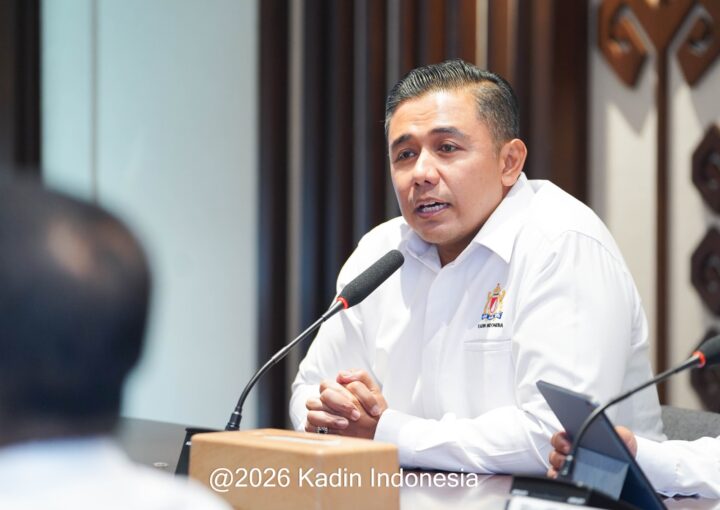
Kadin Indonesia Vice Chairman for Livestock, Cecep Muhammad Wahyudin, emphasized that the involvement of partners from China is not intended to displace local businesses, but rather to strengthen production capacity through the transfer of livestock technology.
Demand for eggs is projected to continue increasing in line with the MBG target of reaching 92.78 million beneficiaries by 2029, as well as rising per capita egg consumption in Indonesia.
“If MBG beneficiaries reach 92.78 million by 2029 and per capita consumption increases to more than one egg per day, or over 365 eggs per year, demand will far exceed production. Therefore, production must be increased and distribution improved. This requires planning and strategy starting now, considering the long poultry supply chain—from Great Grand Parent (GGP), Grand Parent Stock (GPS), Parent Stock (PS), to Final Stock (FS), which produces consumption eggs. Completing this cycle takes more than three years,” Cecep said in Jakarta on Wednesday (April 29, 2026).
As part of these efforts, Kadin Indonesia, together with Kadin Aceh Province, hosted a visit from The China Egg Industry Chain Business Delegation on April 21, 2026.
The meeting discussed a cooperation initiative titled “Strategic Orchestration of China’s Agrotechnology Ecosystem for Strengthening the Supply Chain of MBG Sumatra Corridor,” focusing on investment and technology transfer in the layer chicken sector, particularly in Aceh.
Cecep reaffirmed that the Chinese companies involved will not act as vertical integrators in Indonesia’s layer poultry industry. This is regulated under Law No. 5/1999 on the Prohibition of Monopolistic Practices and Unfair Business Competition, which restricts full control of the supply chain from upstream to downstream by a single entity.
Another relevant regulation is the Ministry of Agriculture Regulation No. 32/2017 on Supply-Demand Control. The Chinese partners are expected to introduce modern farming technologies to enhance efficiency and production quality through a horizontal integration model in the layer poultry industry—an initiative that has been conceptualized since the Kadin National Leadership Meeting (Rapimnas) in late 2024.
The adoption of modern livestock technologies to improve efficiency and product quality is one of Kadin’s flagship programs in the livestock sector. A Protein Task Force has also been established through collaboration between the Ministry of Cooperatives, Kadin Indonesia, and the Indonesian Farmers Association (HKTI).
“This is tangible support for MSME farmers to produce eggs with high efficiency, international quality standards, and competitive pricing,” Cecep stated.
The cooperation plan targets approximately IDR 1.4 trillion in investment for upstream poultry development, including the construction of breeding farms, feed mills, and egg processing facilities in Aceh, in partnership with independent/local farmers to build a horizontally integrated livestock ecosystem.
“Kadin hopes this initiative can be replicated in various regions to achieve regional food sovereignty and strengthen national food security,” Cecep added.
Currently, Indonesia’s per capita egg consumption remains relatively low compared to Malaysia, where consumption exceeds one egg per day. In Indonesia, it is still below that level.
On the supply side, data from Statistics Indonesia (BPS) indicates that national egg production capacity is currently estimated at around 90–100 billion eggs per year. However, this output is largely absorbed by household consumption, the food industry, and the hospitality sector (hotels, restaurants, and cafés), meaning that additional demand from the MBG program is placing new pressure on the supply chain.
Kadin believes the challenge lies not only in increasing production, but also in improving distribution efficiency and supply quality. Therefore, the adoption of modern technologies is essential—from closed-house systems and automated feeding to logistics solutions such as cold chain systems and digitalized distribution.
“This is a long-term strategy to strengthen the national food supply chain, not a short-term solution through imports. We want to ensure that local farmers remain the main players in their own country, supported by the best technology. At the same time, Kadin is also targeting global markets, particularly Singapore, where Indonesia has yet to become a major egg supplier,” Cecep explained.
Through investment collaboration and technology transfer, Kadin is optimistic that the national layer poultry industry can become more modern, efficient, and capable of meeting the growing protein needs of the population.
Cecep further emphasized that Kadin continues to promote the strengthening of the national livestock sector through an inclusive, village-based collaboration model.
“Programs such as One Village One Farming are designed to directly involve cooperatives, MSMEs, village-owned enterprises (BUMDes), and Islamic boarding schools as key actors on the ground,” he said.
Kadin, Cecep added, views grassroots economic development as inseparable from the role of cooperatives. Therefore, Kadin remains open to collaboration with MSMEs and cooperatives, including exploring partnerships with Koperasi Desa Merah Putih as part of strengthening the national food ecosystem.
“In its implementation, Kadin will encourage cross-sector synergy, where businesses support upstream activities, while village cooperatives serve as the spearhead for local economic development. Through this approach, we aim to ensure that government programs not only run effectively, but also deliver tangible impacts in job creation, economic equity, and the fulfillment of community nutritional needs,” Cecep concluded.