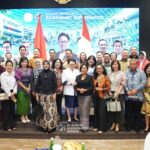
The forum marked an important momentum for the Indonesian and Philippine business communities to translate increasingly strong bilateral relations into concrete cooperation, particularly in the development of critical mineral supply chains, food security, digital economy, energy, and industrial connectivity.
One of the forum’s key outcomes was the strengthening of the “Indonesia–Philippines Nickel Corridor” initiative, a strategic cooperation framework connecting Indonesia’s nickel downstreaming capabilities with the Philippines’ nickel ore supply base. The initiative is designed to position Indonesia and the Philippines as key pillars in the global critical minerals supply chain, while strengthening ASEAN’s industrial resilience amid rising global demand for raw materials used in stainless steel, batteries, electric vehicles, energy storage, and other industrial applications.
Through cooperation between the Indonesian Nickel Miners Association (APNI) and the Philippine Nickel Industry Association (PNIA), the Indonesia–Philippines Nickel Corridor will serve as an industrial cooperation platform covering the exchange of nickel-related data and information, regulatory and policy dialogue, joint activities, mine and smelter site visits, cross-border investment promotion, ESG methodology development, as well as scholarship and human capital capacity-building programs for the nickel sector.
In 2025, Indonesia produced approximately 2.6 million metric tons of nickel, while the Philippines produced around 270,000 metric tons. Based on estimates by the United States Geological Survey (USGS) in 2025, the two countries together accounted for approximately 73.6% of global nickel mine production.
In terms of reserves, Indonesia is estimated to possess around 62 million metric tons of nickel reserves, while the Philippines holds approximately 4.8 million metric tons. For Indonesia, the corridor strengthens raw material supply certainty for its rapidly expanding nickel downstream ecosystem. For the Philippines, the cooperation opens opportunities to move beyond raw material exports through greater integration with regional processing opportunities, investment, and industrial capacity building.
Vice Chairman for Foreign Affairs of Kadin Indonesia, Bernardino Moningka Vega, stated that the Indonesia–Philippines Nickel Corridor reflects a new direction for regional economic cooperation that goes beyond commodity trade toward the development of deeper and mutually beneficial value chains.
“In line with this year’s Philippine ASEAN theme, ‘Navigating Our Future, Together,’ the Kadin Indonesia–PCCI high-level forum has laid out a roadmap not only for bilateral cooperation, but also for making the ASEAN region more prepared to face today’s geo-economic realities,” Bernardino said.
The APNI–PNIA cooperation is also expected to bring together upstream and downstream industry players, investors, associations, and relevant stakeholders from both countries.
As such, the corridor is expected to evolve not merely as a strategic concept, but also as a practical mechanism to strengthen the regional nickel value chain, improve supply certainty, and encourage sustainable investment.
President of the Philippine Chamber of Commerce and Industry (PCCI), Ferdinand Ferrer, added that the cooperation marks an initial step toward building a more integrated nickel industry relationship between Indonesia and the Philippines.
“ASEAN will be strongest when it acts as one. And at the heart of this unity is the very strong bilateral relationship between Indonesia and the Philippines, with a combined population of nearly 400 million people. Our chambers of commerce will lead efforts to build closer economic relations in concrete and measurable ways,” Ferrer concluded.
In addition to the strategic APNI–PNIA cooperation under the Indonesia–Philippines Nickel Corridor framework, the forum also announced several other agreements:
First, a Strategic Cross-Chamber Cooperation between Kadin Indonesia and PCCI, serving as an institutional cooperation framework to strengthen trade, investment, and business-to-business relations in priority sectors, including critical minerals, sharia economy, digital finance, food security, and energy.
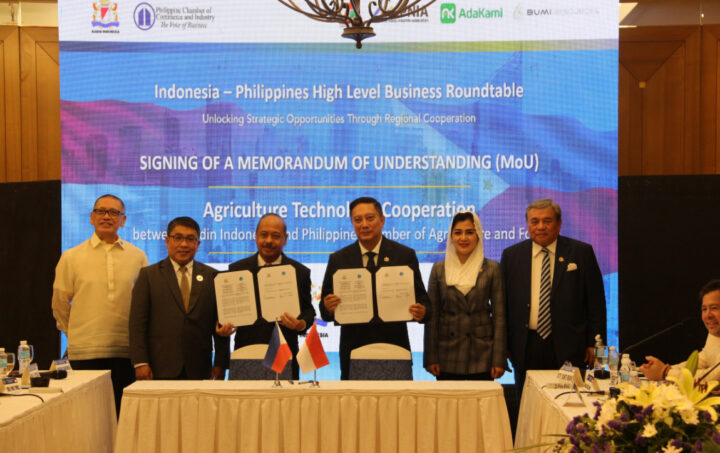
Second, an Agricultural Technology Collaboration between Kadin Indonesia and the Philippine Chamber of Agriculture and Food, focusing on knowledge exchange, research and development, digital agriculture, organic fertilizers, and technology transfer to support productivity and food security.
Third, an Aviation Related Collaboration between Garuda Maintenance Facility and JAR Aviation Services, opening opportunities for collaboration in the development and implementation of aviation projects in the Philippines with an indicative value of US$80 million.
Fourth, the Establishment of a Nickel Processing Facility in the Philippines by Agro Investama Group together with RBN Solutions Inc. and Ploutus Inc., which includes a minimum nickel supply commitment of 200,000 metric tons per month starting in June 2026, as well as plans to develop a nickel processing facility to support battery and electric vehicle supply chains.
This series of agreements demonstrates the strengthening economic partnership between Indonesia and the Philippines, which is now evolving from commodity trade toward industrial cooperation, investment, and ASEAN value chain integration.
Going forward, Kadin Indonesia will continue to encourage concrete follow-up actions for every agreement announced, including through regular business dialogues, trade missions, investment facilitation, business matching, and cooperation among sectoral associations. Through this approach, the Indonesia–Philippines partnership is expected to become one of the key pillars supporting a more integrated, competitive, and sustainable ASEAN economy.
Also attending the event were Coordinating Minister for Economic Affairs of the Republic of Indonesia Airlangga Hartarto, Undersecretary of the Department of Trade and Industry of the Philippines Alan Gepty, and more than 40 Indonesian and Philippine business