Beijing – Chairman of the Indonesian Chamber of Commerce and Industry (Kadin Indonesia), Anindya Novyan Bakrie, reaffirmed his commitment to addressing concerns raised by Chinese businesses operating in Indonesia.
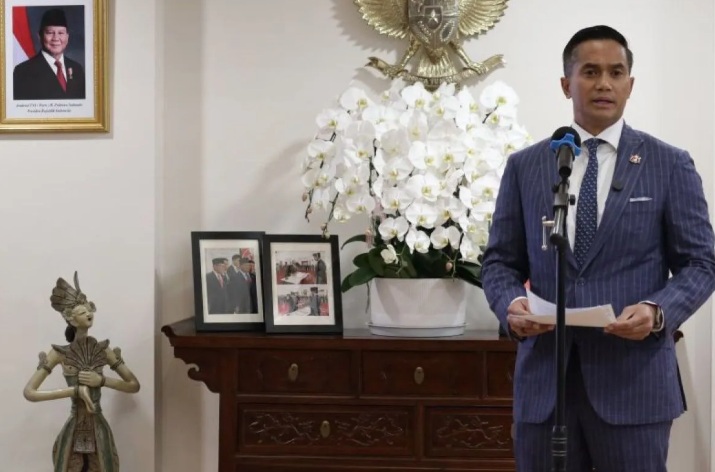
“We are all aware of the letter sent by the Chinese Chamber of Commerce to the Indonesian government. In my view, the best way to respond is to come here directly and explain how we see these issues from the perspective of the private sector,” Anindya said at the Indonesian Embassy in Beijing on Sunday (June 21).
Anindya, widely known as Anin, visited China to attend a series of events, including the China International Supply Chain Expo and the APEC CEO Forum in Beijing, the Summer Davos 2026 in Dalian, as well as meetings with various business partners.
In May 2026, the Chinese Chamber of Commerce in Indonesia submitted an official letter to Indonesian President Prabowo Subianto outlining a number of concerns regarding government policies and the business climate in Indonesia.
In the letter, Chinese investors argued that frequent policy changes have created significant challenges for Chinese companies operating in Indonesia. Among the issues highlighted were increasingly restrictive regulations, excessive law enforcement actions, as well as concerns over corruption and extortion by certain authorities.
“We have maintained dialogue over time. Admittedly, the way these concerns were communicated came as a surprise. However, diplomacy, discussion, and open communication are essential. That is precisely why I am here—to explain our perspective directly,” Anin said.
He also expressed his intention to clarify the concerns and determine whether the letter genuinely reflected the views of the broader Chinese business community.
“There may indeed be legitimate concerns, but they may not necessarily represent all Chinese businesses. I do not dismiss them, because in business, customer service is important. If a client is unhappy, we need to meet them, listen, and discuss the issues directly,” he added.
According to Anin, China remains one of Indonesia’s most important strategic partners, given the scale of bilateral trade and investment between the two countries.
“China is highly strategic and extremely important to Indonesia. We have a mutually beneficial relationship. What I want to emphasize is that our partnership extends beyond trade—it also includes investment, job creation, and human capital development. These are areas where Indonesia can learn a great deal from China,” he stressed.
Anin noted that China has demonstrated particular strengths in renewable energy, electric vehicles, technology, and agriculture.
“Ultimately, the private sector is focused on creating economic activity through trade and investment. We do not recognize borders in the same way governments do, and we are often able to engage in more informal conversations that can help facilitate solutions,” he explained.
Bilateral trade between Indonesia and China reached US$167.48 billion in 2025, with Indonesian exports increasing by 16.7 percent compared to the previous year.
Meanwhile, Indonesia’s trade with Hong Kong amounted to approximately US$6 billion, bringing the combined trade value with China and Hong Kong to around US$173 billion.
On the investment side, Chinese investment in Indonesia reached approximately US$7.58 billion during the same period, while investment from Hong Kong totaled US$10.1 billion. Combined, investment from China and Hong Kong reached approximately US$18 billion in 2025, making them Indonesia’s largest source of foreign direct investment.
However, the Chinese Chamber of Commerce in Indonesia raised several concerns in its letter to President Prabowo Subianto. These included repeated increases in taxes and fees, including mineral resource royalties, as well as increasingly intensive tax audits and substantial financial penalties reaching tens of millions of U.S. dollars, which the organization said had created anxiety among businesses.
The chamber also expressed concerns over the government's plan to require exporters of natural resources to place their export earnings in Indonesian state-owned banks for a minimum period of one year. According to the investors, the policy could negatively affect corporate liquidity.
In particular, Chinese investors objected to the significant reduction in nickel ore mining quotas since the beginning of 2026, which they said had been cut by more than 70 percent, equivalent to approximately 30 million tons in total. They also raised concerns about the Ministry of Energy and Mineral Resources’ decision to increase the Mineral Benchmark Price (HPM) for nickel ore and revise its pricing formula, which they claimed had driven overall nickel ore costs up by as much as 200 percent.